 Save
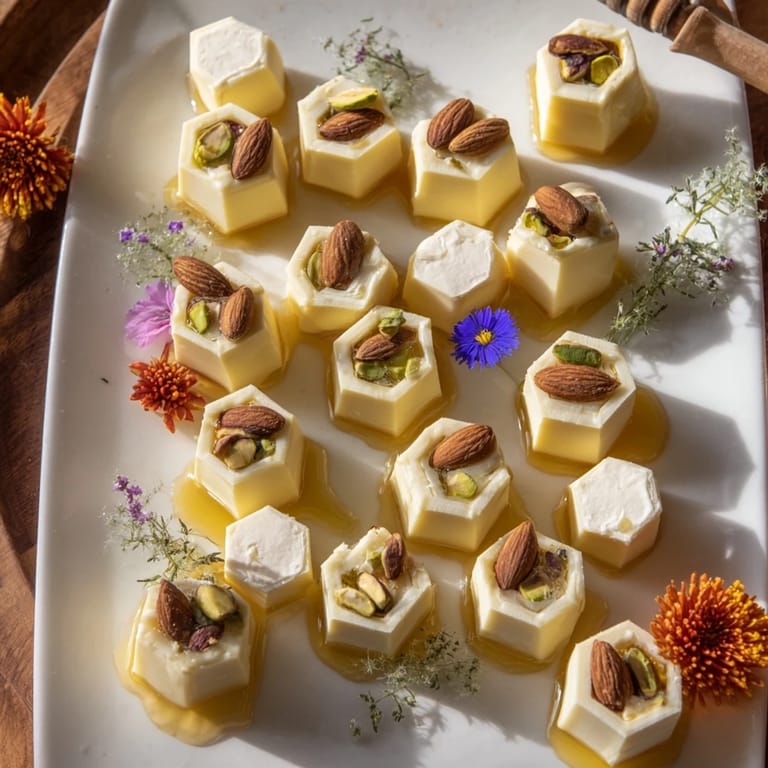
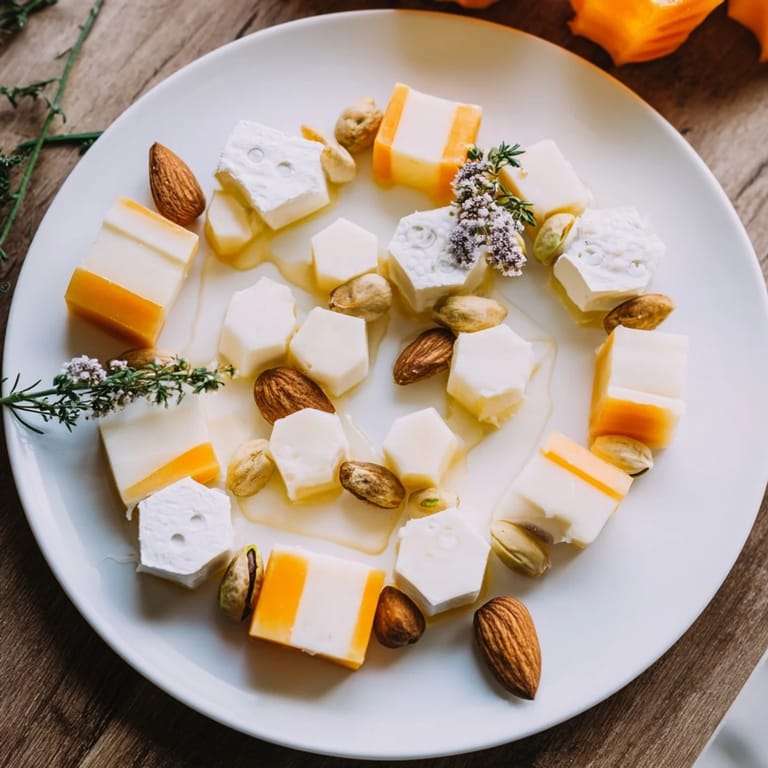
Save I still remember the first time I arranged cheeses on a board for a dinner party and thought, "This is just functional." Then one evening, while reorganizing my platter into interlocking hexagons inspired by a honeycomb I'd seen in a beekeeper's shop, something magical happened. The geometric pattern caught the candlelight differently, and suddenly cheese became art. My guests leaned in closer, drawn not just by hunger but by the visual poetry of it all. That's when I realized that the most memorable appetizers aren't just delicious—they tell a story before anyone takes the first bite.
I'll never forget my cousin's wedding shower where I nervously brought this platter as my contribution. I'd stressed over cutting those cheese hexagons perfectly, worried the whole thing would look amateur. When I set it down on the table, the room actually went quiet for a moment. Then someone said, "Did you design that?" and suddenly I wasn't just another guest with a cheese board—I was the person who created something guests took photos of and asked about. That's the power of intention meeting geometry.
Ingredients
- Manchego cheese: This Spanish gem has a slightly nutty, buttery flavor that grounds the platter beautifully. It's firm enough to cut into perfect hexagons without crumbling, and it holds its shape even as the honey pools around it. I learned the hard way that softer cheeses make this pattern look sloppy within minutes.
- Cheddar cheese: Don't shy away from the depth cheddar brings—it adds a tangy contrast to manchego's sweetness. A good aged cheddar transforms this from "nice cheese board" to "wait, where did this come from?"
- Brie: The creamy wildcard that makes people pause. A little brie adds luxury and a melting softness that complements the firm cheeses. Cut it gently to keep those wedges intact.
- Roasted almonds: These aren't just fillers—they anchor the flavor profile with earthiness. Roasting them yourself gives you control over the salt level, which I wish I'd known sooner. They also catch the light beautifully between the cheese hexagons.
- Shelled pistachios: Here's where color becomes flavor. The natural green adds visual pop, and pistachios bring a subtle sweetness that plays perfectly against honey's warmth. They're also the first thing to disappear.
- High-quality honey: This is non-negotiable. A floral honey with character—perhaps wildflower or acacia—transforms this platter from adequate to unforgettable. Cheap honey tastes like sweet nothing; good honey tastes like bees did something meaningful.
- Fresh thyme sprigs: The herbal whisper that reminds guests this is thoughtfully composed, not thrown together. A few sprigs scattered across the top add aromatics and sophistication without overwhelming.
- Edible flowers: Optional, but they're the punctuation mark that says "I cared." Pansies or violas add visual drama and a delicate floral note that extends the sensory experience.
Tired of Takeout? 🥡
Get 10 meals you can make faster than delivery arrives. Seriously.
One email. No spam. Unsubscribe anytime.
Instructions
- Cut your cheeses into hexagonal shapes:
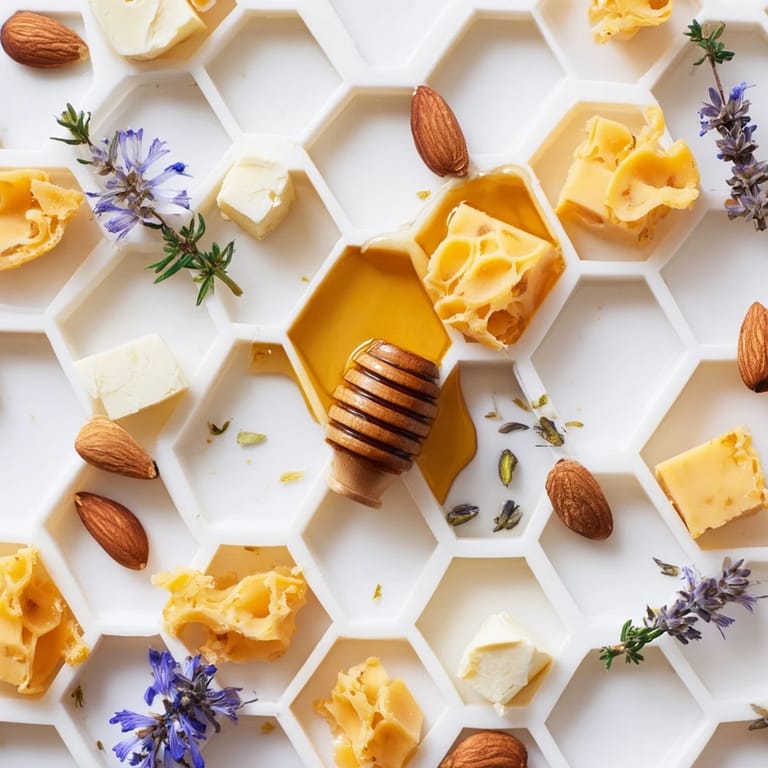
- This is where patience pays off. If you have a small hexagonal cookie cutter, use it—it's a game-changer. If not, a sharp knife and a steady hand work beautifully. Cut manchego and cheddar into uniform cubes roughly the size of dice. For brie, slice it gently into thin wedges or small cubes that won't lose their shape. Imagine you're building with architecture in mind, not just creating snacks.
- Find your board and envision the pattern:
- Lay out your large serving board and take a breath. This moment is about composition. Picture the interlocking hexagon pattern—how they nestle together like a puzzle. You might arrange them starting from the center and working outward, or build from one corner. There's no wrong way, only your way. The beauty is in the intentionality.
- Build your cheese foundation:
- Begin placing cheese hexagons snugly against each other, creating that interlocking honeycomb effect. Push them close enough that they support each other but still have tiny gaps between them. These gaps are where the magic happens—they're pockets for nuts and rivers for honey to flow through. Step back frequently. You're creating a pattern, and your eye is your best guide.
- Distribute your nuts with intention:
- Now fill those carefully created gaps with almonds and pistachios. This isn't random scattering—think of it as placing visual punctuation marks. Almonds go in some spaces, pistachios in others. The mix of textures and colors should feel balanced as you move across the board. You're not just filling gaps; you're creating visual rhythm.
- Apply the honey with a gentle hand:
- Slowly drizzle your honey across the entire creation. Watch it pool in the crevices, catch light, and create amber streams between the pale cheese and green nuts. Let some pool slightly—these little honey ponds are flavor bombs waiting to be discovered. A good drizzle is generous but not drowning.
- Crown it with garnishes:
- Scatter fresh thyme sprigs across the top like tiny herbs whisper wisdom. If using edible flowers, place them thoughtfully—perhaps one in the center of larger cheese sections or clustered in a few spots. This is your signature moment. Step back and admire what you've created.
- Serve with care:
- Bring this to the table with small forks or toothpicks ready. Announce it with a smile. Watch people's faces light up when they realize this isn't just a cheese board—it's a work of edible art.
 Save
Save At my best friend's promotion dinner, we gathered around this platter and nobody touched it for five minutes. Everyone was too busy photographing it, talking about the pattern, and asking how long it took. Then someone broke the spell by taking the first piece, and suddenly it became this shared moment of indulgence. We weren't just eating cheese—we were celebrating something beautiful together. That's when I understood that good food feeds more than just stomachs.
The Geometry of Good Taste
There's something deeply satisfying about arranging food into geometric patterns. It's not pretentious—it's actually the opposite. It's taking the simple pleasure of quality cheese and saying "this matters enough to present thoughtfully." Every time I make this platter, I'm reminded that presentation isn't about impressing people with effort; it's about respecting both the food and the moment we're sharing around it. The hexagon pattern works because it mimics nature itself. Honeycomb is one of nature's most efficient designs, and when you replicate that on a board, something resonates. People sense that intention without always knowing why it makes them smile.
Pairing and Serving Wisdom
This platter doesn't need much beyond itself, but thoughtful pairings elevate it beautifully. A crisp dry white wine—perhaps a Sauvignon Blanc or Pinot Grigio—cuts through the richness of the cheese while the wine's minerality plays against the honey's sweetness. Sparkling wine works too, especially Prosecco or a lighter Champagne. The bubbles provide contrast and keep the palate fresh as you move between the earthiness of nuts and the creaminess of cheese. I've also served it with a light aperitif like Vermentino, which feels both elegant and approachable. The key is choosing something that refreshes rather than competes. Avoid heavy reds—they overpower the delicate flavors you've carefully arranged.
Variations and Your Kitchen Creativity
Once you understand the formula—firm cheese, soft cheese, nuts, honey, garnish—you can play endlessly. I've made versions with gouda and gruyère, substituted candied walnuts for roasted almonds, drizzled with fig-infused honey instead of plain, and scattered fresh rosemary instead of thyme. For vegan friends, plant-based cheeses work if you choose firm varieties that won't collapse. Agave syrup replaces honey beautifully and even adds a subtle warmth. The magic isn't in the specific ingredients—it's in the care you take arranging them. That said, never compromise on the quality of your honey or your main cheeses. Those two elements are the soul of this dish.
- Try white cheddar paired with manchego for deeper flavor complexity
- Add pomegranate arils for tartness and dramatic pops of color
- Experiment with hot honey instead of plain—the subtle heat is unforgettable
 Save
Save This platter reminds me that hospitality isn't complicated—it's just about taking a moment to care. You've created something beautiful that nourishes both hunger and spirit.
Recipe Help & Answers
- → How do I achieve the perfect hexagonal cheese shapes?
Using a small hexagonal cookie cutter ensures uniform shapes, but careful cutting with a sharp knife also works well.
- → Can I use other types of cheese in this arrangement?
Yes, firm cheeses such as gouda or comté can be great alternatives for variation in flavor and texture.
- → Is there a substitute for honey in this platter?
Agave syrup or another mild floral syrup can replace honey, especially to accommodate vegan preferences.
- → What nuts complement the cheese best in this layout?
Roasted almonds and shelled pistachios add a crunchy texture and nutty flavor that pairs well with creamy cheeses.
- → How should I serve this cheese platter?
Serve immediately on a large board with small forks or toothpicks for easy picking and elegant presentation.