 Save
Save The first time I bit into a sabich at a Tel Aviv market stall, I understood why locals queue for it at lunch. The vendor worked with such ease, layering crispy eggplant and creamy tahini into warm pita like they were composing something sacred. I've been chasing that exact moment ever since, trying to replicate the way the fried eggplant stays golden and tender, how the tahini cools just enough to taste luxurious without being heavy. This recipe is what I've learned standing in my own kitchen, making sabich for friends who suddenly understand why I won't stop talking about it.
I made this for my sister on a summer evening when she was going through a phase of "I don't eat much anymore." Watching her finish her sabich and ask for another dollop of tahini told me something about how food works—it's not about being fancy, it's about being exactly what someone needed. She still texts me photos of sabich she finds at restaurants, comparing them to that night.
Ingredients
- Eggplant: Two medium ones, sliced into half-inch rounds, are the star; thinner slices get too soft, thicker ones stay tough inside.
- Salt: Use it on the eggplant first to pull out moisture, which is the secret to that crispy exterior.
- All-purpose flour: Just a light coating prevents the eggplant from absorbing too much oil.
- Vegetable oil: You need enough to create that golden-brown crust; don't be shy.
- Eggs: Four large ones, boiled until the yolk is just set but still bright yellow in the center.
- Tomatoes and cucumber: Dice them small so they nestle into the pita without falling out.
- Red onion: A quarter of one, thinly sliced, adds a sharp note that balances the richness.
- Fresh parsley: Two tablespoons chopped fine, not a heavy handful.
- Lemon juice: Freshly squeezed, always; bottled changes the whole character of the salad.
- Tahini paste: Half a cup of pure, good-quality tahini is non-negotiable; stir it well before measuring.
- Water: A quarter cup loosens the tahini into that creamy sauce; add it slowly and taste as you go.
- Garlic: Just one small clove, minced fine, so it doesn't overpower the delicate tahini.
- Pita bread: Buy it fresh the same day, or warm it in a dry skillet before serving.
- Amba sauce: This pickled mango condiment is optional but transforms the whole thing into something special.
- Cilantro and pickles: Garnishes that add brightness and crunch at the very end.
Tired of Takeout? 🥡
Get 10 meals you can make faster than delivery arrives. Seriously.
One email. No spam. Unsubscribe anytime.
Instructions
- Salt the eggplant and wait:
- Scatter salt across your eggplant slices and let them sit for fifteen minutes. You'll see beads of moisture form on the surface—this is what you want. Pat them completely dry with paper towels before you fry; wet eggplant steams instead of crisps.
- Flour and fry until golden:
- Dredge each slice lightly in flour, shaking off the excess. Heat your oil until a piece of eggplant sizzles immediately when it hits the pan, then fry until the edges turn deep golden brown, about two to three minutes per side. Drain on paper towels while they're still warm.
- Boil eggs to perfect tenderness:
- Place eggs in cold water, bring to a boil, then reduce heat and simmer for exactly nine minutes. This gives you a fully cooked white and a yolk that's set but still has a whisper of color in the center. Ice water bath immediately to stop the cooking.
- Make the salad fresh and bright:
- Toss tomatoes, cucumber, red onion, and parsley together with lemon juice, olive oil, salt, and pepper. Don't do this too early or the vegetables will weep; fifteen minutes before serving is perfect.
- Blend tahini into silk:
- Whisk tahini paste with water, lemon juice, minced garlic, and salt. The tahini will seize up at first, looking separated and grainy—keep whisking and adding water a tablespoon at a time until it becomes smooth and pourable. This transformation is magical and worth watching.
- Warm the pita and slice:
- If your pita is cold, run it through a dry skillet for a few seconds per side, or wrap it in foil and warm it in the oven. Slice each one open gently to create a pocket.
- Layer it like you mean it:
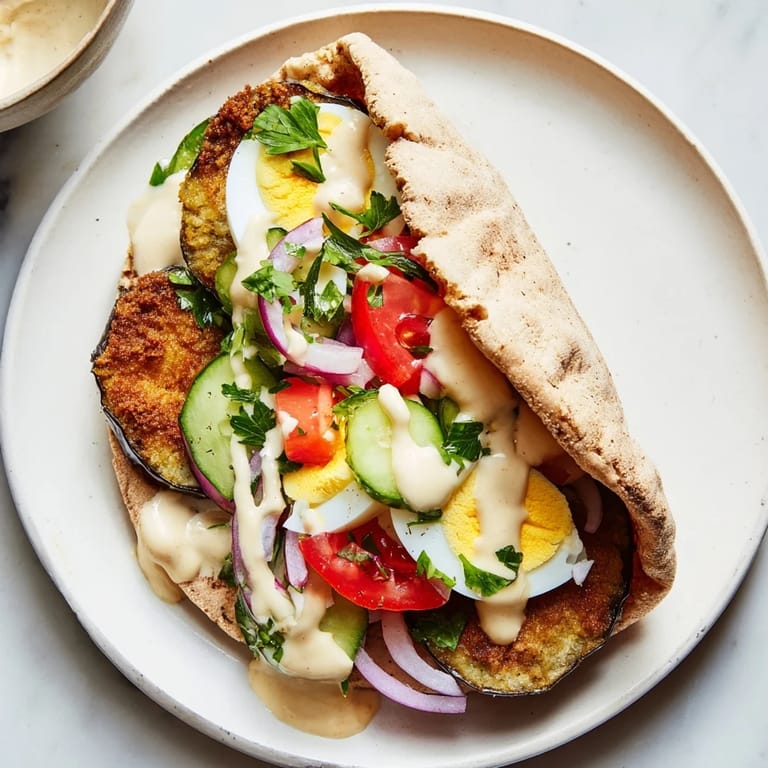
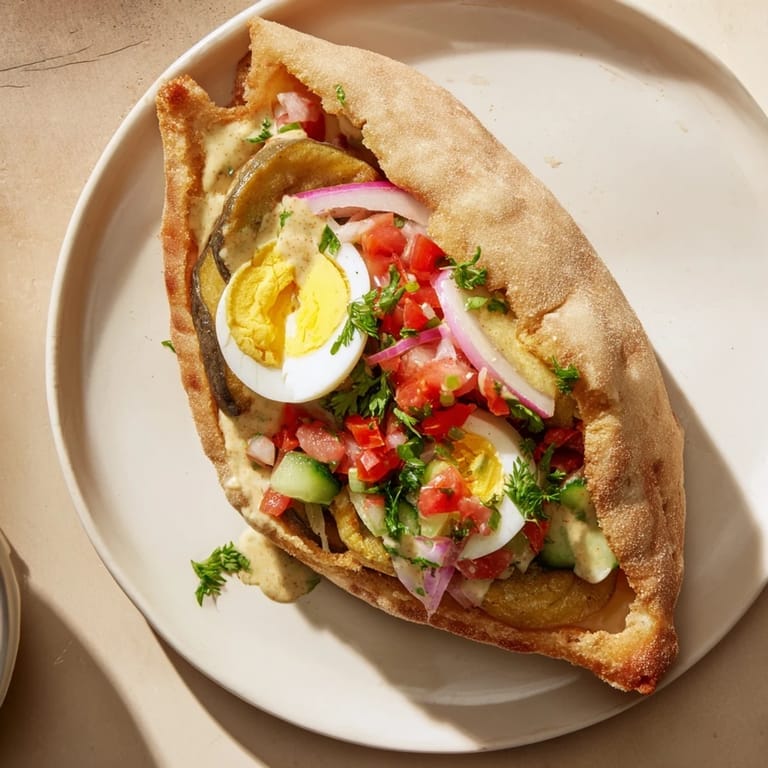
- Spread a spoonful of tahini sauce inside the pita, then add fried eggplant, a few slices of hard-boiled egg, a generous handful of Israeli salad, and a drizzle more tahini. If you're using amba, add it now along with pickles, cilantro, and a pinch of hot sauce.
- Serve while everything is still warm:
- The contrast of warm eggplant and sauce against cool crisp vegetables is part of the whole experience. Serve immediately with extra tahini and pickles on the side.
 Save
Save My neighbor, who grew up in Jerusalem, watched me make this once and offered only one suggestion: don't skimp on the tahini. She was right. The tahini isn't a drizzle; it's the binding force, the thing that holds the story together. When you get it right, sabich isn't just lunch—it's a conversation, a memory, a reason to gather someone to your table.
The Secret Life of Tahini
Tahini is sesame seeds ground into submission until they release their oils and become this thick, sometimes intimidating paste. The first time I opened a jar, I thought it was broken—separated, grainy, unappetizing. But here's what no one tells you: tahini wants to be whisked. Once you add liquid and commit to whisking, it transforms into something creamy and luxurious that coats your mouth and tastes faintly nutty and bright. That transformation is part of the magic of this dish.
Why Fried Eggplant Belongs Here
Eggplant has a reputation for being either soggy or bitter, and it deserves better. Salting it first solves both problems by drawing out the moisture and any harsh compounds. Then frying it briefly in hot oil turns the outside into a thin, crispy shell while the inside stays tender and almost buttery. It's not heavy or greasy if you do it right—it's a texture moment, the thing that makes someone say yes to eating eggplant when they normally wouldn't.
Building Layers, Creating Balance
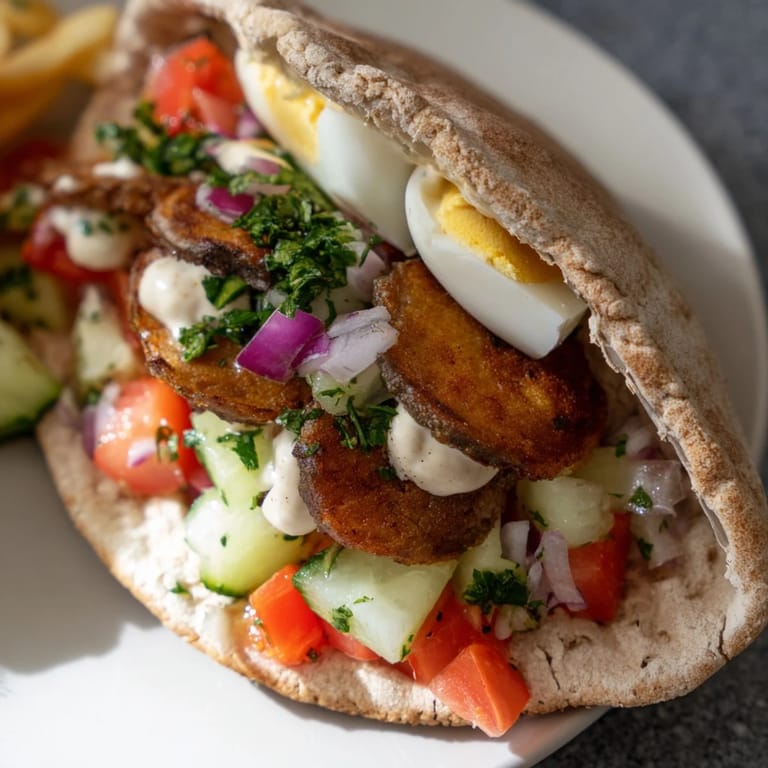
Sabich works because every element does something different. The warm fried eggplant is crispy and rich. The creamy tahini sauce cools and rounds it out. The Israeli salad, bright with lemon and fresh herbs, cuts through and lifts everything up. The hard-boiled egg adds protein and a touch of sulfury sweetness that somehow ties it all together. When you're assembling, think of it as building something delicate—each layer matters.
- Don't overfill your pita or it becomes impossible to eat; less is more elegant.
- Add hot sauce sparingly at first—you can always add more, but you can't take it back.
- Toast your pita until it's just warm, not crispy, so it still has enough give to hold everything.
 Save
Save Sabich is the kind of recipe that tastes complicated but isn't, which makes it perfect for weeknight dinners or when you want to feed people something memorable. Once you make it twice, it becomes yours to play with—add pickled turnips, use crispy halloumi instead of eggs, or pile on the cilantro. The frame is solid; you just have to learn to cook inside it.
Recipe Help & Answers
- → How do I achieve crispy fried eggplant slices?
Salt the eggplant slices and let them sit for 15 minutes to remove excess moisture, then pat dry. Lightly coat them in flour before frying in hot oil until golden brown on both sides.
- → What is the best way to prepare the tahini sauce?
Whisk tahini paste with water, fresh lemon juice, minced garlic, and salt until smooth and creamy. Adjust the water to reach the desired consistency.
- → Can I make a vegan version of this dish?
Yes, omit the boiled eggs or substitute them with tofu to keep it vegan while preserving the flavors.
- → What ingredients are used in the Israeli salad?
The salad combines diced tomatoes, cucumber, finely chopped red onion, fresh parsley, lemon juice, olive oil, salt, and pepper for a refreshing, tangy side.
- → Are there any common allergens to be aware of?
This dish includes gluten from pita and flour, sesame from tahini, and eggs. Gluten-free pita and egg substitutes can be used for dietary restrictions.
- → What optional toppings enhance the flavor?
Pickled mango sauce (amba), fresh cilantro, pickles, and hot sauce can be added as desired for extra zest and complexity.