 Save
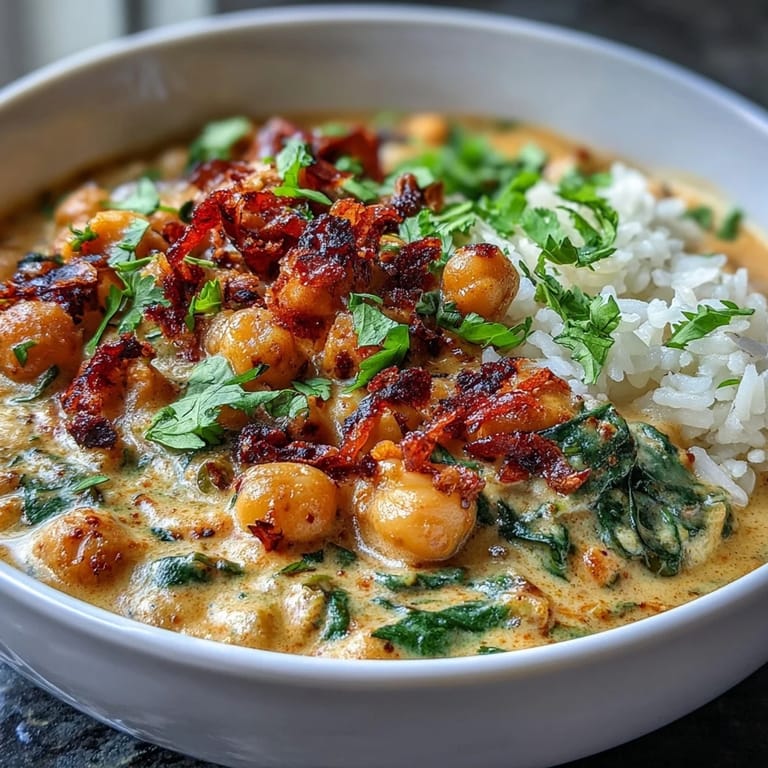
Save My kitchen smelled like a tropical beach the first time I threw together this mango coconut curry, and honestly, it was an accident born from desperation. I had twenty minutes before friends arrived, a can of chickpeas that needed rescuing from the back of my pantry, and a slightly overripe mango sitting on my counter. What emerged from that scramble was so vibrant and satisfying that I've made it at least twice a week since, each time discovering new layers in those few simple ingredients.
There's this moment I replay when my partner took one bite and just closed their eyes, and I realized I'd stumbled onto something that felt both comforting and adventurous at the same time. That's when I knew this wasn't just a weeknight fix—it was the kind of dish that sits somewhere between convenience and genuine care.
Ingredients
- Basmati or jasmine rice (1 cup): These varieties stay separate and fluffy rather than clumping, which matters when you're building a beautiful plate.
- Coconut oil (1 tbsp): It carries flavors better than neutral oils and adds a subtle richness that feels intentional.
- Onion, garlic, ginger (1 small onion, 2 cloves, 1-inch piece): This is your flavor foundation—don't skip any of it or rush the chopping, as the pieces help you know when they're ready.
- Red bell pepper (1, diced): It softens into the sauce while keeping its sweetness, and the color stays vivid if you don't overcook it.
- Fresh or frozen mango (1.5 cups): Ripe is crucial here; if your mango is still firm, the sauce will taste flat no matter what else you do.
- Canned chickpeas (1 can, drained and rinsed): Rinsing them removes the salty brine and helps them absorb the curry flavors instead of fighting them.
- Full-fat coconut milk (1 can): Don't reach for the light version unless you have to—the difference in creaminess and flavor is real and worth it.
- Curry powder (2 tbsp): Mild works if you're cooking for varied palates, but medium is where the personality comes through.
- Turmeric (1/2 tsp), salt (1/2 tsp), black pepper (1/4 tsp): These work together to deepen and ground the sweetness so it doesn't feel one-dimensional.
- Lime juice (1 tbsp): This is your secret weapon—it brightens everything and makes you wonder why you ever skipped it.
- Maple syrup or agave (1 tbsp, optional): Only add this if your mango tastes a bit sour or if you want the sauce to lean into dessert-like comfort.
- Fresh cilantro (1/4 cup, chopped): It's not just garnish; those fresh green notes are what make the first and last bites feel completely different.
Tired of Takeout? 🥡
Get 10 meals you can make faster than delivery arrives. Seriously.
One email. No spam. Unsubscribe anytime.
Instructions
- Start your rice first:
- Combine rice, water, and salt in a medium saucepan and bring to a boil. The water should look slightly frothy when it's ready. Drop the heat to low, cover it tight, and let it sit undisturbed for 12 to 15 minutes while you build the curry.
- Warm your coconut oil and soften the onion:
- Heat the oil in a large skillet over medium heat until it shimmers slightly. Add your chopped onion and listen for that gentle sizzle—it should sound quiet and steady. Stir it every minute or so until it turns translucent and starts to smell sweet, about 2 to 3 minutes.
- Add the aromatic trio:
- Toss in your minced garlic, grated ginger, and diced bell pepper all at once. The smell will shift immediately into something more complex. Keep stirring and let them cook for about 2 minutes until the raw edge softens and everything becomes fragrant.
- Build your sauce:
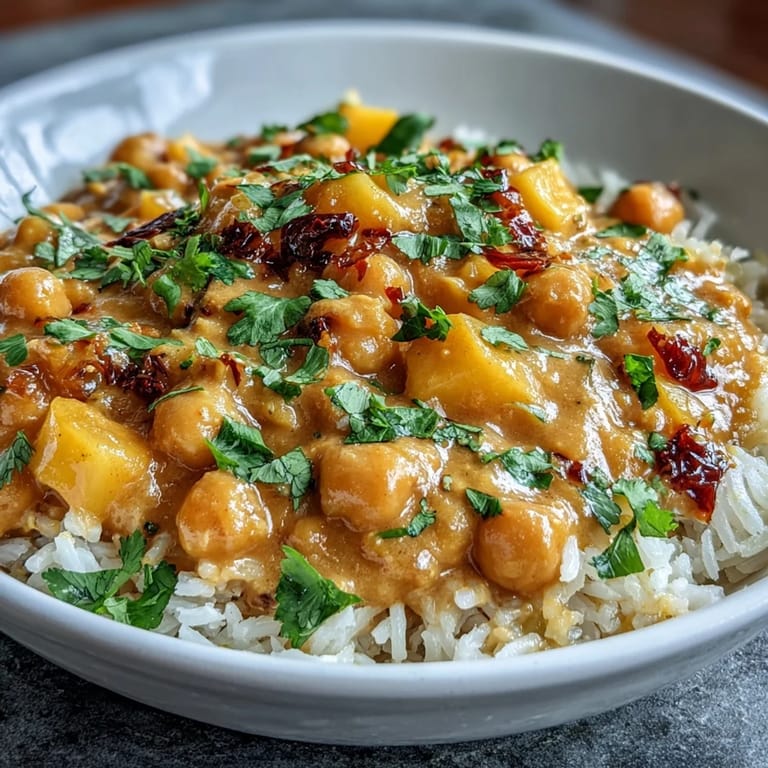
- Stir in the mango, chickpeas, coconut milk, curry powder, turmeric, salt, and black pepper. Mix it really well so the spices dissolve into the coconut milk rather than clumping at the bottom. The mixture should look golden and thick.
- Let it simmer and meld:
- Bring everything to a gentle simmer and let it bubble quietly for 6 to 8 minutes, stirring occasionally. You're not looking for a rolling boil—just gentle heat that lets the flavors talk to each other. The sauce will thicken slightly as it cooks, and the mango will soften into the background while staying recognizable.
- Finish with brightness:
- Turn off the heat and stir in your lime juice and the maple syrup if you're using it. Taste it and adjust—maybe more salt, maybe more lime, maybe nothing at all. Trust your instincts here.
- Plate and garnish:
- Fluff your rice with a fork (this matters more than you'd think) and divide it among bowls. Spoon the curry generously over the top and scatter cilantro across everything. That fresh green is your final flourish.
 Save
Save I'll never forget when my neighbor smelled this cooking through our shared wall and knocked asking what I was making. We ended up eating together, and she asked for the recipe immediately—not as a polite gesture, but genuinely wanting to know how something this good came together in twenty minutes. That's when I understood this dish had a kind of magic that transcends the speed it takes to make.
Why This Curry Works So Fast
The real trick is that chickpeas are already cooked, mango is already soft, and coconut milk is already rich. You're not fighting against raw ingredients that need tenderizing or coaxing. Instead, you're just bringing everything together long enough for the spices to bloom and the flavors to find each other. This is why it feels like you're cheating in the best way possible.
The Sweet and Savory Balance
This curry lives in that delicious middle ground between savory dinner and almost-dessert comfort. The mango brings a natural sweetness that the coconut milk amplifies, but the curry powder and turmeric keep everything grounded and complex. If your curry tastes too one-note sweet, you need more salt or lime; if it tastes too assertive, you need a tiny bit more coconut milk to round it out.
Variations and Swaps That Work
I've made this curry at least a dozen different ways, and it seems to know how to take care of itself. Some nights I use pineapple instead of mango for something brighter and more tart, other times I add a handful of spinach at the very end just to sneak in something green. I've even added a pinch of cayenne when I wanted heat, or swapped chickpeas for tofu when someone vegetarian-but-soy-loving came to dinner.
- Pineapple swaps in beautifully and makes the sauce taste more tropical and less creamy in character.
- A squeeze of extra lime juice at the table lets everyone adjust their own brightness level.
- This works over quinoa, cauliflower rice, or even crusty bread if you're out of rice.
 Save
Save This is the kind of recipe that reminds me why I love cooking—it asks so little of you and gives back something that feels generous and thoughtful. Every time I make it, I'm reminded that weeknight meals don't have to choose between quick and delicious.
Recipe Help & Answers
- → What type of rice works best with this curry?
Basmati or jasmine rice pairs perfectly, offering a fragrant, fluffy base that complements the creamy curry.
- → Can I adjust the spice level in this dish?
Yes, adding a pinch of cayenne pepper or chopped chili with the onion will increase the heat to your preference.
- → Is it possible to substitute mango in the dish?
Pineapple is a great alternative, providing a tangier sweetness that still blends well with the curry flavors.
- → What enhances the curry’s flavor profile the most?
Fresh ginger, garlic, and curry powder infuse warm, aromatic notes, while lime juice adds a bright, zesty finish.
- → Can I use light coconut milk instead of full-fat?
Light coconut milk can be used for a lighter version, though the curry will be less creamy and rich.