 Save
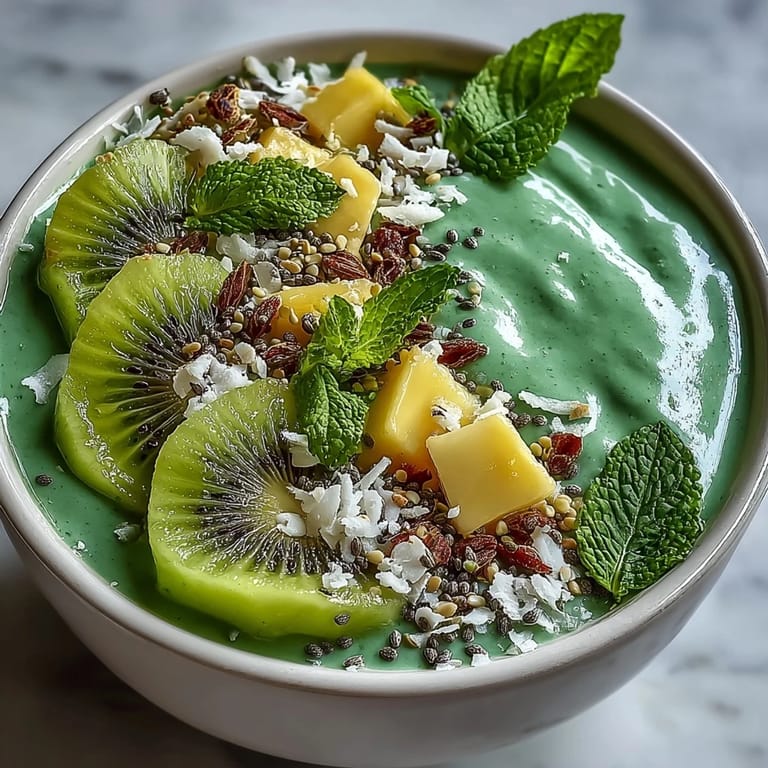
Save One morning, I was staring at my sad sad kitchen with nothing but frozen fruit and regret when I decided to blur the line between smoothie and bowl. What started as a lazy breakfast hack became this gorgeous tropical situation that my partner actually wanted to steal off my counter. The first time the mango-chia topping caught the light, I realized I'd accidentally made something that looked like it belonged in a wellness magazine, except it actually tasted like real food.
I made this for my friend who'd just declared she was going on a wellness journey, and I watched her face shift from skeptical to genuinely surprised. She came back the next week asking for the recipe, which honestly felt like the highest compliment a bowl of blended fruit could receive. Now it's become our Sunday morning ritual when we both need something that feels indulgent but actually fuels our bodies.
Ingredients
- Fresh spinach (packed, 1 cup): Spinach disappears entirely when blended, so don't hold back—it adds iron and creaminess without any leafy taste.
- Frozen banana (1, sliced): This is your base's best friend, creating that perfect creamy texture that feels almost like soft serve.
- Frozen pineapple chunks (1/2 cup): The tropical punch that makes every spoonful taste like you're somewhere warm and carefree.
- Frozen mango chunks (1/2 cup): Freeze your own if you can—the flavor is brighter than store-bought, and the bowl topping will thank you.
- Unsweetened coconut milk or almond milk (1/2 cup): Use whatever you have, though coconut gives a richer, more indulgent feel.
- Lime juice (1 tablespoon): This is the secret handshake that wakes everything up and prevents the smoothie from tasting flat.
- Chia seeds (1 tablespoon for base plus 2 teaspoons for topping): They absorb liquid and create this magical gelatinous texture when given a few minutes to work their magic.
- Fresh mango for topping (1/2 cup, diced): Use ripe mango here—it's what people see first, so let it shine.
- Coconut water (2 teaspoons for topping): This keeps the mango mixture spoonable without making it runny.
- Maple syrup (1 teaspoon, optional): Only add if your mango tastes slightly underripe.
- Kiwi slices (1/4 cup): The bright green adds visual contrast and a tartness that balances the sweetness.
- Coconut flakes (1/4 cup): Toast them briefly if you want them crunchier, or leave raw for a softer bite.
- Hemp seeds (1 tablespoon): These add a subtle nutty flavor and serious protein without being heavy.
- Gluten-free granola (1 tablespoon): This is your crunch insurance—choose one you actually like eating because it matters.
- Fresh mint leaves (optional): A few leaves scattered on top feel fancy but taste even better.
Tired of Takeout? 🥡
Get 10 meals you can make faster than delivery arrives. Seriously.
One email. No spam. Unsubscribe anytime.
Instructions
- Wake up the mango topping first:
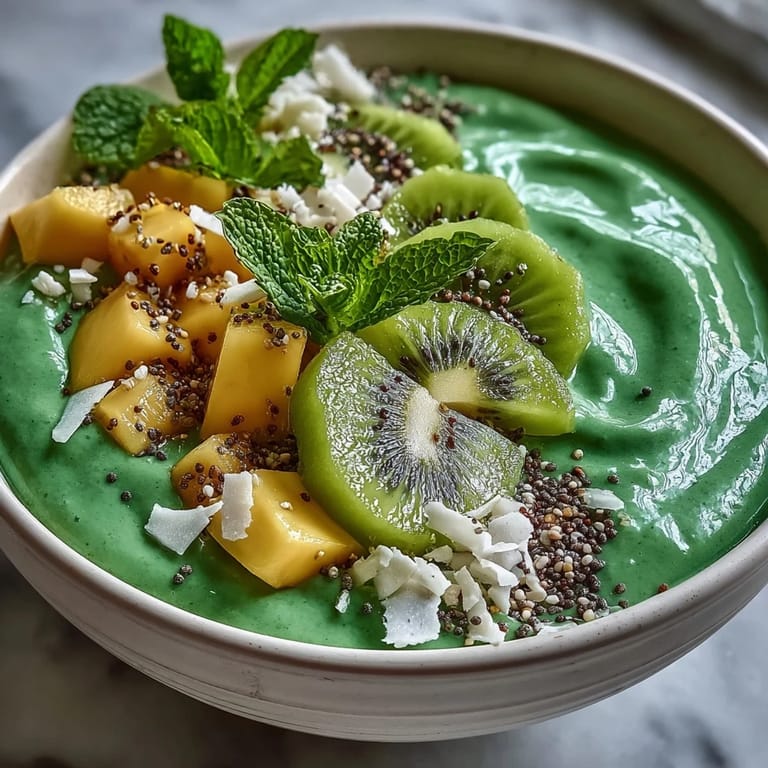
- In a small bowl, combine diced mango, chia seeds, coconut water, and maple syrup if using it. Stir everything together and let it sit for at least five minutes—the chia seeds will slowly absorb the liquid and create this beautiful glossy coating that clings to the mango.
- Build your smooth base:
- While the topping is getting thick, add spinach, frozen banana, frozen pineapple, frozen mango, coconut milk, lime juice, and one tablespoon of chia seeds to your blender. Blend everything until it's completely smooth and creamy, stopping to scrape down the sides as needed because frozen fruit gets stubborn sometimes.
- Pour it up:
- Divide your smoothie base between two bowls, filling them about three-quarters full so you have room for all the toppings without making a mess.
- Spoon on the good stuff:
- Top each bowl with half of your mango chia mixture, letting it pool slightly in the center.
- Get fancy with the toppings:
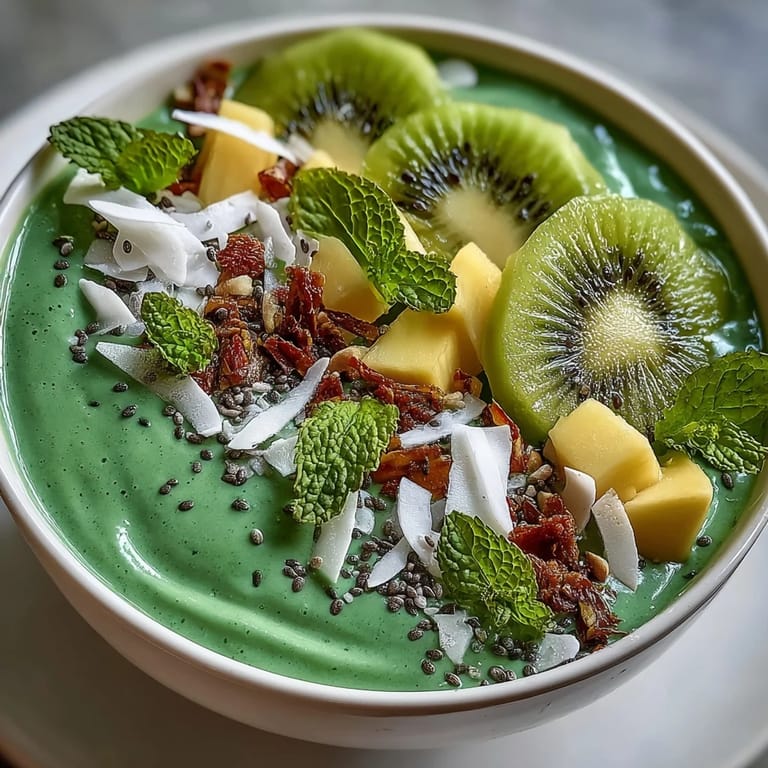
- Arrange kiwi slices, coconut flakes, hemp seeds, granola, and mint leaves across each bowl however looks beautiful to you—there's no wrong way to make something look this good.
- Eat it immediately:
- Serve right away with a spoon and eat standing up if you need to, because this is peak texture when everything's still cold and crunchy.
 Save
Save I'll never forget the moment my mom took a photo of this for her book club group chat. She's not usually one for health-focused meals, but something about the combination of textures and the way it looked made her want to share it, which says everything about how satisfying this bowl actually is. It became the bridge between her world and mine.
The Texture Game
The magic here isn't just the flavors working together—it's what happens when creamy meets crunchy. Your spoon hits soft base, then encounters granola crunch, then slides through the silky mango topping, then catches on coconut flake. Every bite should feel like three different textures happening at once, which means choosing toppings with intention. Don't just dump everything on top; think about how each element will actually feel in your mouth.
Making It Your Own
This bowl is honestly a suggestion more than a rule book. Some mornings I swap the spinach for kale if I'm feeling like something earthier, and other times I add a scoop of vegan protein powder because I'm heading into a long meeting and need actual fuel. The tropical fruit base stays consistent because it's what makes this taste like it's worth waking up for, but everything else bends to whatever you have and whatever you need.
Storage and Timing
This is a make-it-now, eat-it-now situation because keeping everything separate is the only way to protect the texture integrity. You can prep your toppings the night before and store them in containers, and you can freeze extra fruit whenever you see it on sale, but the actual assembly should happen when you're ready to eat. I learned this the hard way by preparing a bowl the night before, thinking I was being efficient—the granola went soft and the whole thing felt sad by morning.
- Prep all fresh ingredients the day before if you want to save time in the morning.
- Make sure your frozen fruit is actually frozen solid, not half-thawed, or your smoothie will be watery.
- Keep your blender bowl in the freezer for five minutes before blending if you really want maximum coldness.
 Save
Save This bowl has become my answer to the question of what breakfast actually tastes like when you're taking care of yourself. It's not sacrifice or restriction—it's genuinely delicious and happens to be good for you too.
Recipe Help & Answers
- → Can I substitute spinach with another green?
Yes, kale is a great alternative to spinach and provides a similar nutrient profile with a slightly earthier taste.
- → How do I make the mango chia topping thicker?
Allow the mango, chia seeds, coconut water, and syrup mixture to sit for at least 5 minutes to let the chia seeds absorb moisture and thicken.
- → What can I use instead of coconut milk?
Unsweetened almond milk or other plant-based milks work well as substitutes without altering the tropical flavor too much.
- → Is this smoothie bowl suitable for gluten-free diets?
Yes, as long as gluten-free granola is used and ingredient labels are checked for hidden gluten sources.
- → Can I add protein to this bowl?
Absolutely, adding a scoop of vegan protein powder to the smoothie base can increase its protein content without changing taste significantly.
- → How can I adjust the texture of the smoothie base?
Use more coconut milk for a thinner texture or less for a thicker, spoonable consistency perfect for bowls.