 Save
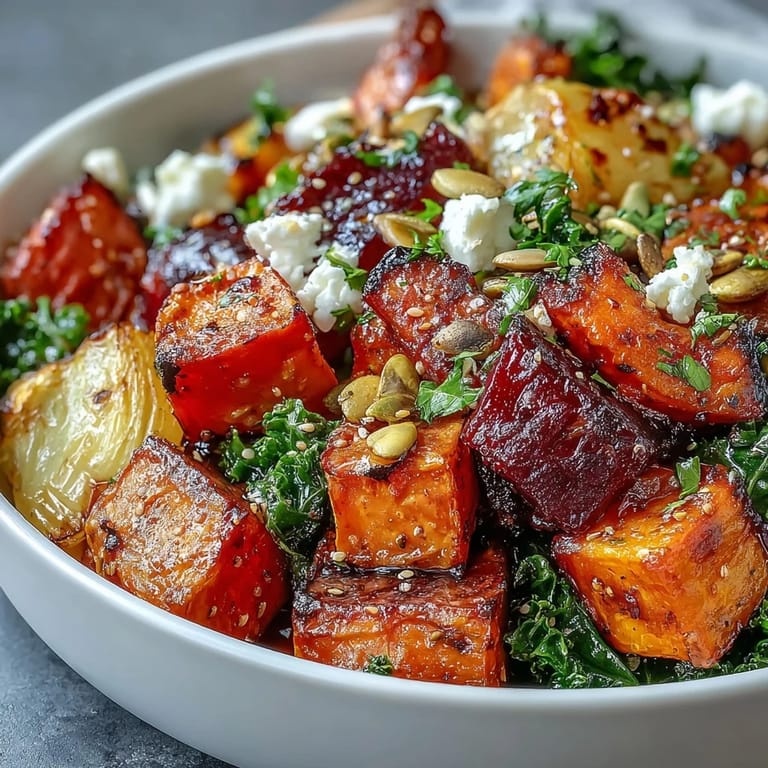
Save Last November, I found myself standing in front of a farmer's market stand piled high with root vegetables, unsure what to do with the strange purple beet the vendor kept insisting would change my life. That conversation led me here, to a bowl that became my answer to everything gray and cold about winter—turns out the vendor was right. There's something about roasting these humble vegetables until their edges caramelize that makes you forget you're eating something healthy. The warm dressing ties everything together in a way that feels less like lunch and more like a small act of self-care on a Tuesday afternoon.
I made this for my sister on a snowy Sunday when she'd been dealing with a rough week, and watching her face light up at that first bite—the warm dressing soaking into the massaged kale, the crunch of pepitas—reminded me that food can be honest. She asked for the recipe before she'd finished the bowl, and now it's become her go-to when she needs to feel like she's taking care of herself again.
Ingredients
- Carrots: The sweetness intensifies when roasted; choose ones that feel firm and never skip the halftime stir or they'll brown unevenly on one side.
- Parsnips: Creamy and slightly nutty when cooked, they're the unsung hero of roasted vegetable bowls and worth seeking out if you haven't used them before.
- Sweet potato: One small one is perfect—larger ones take longer and throw off your timing, which I learned the hard way.
- Beet: This is where the earthiness comes in; don't skip it even if it seems intimidating, and wear an apron because the juice stains.
- Olive oil: Use good oil, the kind you'd drizzle on bread, because it becomes part of the flavor story here.
- Thyme: Dried works beautifully; fresh gets lost during roasting, so stick with dried.
- Curly kale: The massage step is non-negotiable—it softens the leaves and makes them actually pleasant to eat without the bitterness overpowering everything else.
- Apple cider vinegar: The tangy backbone; regular vinegar tastes too sharp in comparison.
- Dijon mustard: Just a tablespoon emulsifies the dressing and adds sophistication without mustard flavor taking over.
- Honey or maple syrup: The balancing sweetness that makes the warm dressing feel complete; don't skip this.
- Shallot: Minced small, it softens into the oil and disappears while leaving subtle sweetness.
- Pumpkin seeds: Toast them yourself if possible—store-bought sometimes taste stale, and toasting takes two minutes and changes everything.
- Feta cheese: The creamy, salty finish; skip entirely for vegan or swap in dairy-free feta if you prefer.
Tired of Takeout? 🥡
Get 10 meals you can make faster than delivery arrives. Seriously.
One email. No spam. Unsubscribe anytime.
Instructions
- Set your oven to hot and line your pan:
- Preheat to 425°F with parchment paper ready—this prevents sticking and cleanup becomes almost pleasant.
- Toss and tumble your vegetables:
- In a large bowl, coat carrots, parsnips, sweet potato, and beet with olive oil, salt, pepper, and thyme, making sure every piece gets kissed with seasoning. Spread them out on the sheet in a single layer so they have room to breathe and develop color.
- Let the oven work its magic:
- Roast for 30 to 35 minutes, stirring halfway so nothing burns on the bottom or stays pale on top. You'll know they're ready when the edges are caramelized and a fork slides through easily.
- Soften your greens:
- While vegetables roast, take your torn kale and massage it with one tablespoon of olive oil and a pinch of salt, using your hands to break down the tough fibers. This makes each bite tender instead of chewy.
- Build your warm dressing:
- Heat three tablespoons of olive oil in a small skillet over medium heat, then add minced shallot and let it soften for about two minutes until it becomes fragrant. Whisk in apple cider vinegar, Dijon mustard, and honey or maple syrup, stirring until it feels cohesive, then taste and season with salt and pepper to your liking.
- Bring it together:
- Divide massaged kale among four bowls, mound roasted vegetables on top, and drizzle everything with the warm dressing while it's still hot. The heat helps the flavors marry together and makes the kale even softer.
- Finish with intention:
- Scatter toasted pumpkin seeds across each bowl for crunch and top with crumbled feta if using. Serve immediately so the warmth and textures remain distinct.
 Save
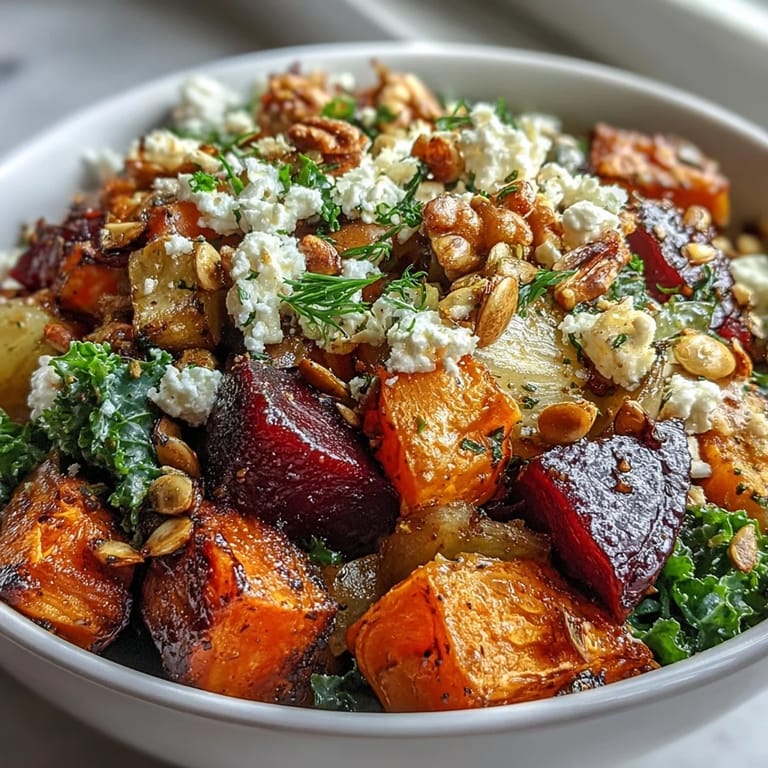
Save There's a moment, right after you pour that warm dressing over the cold greens and roasted vegetables, when steam rises and the colors deepen, and the whole thing transforms into something greater than its parts. That's when you know this isn't just a bowl—it's a moment of genuine nourishment.
Why Roasting Changes Everything
Raw root vegetables are one thing, but roasting them at high heat brings out a sweetness and depth that boiling or steaming never achieves. The caramelization that happens on the edges isn't just flavor—it's texture, it's visual appeal, it's proof that simple ingredients can become something special through patience and heat. I spent years avoiding root vegetables because I thought I didn't like them, until someone roasted them and suddenly everything made sense.
The Warm Dressing Philosophy
This dressing breaks the usual rule about dressings being cold, and that's exactly why it works so well here. The warm oil carries the flavors of shallot and mustard deeper into the kale, while the heat mellows any harshness from the vinegar. It feels elegant and simple but tastes like you spent way more effort than you actually did, which is the best kind of cooking secret.
Customization and Timing
The beauty of this bowl is how flexible it actually is—swap kale for spinach or chard without guilt, add quinoa or brown rice for heartiness, go fully vegan by skipping feta entirely. Just remember that the core of this dish is the roasted vegetables and warm dressing; everything else is you making it your own.
- Prep your vegetables the night before and store them in an airtight container so assembling is truly five minutes on a busy evening.
- Make extra warm dressing and keep it in a small jar for drizzling over leftovers the next day, or use it on salads throughout the week.
- Toast your pumpkin seeds fresh if you have time, but honestly, buying pre-toasted ones is a victory on nights when simplicity matters most.
 Save
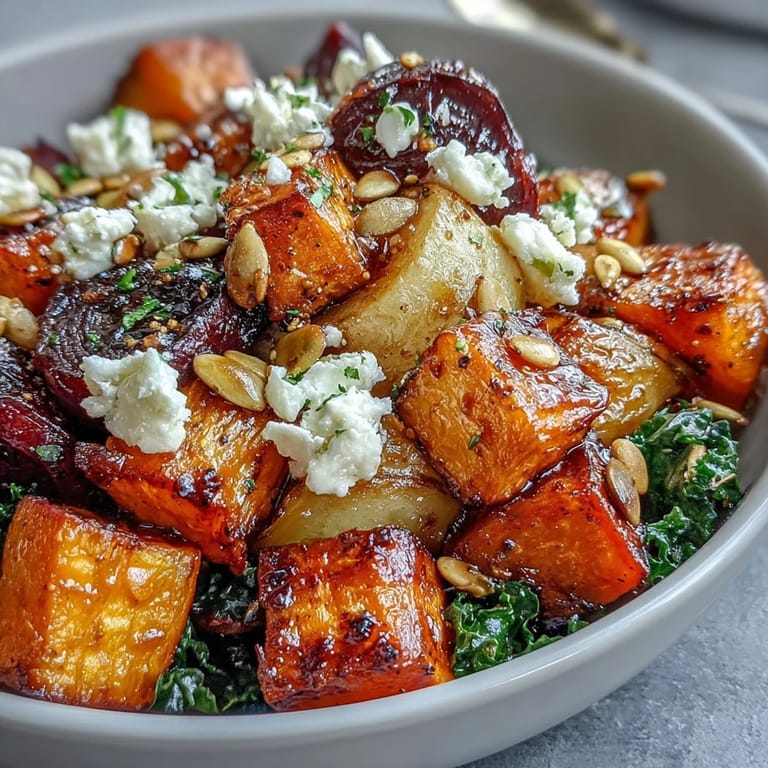
Save This bowl has become my quiet rebellion against winter, proof that eating well doesn't require complexity or time you don't have. Make it tonight, and you'll understand why people ask for the recipe.
Recipe Help & Answers
- → Can I prepare the vegetables ahead of time?
Yes, you can peel and cut the root vegetables up to a day in advance. Store them in an airtight container with cold water to prevent browning. Drain and pat dry before roasting.
- → What other root vegetables work well in this bowl?
Turnips, rutabaga, celery root, or winter squash like butternut and acorn all roast beautifully. Keep the pieces uniform in size for even cooking.
- → How do I store leftovers?
Store components separately in the refrigerator for up to 4 days. Keep the dressing in a small jar and reheat gently before serving. The vegetables can be eaten cold or at room temperature.
- → Can I make this without an oven?
The root vegetables can be pan-roasted in a large skillet over medium-high heat, though they won't caramelize quite the same way. Cut them into smaller pieces to ensure they cook through.
- → Is this bowl freezer-friendly?
The roasted vegetables freeze well for up to 3 months. However, the kale and dressing are best enjoyed fresh. Prepare the vegetables in bulk and freeze portions for quick future meals.
- → What protein can I add to make it more filling?
Chickpeas, white beans, or lentils pair naturally with the flavors. For non-vegetarian options, roasted chicken or crispy pancetta work well too.