 Save
Save There's something almost magical about arranging a board that tells a story through color and flavor. One December evening, as darkness fell early and the house felt quieter than usual, I found myself drawn to the kitchen with an idea: what if I could capture the very feeling of the winter solstice on a single board? The shortest day seemed like the perfect moment to celebrate balance—rich and mysterious on one side, bright and hopeful on the other. What started as a simple gathering of cheeses and fruits became something I looked forward to making every winter since.
I remember serving this to friends on a winter afternoon when conversation had gone quiet and stale. Someone reached for a piece of dark chocolate and fig, then immediately tried the pear and honeycomb on the other side, and suddenly everyone was tasting across both halves, commenting on how the flavors spoke to each other. That simple shift from eating one side at a time to discovering the interplay between them felt like watching people understand the board's whole point without me having to explain a thing.
Ingredients
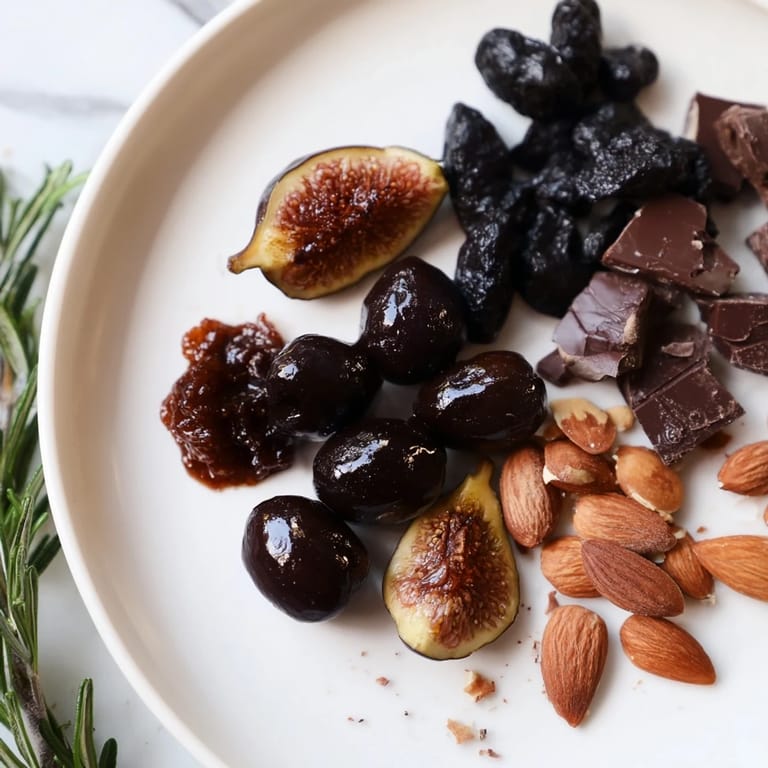
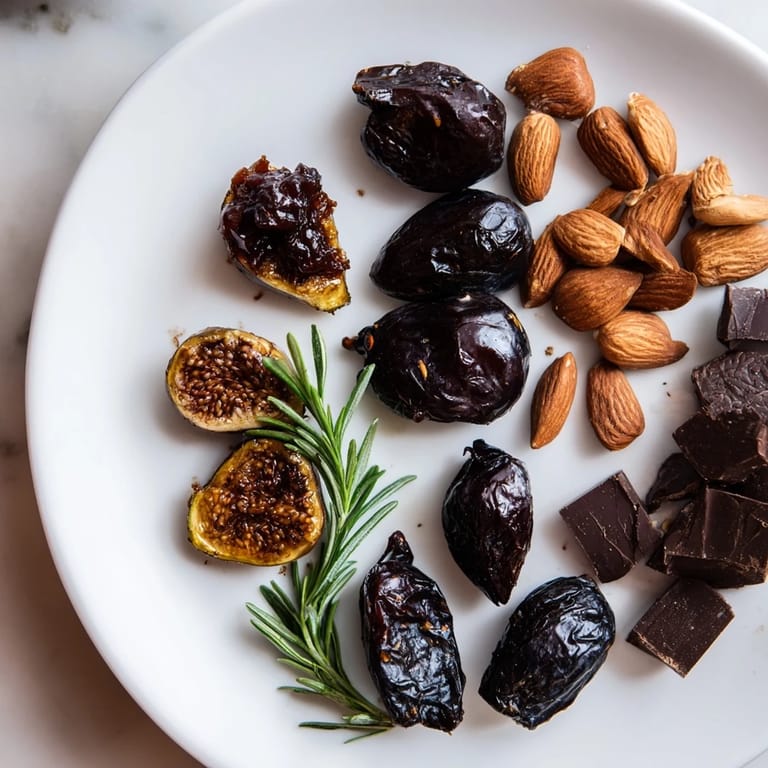
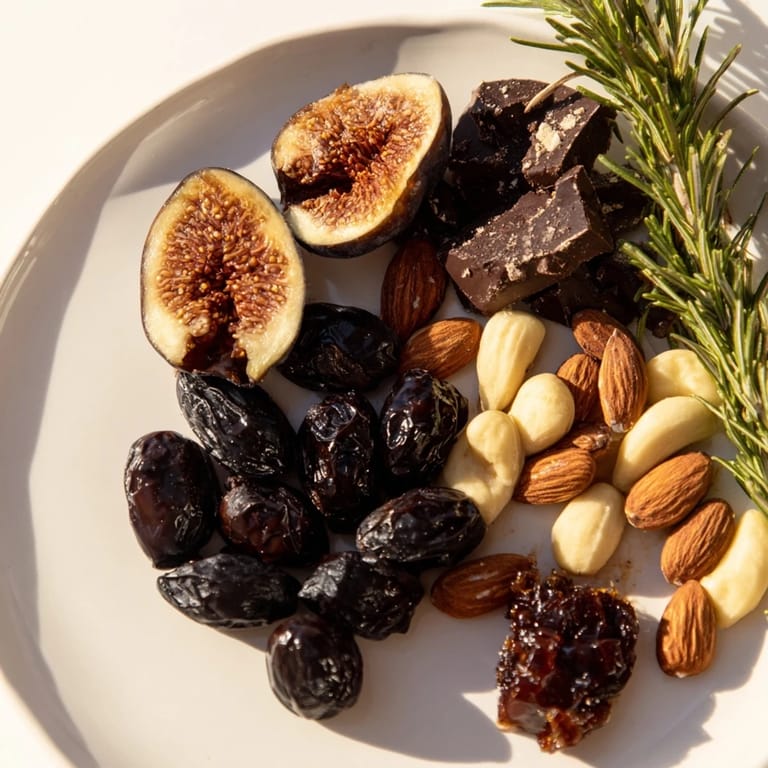
- Kalamata olives: Use pitted ones to save guests the small surprise of a pit mid-bite; the briny, buttery flavor anchors the dark side.
- Oil-cured black olives: These are deeper and more intense than Kalamatas, adding complexity and texture variation.
- Dried mission figs: Halving them prevents them from dominating the board visually and makes them easier to eat; their natural sweetness bridges the salty and the bright.
- Fig jam: A small dollop adds glossy richness and gives guests something to spread on crackers without much effort.
- Dark chocolate: Break it into uneven pieces rather than neat squares—it looks more inviting and feels more natural on a board.
- Roasted almonds: Toast them yourself if you can; store-bought roasted ones taste sharper, almost peppery, which surprisingly works beautifully here.
- Fresh rosemary: A single sprig is both garnish and divider, releasing its piney scent when guests brush past it.
- Ripe Brie cheese: Choose one that yields slightly when pressed but isn't oozing; it should smell faintly nutty and creamy, a sign it's at its peak.
- Pears: Slice them no more than 15 minutes before serving so they don't brown, and slice them thin enough to pair easily with cheese.
- Honeycomb or honey: Honeycomb adds texture and a delicate floral note; if using liquid honey, drizzle it into a small ramekin so guests can dip rather than spread.
- Toasted walnuts: Their earthiness softens slightly against the sweetness of pears and honey, creating a quiet harmony.
- Seedless green grapes: Their slight tartness cuts through richness and their round shape creates visual rhythm alongside everything angular on the board.
- Fresh thyme: A small bunch mirrors the rosemary on the dark side and adds an herbal whisper to the light side's sweetness.
- Baguette slices: Toast them lightly if your board will sit out longer than 20 minutes; it keeps them crisp and gives them a subtle caramelized note.
- Assorted crackers: Mix textures—some thin and delicate, some seeded or hearty—so there's a vehicle for every pairing someone might want to try.
Tired of Takeout? 🥡
Get 10 meals you can make faster than delivery arrives. Seriously.
One email. No spam. Unsubscribe anytime.
Instructions
- Divide your board:
- Use a line of fresh rosemary sprigs or a deliberate row of crackers running down the center to create a visual and conceptual split. This simple act transforms a board into a narrative.
- Build the dark side:
- Start with olives clustered in two or three spots rather than one scattered mass, then tuck figs between them, add a small ramekin of fig jam, scatter dark chocolate pieces, and nestle almonds into gaps. The arrangement should look intentional but not rigid—like you were thinking about balance while placing each element.
- Compose the light side:
- Place the Brie slightly off-center so it feels like it's the side's focal point, fan pear slices in a gentle arc nearby, add honeycomb (or a small bowl of honey for drizzling), scatter walnuts, and distribute grapes as little jewels of color. Let the garnish of thyme fall casually across the top.
- Add your accompaniments:
- Arrange baguette slices and crackers along the center divide or on a separate small plate so they don't crowd the artistry of the board itself. This also makes it easier for guests to help themselves without disrupting your composition.
- Serve at room temperature:
- Pull the board from the fridge about 10 minutes before guests arrive so the Brie softens slightly and all the flavors wake up. Room temperature is where cheese and fruit speak most honestly.
 Save
Save The first time someone noticed the board's intention—that it truly was meant to represent the turning of the year, the balance of darkness giving way to light—I realized this wasn't just a pretty thing to eat. It was a quiet ritual, something that made sense to arrange in December when you need a little extra meaning in the dark afternoons.
The Art of the Cheese Board
Building a cheese board is one of those kitchen skills that looks effortless once you understand the logic beneath it. You're not trying to fit everything neatly into corners; you're creating rhythm with repetition and contrast. Two or three olives clustered together reads as more intentional than seven scattered across the board. Leaving breathing room between elements makes each ingredient feel considered rather than crowded. The board becomes a kind of edible conversation, with the flavors and textures asking questions and answering each other.
Seasonal Flexibility
While this board is designed for winter, its philosophy adapts beautifully to any season. In spring, swap the figs for fresh strawberries and choose a lighter cheese like goat cheese or ricotta salata. Summer calls for stone fruits, burrata, and basil instead of rosemary. Autumn invites you to play with roasted grapes, aged cheddar, and candied nuts. The seasonal shift isn't just about ingredients—it's about capturing the mood of the moment on your board, whether that's the introspection of winter or the abundance of fall.
Pairing and Serving
The best cheese boards are meant to be grazed on slowly, with people drifting back to them throughout an afternoon or evening. Think about what you're pouring alongside it: a dry sparkling wine echoes the brightness of the pear side, while a light-bodied red wine like Pinot Noir mirrors the earthy complexity of the dark side. If you're serving this without wine, even cold cider or sparkling water makes the flavors feel more intentional.
- Don't overthink pairing—let guests discover their own favorite combinations by moving between both sides of the board.
- Keep the board at room temperature so cheeses stay supple and all flavors reach their best expression.
- Small bread and crackers should feel like supporting players, not the main attraction, so resist the urge to overstock them.
 Save
Save This board has become my winter answer to the question of what to make when time is short but the moment feels like it deserves something beautiful. It's proof that the most striking things to eat sometimes require the least effort in the kitchen.
Recipe Help & Answers
- → How do I create a clear division on the board?
Use a sprig of rosemary or line up crackers down the center of the board to separate the dark and light sides distinctly.
- → Can I substitute the Brie cheese?
Yes, soft cheeses like Roquefort or Camembert work well as alternatives depending on your taste preference.
- → What pairs well with this board?
A dry sparkling wine or a light-bodied red complements the mix of savory and fresh flavors beautifully.
- → Are there options for adding protein to the board?
For non-vegetarians, prosciutto slices can be added to either side to introduce savory, meaty notes.
- → How can I make the board gluten-free?
Replace the baguette and crackers with gluten-free alternatives to accommodate gluten sensitivities.
- → What nuts are included and can they be swapped?
Roasted almonds and toasted walnuts are used, but you can substitute with preferred varieties like pecans or cashews.