 Save
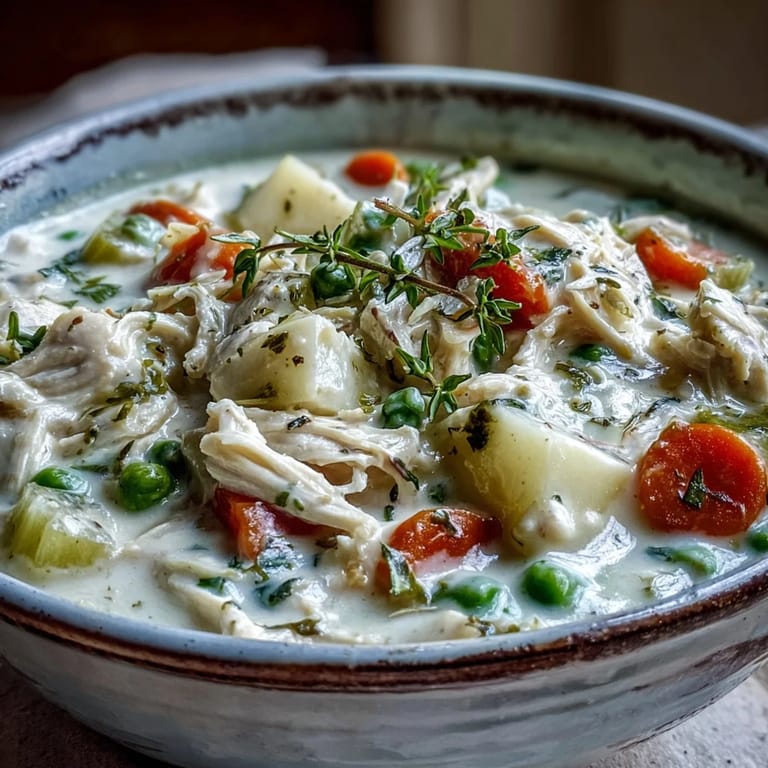
Save There's something about a bowl of creamy chicken soup that stops time. My neighbor brought this over one particularly gray Tuesday when I'd been wrestling with a work project all morning, and the smell of it warming on my stove shifted something in me immediately. It tastes like the idea of chicken pot pie but arrives in a bowl, no fuss, no crimping pastry edges at midnight. The first spoonful—tender chicken, buttery vegetables, that earthy whisper of thyme—felt less like dinner and more like someone saying, it's going to be okay.
I made this for my book club last fall when everyone showed up looking frazzled, and it became the thing people still ask me about. Nobody wanted dessert that night—they just wanted more soup. I watched someone dip crusty bread into it with that quiet, unselfconscious pleasure you only see when food is genuinely nourishing. That's when I knew this wasn't just a recipe; it was a way to say something without words.
Ingredients
- Unsalted butter (2 tablespoons): The foundation that makes everything else taste better, and using unsalted lets you control the salt completely.
- Yellow onion, carrots, celery, and potatoes: This is your flavor base, and dicing them the same size means they cook evenly—a small thing that actually matters.
- Frozen peas (1 cup): They add sweetness and texture without requiring any prep, and honestly, frozen is often fresher than fresh.
- Garlic cloves (3, minced): Mince them fine and add them after the softer vegetables so they perfume the soup without turning harsh.
- Dried or fresh thyme (1 teaspoon or 1 tablespoon): Thyme is the quiet hero here—it's what makes this taste like pot pie and not just creamy chicken soup.
- Bay leaf (1): Add it and forget it, then remember to fish it out at the end because nobody wants that papery surprise in their spoon.
- All-purpose flour (1/4 cup): This creates a roux that thickens the soup naturally and makes it silky instead of watery.
- Low-sodium chicken broth (4 cups): Low-sodium gives you control; full-sodium will make the soup oversalted by the end.
- Whole milk and heavy cream (1 cup each): Together they create that luxurious mouthfeel, though you can use half-and-half for lighter results.
- Rotisserie chicken, shredded (3 cups): Buy it already cooked and shredded if you can—this is where you save time and still get restaurant-quality soup.
- Salt and black pepper: Taste as you go because salt levels shift once the cream goes in.
- Fresh parsley (2 tablespoons, chopped): It's optional but adds a brightness that lifts the whole bowl, especially if you're serving it to people you want to impress.
Tired of Takeout? 🥡
Get 10 meals you can make faster than delivery arrives. Seriously.
One email. No spam. Unsubscribe anytime.
Instructions
- Start with the vegetables:
- Melt butter in a large pot over medium heat, then add onion, carrots, celery, and potatoes. Let them soften for 5 to 7 minutes, stirring occasionally so nothing sticks—you're building flavor, not browning.
- Wake up the aromatics:
- Stir in garlic, thyme, and bay leaf and cook for just one minute until the kitchen smells like herbs and comfort. Don't skip this moment; it's when the magic starts.
- Make your roux:
- Sprinkle flour over everything and stir constantly for 2 minutes to cook out the raw flour taste. This is your thickening agent, so don't rush it.
- Build the broth:
- Gradually whisk in chicken broth while scraping up any browned bits from the bottom of the pot—those bits are flavor you don't want to leave behind. Bring it to a gentle simmer.
- Add the cream:
- Pour in milk and heavy cream, stirring gently to combine, then let everything simmer for 15 to 20 minutes while the potatoes soften and the soup thickens. Stir occasionally and taste; this is when you're close.
- Finish strong:
- Add the shredded chicken and frozen peas, cook for 5 minutes until heated through, then season with salt and pepper to your taste. Fish out the bay leaf and you're done.
 Save
Save  Save
Save The first time I made this for my sister during her divorce, she cried into the bowl. Not because it was sad, but because it was warm and it was made for her, and sometimes that's the only language that works. Food is small and enormous at the same time.
The Secret to Silky Soup
The roux—that mixture of butter and flour cooked together—is what separates a thin, watery soup from something that coats your spoon. I learned this the hard way by skipping it once and ending up with something closer to broth. The roux needs to cook long enough to lose the raw flour taste, but you're not browning it like you would for a dark sauce. It's a pale, almost humble-looking paste, but it transforms everything that comes after. If you whisk the broth in slowly while whisking constantly, you avoid lumps and end up with a velvety texture that feels much more intentional than it actually is.
Why Rotisserie Chicken Is Your Best Friend
Using rotisserie chicken instead of cooking your own saves time without sacrificing anything, which is the dream. The chicken is already seasoned and tender, so you're not wrestling with tough, stringy meat. Shred it yourself right before adding it to the soup rather than buying pre-shredded, because the texture holds up better and tastes fresher. I usually buy the chicken, remove the skin and bones in about 3 minutes, then shred it directly over the pot so the natural juices fall into the broth. It's one of those small shortcuts that feels almost clever because you're not actually cutting corners.
Variations and Finishing Touches
This soup is forgiving and loves adaptation. If you want it lighter, swap the heavy cream for half-and-half or use all milk, though you'll lose some of that silky richness. You can use frozen mixed vegetables if chopping vegetables feels like too much—just add them at the same time you'd add fresh ones. Serve it plain in a bowl or make it feel fancy by topping with baked puff pastry squares, which actually gives you the pot pie experience without the pastry-making stress. Some people add a splash of white wine where the broth goes, or a pinch of nutmeg, and both work beautifully if that's your instinct.
 Save
Save 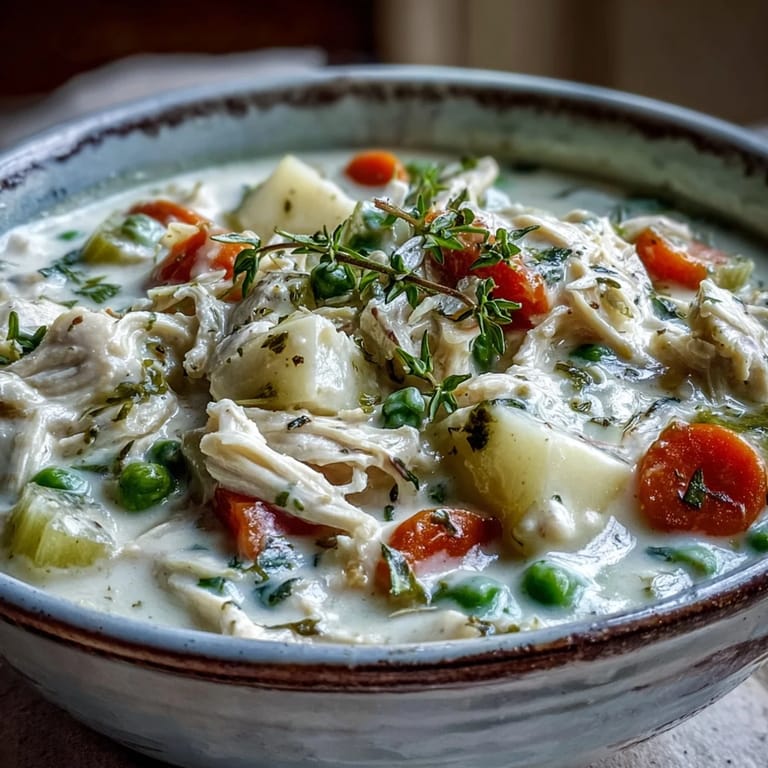 Save
Save This soup is a small kindness you give yourself or someone else, a reminder that comfort food doesn't have to be complicated. Make it when you need to slow down, when someone you love needs tending to, or just because Tuesday exists and deserves something warm in a bowl.
Recipe Help & Answers
- → Can I make this soup ahead of time?
Yes, this soup reheats beautifully. Prepare it up to 3 days in advance and store in the refrigerator. The flavors often deepen overnight. Reheat gently over medium-low heat, adding a splash of milk or broth if it has thickened too much.
- → What can I substitute for rotisserie chicken?
Leftover cooked chicken from any source works perfectly. You can also poach 2 boneless, skinless chicken breasts in the broth during step 4, then shred and add back in. For a vegetarian version, omit the chicken and add extra vegetables or white beans.
- → How can I make this soup lighter?
Replace the heavy cream with half-and-half, evaporated milk, or additional whole milk. The soup will still be creamy but with less fat. You can also reduce the butter to 1 tablespoon and use more broth instead of dairy.
- → Can I freeze this soup?
Freezing is possible, though dairy-based soups can sometimes separate when thawed. For best results, cool the soup completely before freezing in airtight containers for up to 3 months. Thaw overnight in the refrigerator and reheat slowly, whisking to recombine.
- → What should I serve with this soup?
Crusty bread, garlic knots, or buttery crackers are perfect for soaking up the rich broth. For a pot pie experience, top with baked puff pastry squares or biscuits. A simple green salad with vinaigrette provides a nice contrast to the creamy soup.
- → Can I use fresh herbs instead of dried?
Absolutely. Use 1 tablespoon fresh thyme leaves instead of 1 teaspoon dried. Fresh rosemary or sage also work well—add them during the last 5 minutes of cooking to preserve their delicate flavor. Garnish with additional chopped fresh herbs for brightness.