 Save
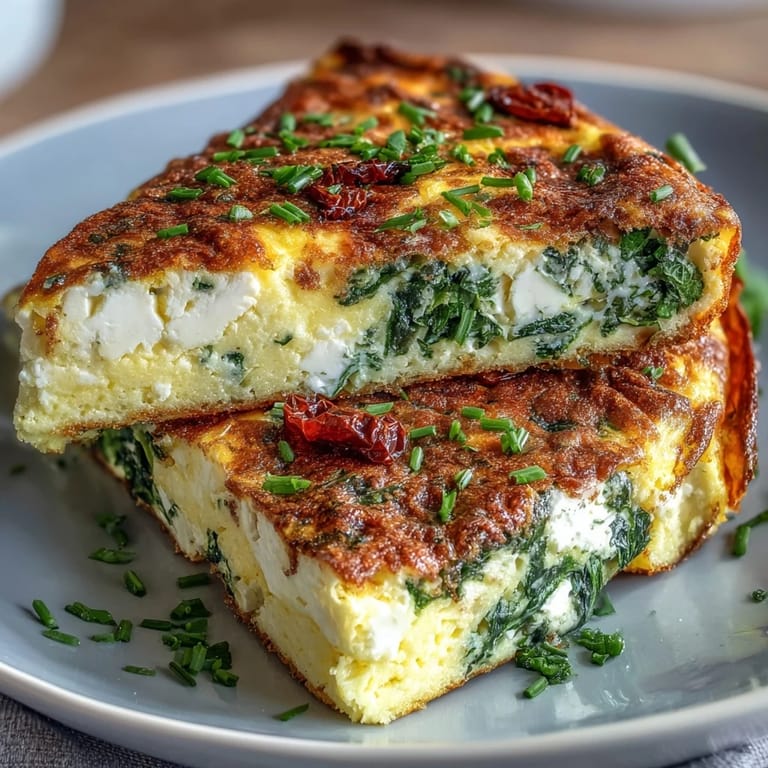
Save There's something about a frittata that turns a quiet Sunday morning into something worth celebrating. My neighbor knocked on the door with a bag of sun-dried tomatoes from her garden project, and I found myself rummaging through the fridge—spinach, eggs, feta—suddenly aware that the best meals happen when you stop overthinking and start cooking. Twenty minutes later, the kitchen smelled like oregano and caramelized onions, and she was already asking for the recipe.
I made this for a group of friends who'd all gone vegetarian that month, and watching them go quiet mid-bite told me everything I needed to know. The frittata sat there golden and steaming, and somehow it felt like I'd cooked something that actually mattered to them.
Ingredients
- Fresh baby spinach (2 cups): Raw spinach wilts dramatically in the pan, so don't be alarmed by how much you're adding—it shrinks to almost nothing.
- Sun-dried tomatoes (1/2 cup, jarred in oil): Drain them well or your frittata gets watery, but save that oil for salad dressing if you're smart about leftovers.
- Yellow onion (1 small, finely chopped): The onion needs those 3-4 minutes to soften and turn sweet; rushing it leaves a sharp bite.
- Garlic (1 clove, minced): Just one clove keeps things balanced—too much and it overpowers the delicate feta.
- Large eggs (6): Room-temperature eggs whisk smoother and incorporate air better, making the frittata fluffier.
- Whole milk (1/4 cup): This adds creaminess without heaviness; if you only have heavy cream, use less.
- Feta cheese (1/2 cup, crumbled): Buy it fresh if you can—the tanginess makes this dish sing, and pre-crumbled feta tastes dusty by comparison.
- Parmesan cheese (1/4 cup, grated): A little goes a long way for that golden top and nutty undertone.
- Dried oregano (1/2 tsp): Mediterranean herbs are the backbone here; don't skip this.
- Black pepper and salt (1/4 tsp each): Taste as you go since feta is already salty.
- Olive oil (2 tbsp): Good oil matters—cheap oil makes everything taste thin and cheap.
Tired of Takeout? 🥡
Get 10 meals you can make faster than delivery arrives. Seriously.
One email. No spam. Unsubscribe anytime.
Instructions
- Heat your oven and skillet:
- Preheat to 375°F while you set up your ovenproof skillet on medium heat with the olive oil. You want the pan hot enough that the oil shimmers but not so hot it smokes.
- Build your flavor base:
- Add the chopped onion and let it cook for 3-4 minutes, stirring occasionally, until it turns translucent and soft. The kitchen will start to smell incredible as the onion caramelizes slightly.
- Finish the vegetables:
- Add the minced garlic and cook for just 1 minute—this prevents it from burning. Stir in your spinach and watch it collapse into tender strands, then add the sun-dried tomatoes and give everything one more minute.
- Make the egg base:
- In a separate bowl, whisk your eggs and milk together until well combined, then stir in the oregano, salt, and pepper. Fold in the crumbled feta and grated Parmesan so the cheese distributes evenly.
- Combine everything:
- Pour the egg mixture over the vegetables and gently stir once or twice to blend. Let it cook on the stovetop for 2-3 minutes until you see the edges starting to set and look slightly opaque.
- Finish in the oven:
- Carefully transfer your skillet to the oven and bake for 10-12 minutes until the center is just set—it should jiggle very slightly in the middle when you give the pan a gentle shake. The top will turn a soft golden color.
- Rest and serve:
- Remove the skillet from the oven using an oven mitt and let it cool for a few minutes so the frittata sets up and becomes easier to slice. Serve it warm or at room temperature—both are equally delicious.
 Save
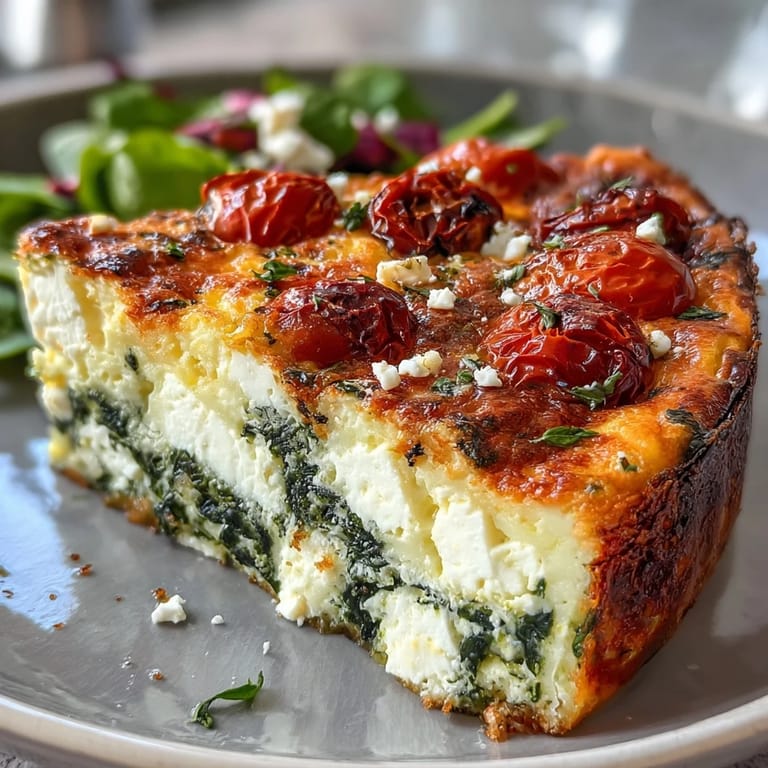
Save The first time I served this to someone I was trying to impress, I watched them take a bite and soften—not in that polite way, but genuinely. It turned out frittatas are the kind of dish that makes people feel cared for, like you took time to think about what they'd enjoy.
Why an Ovenproof Skillet Changes Everything
The oven finish is what separates a frittata from a scrambled egg situation. By starting on the stovetop, you get a slight crust on the bottom and let the edges set, then the gentle heat of the oven cooks the center through without scrambling the eggs or turning them rubbery. It's the difference between something rushed and something that feels composed.
Making It Your Own
Frittatas are forgiving teachers if you want to experiment. Swap the spinach for arugula or kale, use roasted red peppers instead of sun-dried tomatoes, or add crumbled sausage if you want protein beyond eggs. The technique stays the same, so you're just playing with flavors.
- Frozen spinach works perfectly fine if you thaw it thoroughly and squeeze out every bit of moisture.
- Fresh herbs like dill or basil can replace the oregano if that's what you have on hand.
- Leftovers keep for three days in the fridge and taste good straight from the container.
Pairing and Serving
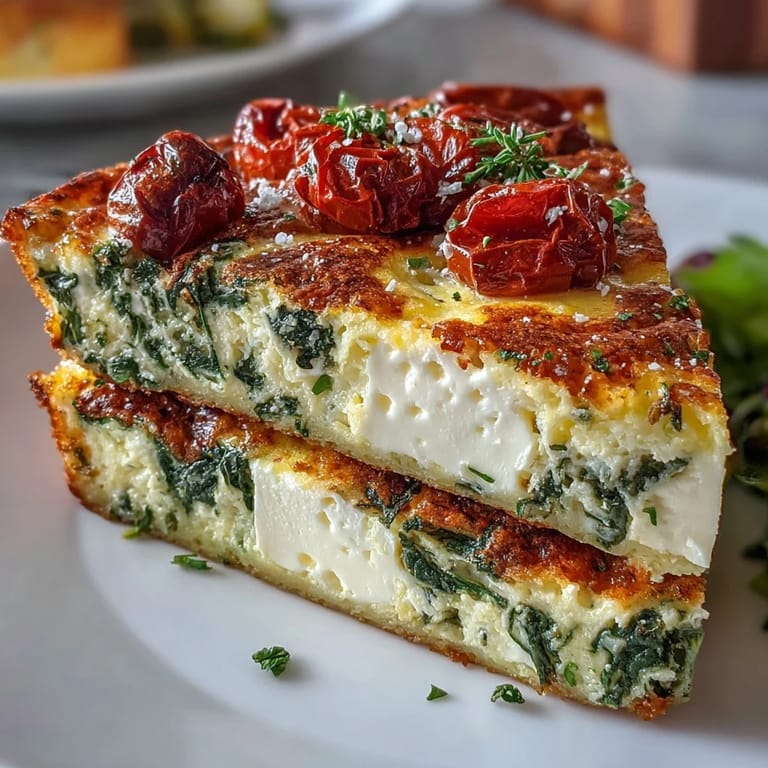
Serve this with a simple green salad dressed in lemon vinaigrette, or alongside crusty bread for soaking up the soft, custardy center. If you're feeling fancy, a crisp Sauvignon Blanc cuts through the richness beautifully without demanding your attention.
 Save
Save This frittata has become one of those dishes I make when I want to feel anchored in the kitchen, when cooking feels less like a task and more like a small meditation. Once you've made it a few times, you'll know exactly what it should smell and taste like, and that confidence is everything.
Recipe Help & Answers
- → Can I use frozen spinach instead of fresh?
Yes, thawed and well-drained frozen spinach works well as a substitute without altering the texture significantly.
- → What cheese options enhance this dish’s flavor?
Feta provides a tangy, creamy element, while Parmesan adds a subtle nutty richness. Both complement the spinach and tomatoes perfectly.
- → How do I know when the frittata is cooked?
The frittata is done when the center is set and the top turns slightly golden, usually after about 10–12 minutes in the oven.
- → Can I prepare this in advance?
Yes, you can prepare the mixture ahead and refrigerate briefly before cooking. Leftovers keep well for a day or two when chilled.
- → What wine pairs well with this dish?
A crisp white wine like Sauvignon Blanc complements the tangy feta and the rich flavors from the sun-dried tomatoes nicely.