 Save
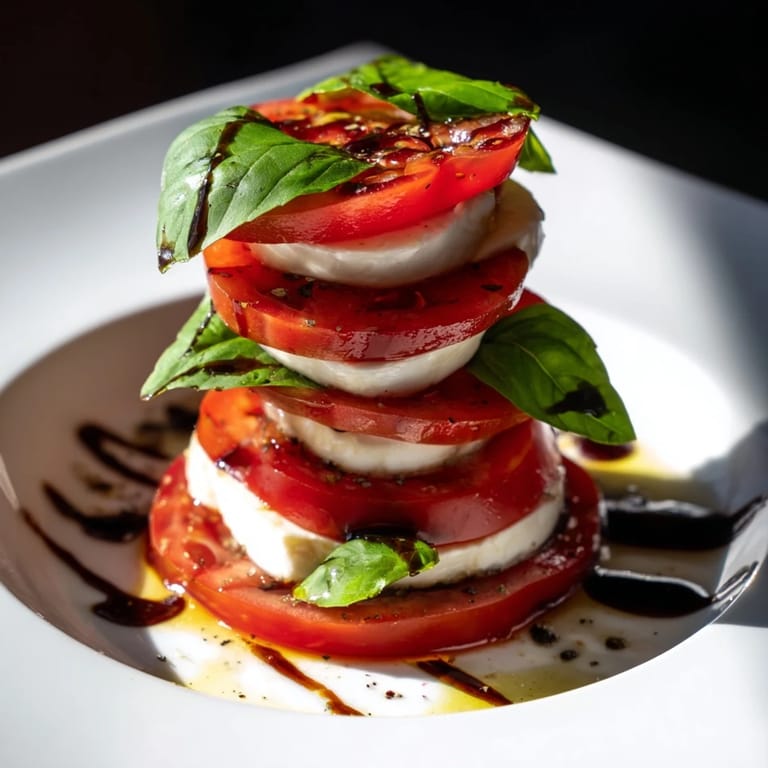
Save I discovered these stacked tomato towers at a summer gathering in Tuscany, where an elderly woman assembled them with such casual grace that I assumed they were impossibly complicated. She caught my amazed expression and laughed, showing me how the magic was simply in choosing the ripest tomatoes and letting them speak for themselves. Now, whenever I stack these pillars, I remember her saying that the best Italian food needs no apologies—just good ingredients and honest hands.
A few years ago, I made these for my neighbor's dinner party on a whim, and I remember the quiet that fell over the table when everyone first saw them—that moment before anyone tastes anything when food looks almost too beautiful to eat. She later told me it became the dish she requests most, which still makes me smile because it cost almost nothing and required zero actual cooking.
Ingredients
- Fresh ripe tomatoes (4 medium): The foundation of everything—pick ones that smell sweet and yield slightly to pressure, never hard or pale.
- Fresh mozzarella cheese (250 g): Buy the good stuff if you can; the delicate, creamy kind that tastes faintly milky is worth every penny.
- Fresh basil leaves (1 small bunch): Tear them by hand instead of cutting to preserve their oils and brightness.
- Extra-virgin olive oil (2 tbsp): This is the final drizzle, so choose one you actually enjoy tasting on its own.
- Balsamic glaze (2 tbsp): A proper glaze is thick and syrupy; if it's thin balsamic vinegar, let it reduce gently in a warm pan first.
- Sea salt and freshly ground black pepper: Taste as you go and be generous—these simple stacks need seasoning to shine.
Tired of Takeout? 🥡
Get 10 meals you can make faster than delivery arrives. Seriously.
One email. No spam. Unsubscribe anytime.
Instructions
- Slice everything into even rounds:
- Cut your tomatoes and mozzarella into eight slices each, about 1 cm thick. Aim for uniformity so the stacks balance nicely and look intentional on the plate.
- Prep your basil with care:
- Rinse and thoroughly pat the basil dry—any lingering moisture will turn the leaves dark and bitter within minutes.
- Build your pillars layer by layer:
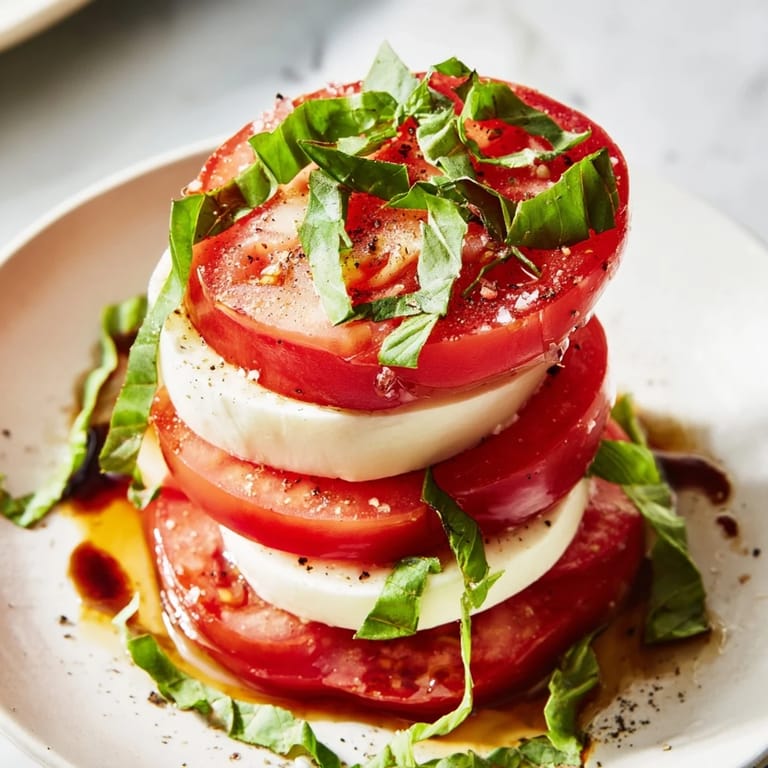
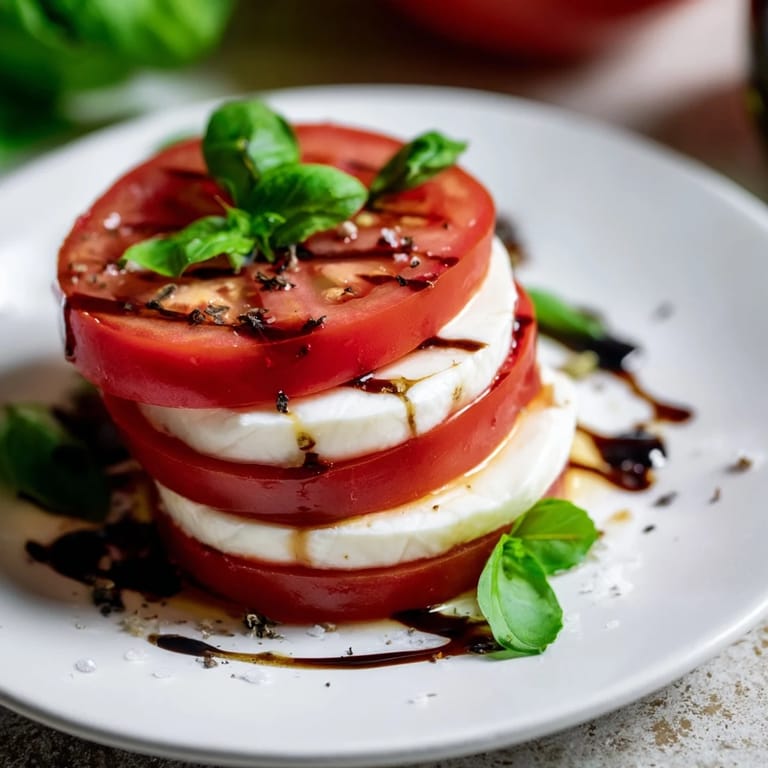
- Start with a tomato round, add a mozzarella slice, then a basil leaf. Repeat until you've got three or four layers, finishing with basil on top so the green catches the eye first.
- Anchor with a skewer:
- Push a long toothpick or thin bamboo skewer straight down through the center of each stack to hold everything steady. It's the unsung hero that keeps your beautiful creation from toppling.
- Season and finish:
- Drizzle olive oil around (not just on top), swirl the balsamic glaze, and finish with a pinch of flaky sea salt and a grind of black pepper. The seasoning should taste generous but balanced.
 Save
Save There's something almost meditative about stacking these pillars, watching them grow taller and more elegant with each layer. I've made them so many times now that I barely think about the steps, but I always pause before the final glaze to admire the colors—that jewel-like combination of red, white, and green that somehow never gets old.
Choosing Your Tomatoes
The entire dish lives or dies by tomato quality, and I learned this the hard way after buying beautiful-looking winter tomatoes that tasted like nothing. Now I seek out heirloom varieties whenever possible—they're often lumpy and imperfect, but their flavor is honest and complex. If you find yourself with mixed colors, that's actually better for presentation; the yellow, orange, and deep red varieties create a more interesting visual story than uniform red alone.
Timing and Assembly
These pillars are best served within an hour of assembly, which actually makes them perfect for entertaining because you can prep all the components ahead and stack them in the final minutes. I usually arrange the tomato and mozzarella slices on a cutting board, pile the basil nearby, and assemble everything right at the last moment while guests are still settling in.
Variations and Pairings
Once you understand the basic structure, this dish becomes a canvas for small additions and experimentation. A whisper of dried oregano adds Italian warmth, while a few good anchovy filaments tucked between layers create sophisticated depth. I've also added thin shreds of prosciutto and played with different cheese styles—burrata instead of mozzarella brings a creamy surprise, and aged ricotta salata adds a salty crunch that's unexpected and lovely.
- Pair with crisp Pinot Grigio or a light, mineral Vermentino for the ultimate summer meal.
- Add a small basil flower or edible microgreens on top for an elegant finishing touch.
- Keep extra skewers handy in case one cracks, and always have more basil than you think you'll need.
 Save
Save These simple stacks have taught me that elegance doesn't require complexity, just respect for ingredients and a steady hand. Serve them with confidence and watch your guests fall quiet the way I did that day in Tuscany.
Recipe Help & Answers
- → What is the best way to slice the tomatoes and mozzarella?
Slice both tomatoes and mozzarella into even 1 cm thick rounds to ensure uniform stacking and easy assembly.
- → Can I substitute fresh basil with other herbs?
Fresh basil is essential for authentic flavor, but you can try oregano or arugula for different herbal notes.
- → How should the stacks be served to keep fresh?
Serve immediately after assembly with a drizzle of olive oil and balsamic glaze to maintain freshness and vibrant colors.
- → What are effective tools to hold the stacks together?
Use long toothpicks or bamboo skewers inserted vertically to securely hold the layers in place.
- → Are there any recommended wine pairings?
A crisp Italian white wine, such as Pinot Grigio, pairs beautifully, complementing the fresh flavors.
- → Can heirloom tomatoes be used in this dish?
Yes, heirloom tomatoes add a colorful and flavorful variation to the stacks.