 Save
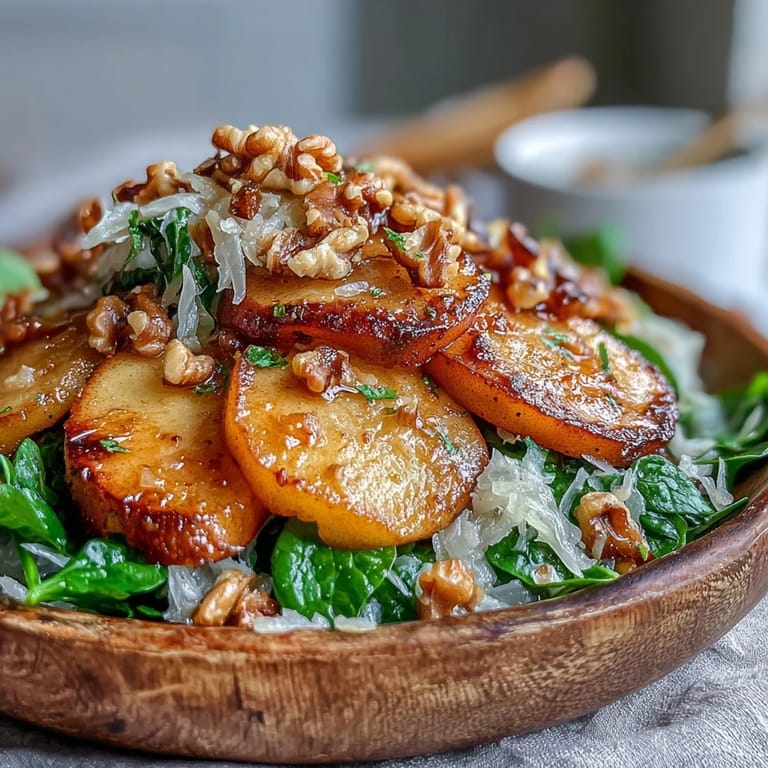
Save My neighbor brought over a jar of homemade sauerkraut one autumn afternoon, insisting I try something beyond the typical pairing with sausages. That evening, I found myself tossing warm caramelized apples with the tangy kraut almost by accident, and the combination stopped me mid-bite. Sweet, funky, and impossibly bright, it felt like discovering a flavor that had always existed but nobody bothered to mention.
I made this for a small dinner party last winter when someone casually mentioned they were tired of heavy, predictable sides. Watching three different guests circle back to take seconds while barely touching their mains told me everything I needed to know about this dish's quiet power.
Ingredients
- Apples (Honeycrisp or Gala): Their natural sweetness intensifies when caramelized, balancing the fermented funk of the sauerkraut without needing added sugar.
- Sauerkraut: The probiotic hero here—make sure it's drained well or your skillet becomes a watery disappointment halfway through cooking.
- Red onion: It softens beautifully in the same time as the apples, adding a gentle sweetness that mellows its raw bite.
- Baby spinach or arugula: Added at the very end so it barely wilts into the warm apples, keeping a whisper of texture.
- Olive oil or unsalted butter: Either works, though butter creates a slightly richer caramelization that feels more intentional.
- Caraway seeds: Optional but worth it if you enjoy that earthy, slightly licorice note that makes this feel authentically European.
- Honey or maple syrup: Just a teaspoon prevents the dish from tipping into overly savory territory.
- Toasted nuts and fresh parsley: Texture and brightness that transform this from side to something people actually remember.
Tired of Takeout? 🥡
Get 10 meals you can make faster than delivery arrives. Seriously.
One email. No spam. Unsubscribe anytime.
Instructions
- Build your foundation:
- Heat your oil or butter over medium heat until it shimmers slightly, then add the apples and onions together. You'll hear them hit the hot pan with a gentle sizzle—that's your signal you're starting right.
- Coax out the sweetness:
- Stir occasionally as they cook for 6 to 8 minutes, watching as the edges of the apples turn golden and the onion becomes translucent. The smell alone is worth pausing to appreciate.
- Awaken the flavors:
- Drizzle in your honey, sprinkle caraway if using it, then season with salt and pepper. One more minute of gentle stirring coats everything evenly and brings the aromatics to life.
- Bring in the sauerkraut:
- Lower the heat to low, fold in your drained sauerkraut carefully, and warm it through for 2 to 3 minutes—you're just taking the chill off, not driving away its living probiotics with aggressive heat.
- Wilt the greens:
- Remove from heat and gently toss in your spinach or arugula until it softens just enough to coat in the warm juices. It should still have personality.
- Finish and serve:
- Transfer everything to a serving platter, scatter your toasted nuts and parsley on top, then serve warm or let it cool to room temperature depending on your mood.
 Save
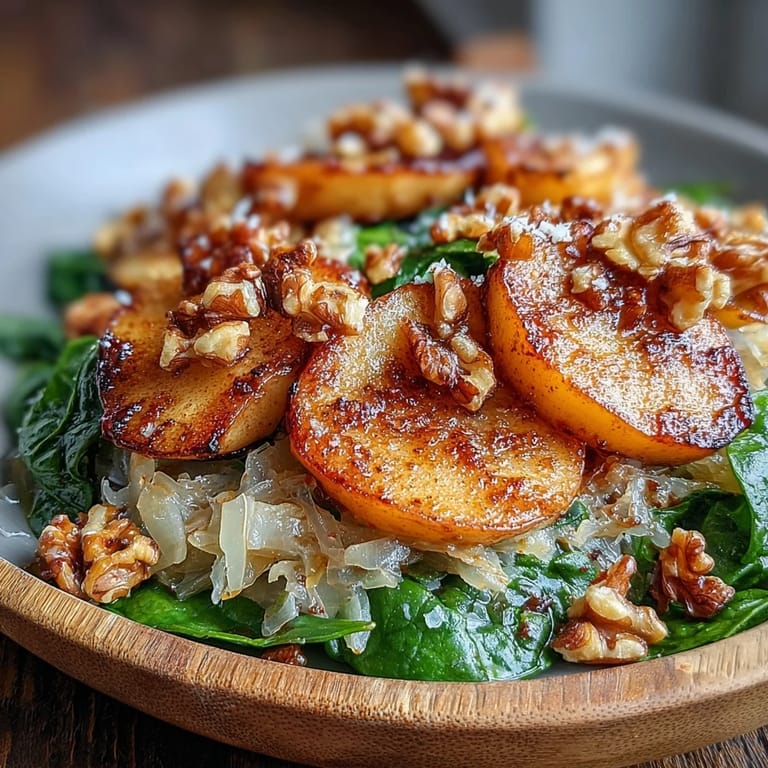
Save My daughter, who typically turns her nose up at anything fermented, asked for thirds one evening. That small victory meant more than any cookbook review ever could.
When to Serve This
This dish shines as a warm side next to roasted pork or sausages, where the acidity cuts through richness beautifully. It also stands alone as a vegetarian lunch, especially when you top it with a fried egg or crumbled cheese for extra substance. Even served cold the next day, it tastes like a composed salad that somehow tastes better than it did fresh from the skillet.
Variations That Work
Once you understand how these flavors dance together, you'll start seeing possibilities. I've added thinly sliced fennel for a subtle anise note, splashed in apple cider vinegar for brightness when the apples weren't as tart as I'd hoped, and even substituted kale for a more substantial, traditional version. The magic is flexible enough to follow your instincts.
Making It Your Own
This recipe rewards small experiments and intuitive adjustments. If your apples are particularly tart, you might skip the honey entirely. If you're cooking for someone skeptical of fermented foods, you can reduce the sauerkraut and increase the greens without losing the dish's soul. It's the kind of recipe that trusts you to know what you like.
- Taste as you go—sauerkraut saltiness varies wildly between brands, so adjust your sea salt accordingly.
- Warm, room temperature, or cold—this dish is genuinely good at any temperature, so don't stress about timing.
- Make it vegan by using olive oil and maple syrup instead of butter or honey.
 Save
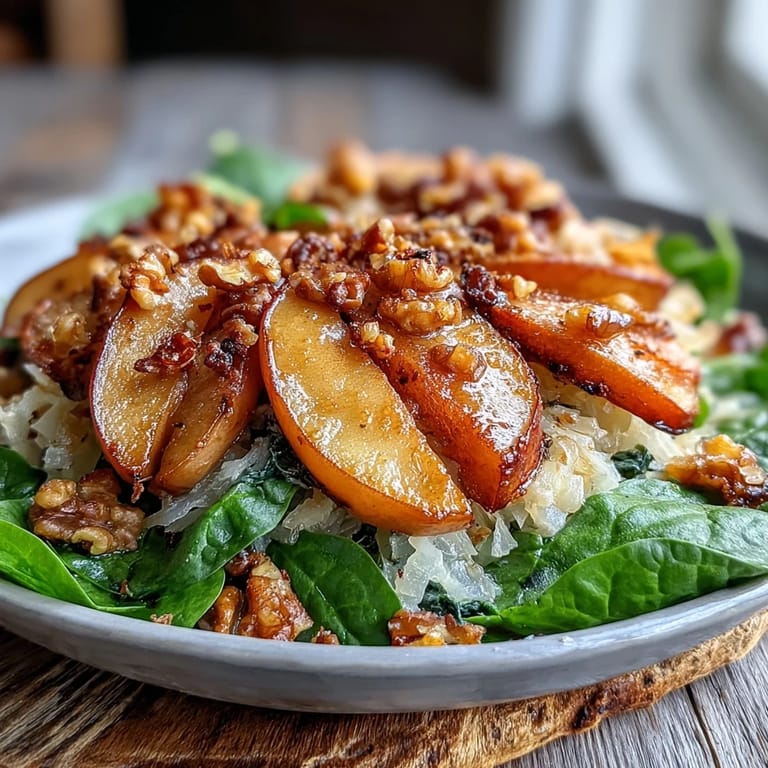
Save This warm apple and sauerkraut skillet has become my quiet answer to the question of what makes good food memorable. It's proof that sometimes the most interesting meals start with someone sharing a jar of homemade something and you being brave enough to try.
Recipe Help & Answers
- → What does warm apple and sauerkraut taste like?
The combination creates a unique sweet-tangy profile. Caramelized apples bring natural sweetness that balances the fermented tang of sauerkraut, while onions add depth. Honey or maple syrup enhances the fruit flavors, and caraway seeds provide subtle earthiness.
- → Can I serve this cold?
While best served warm or at room temperature, you can enjoy it chilled. The flavors develop beautifully over time, making it suitable for meal prep. Let it cool completely before refrigerating in an airtight container for up to 3 days.
- → What main dishes pair well with this skillet?
This warm skillet complements roasted pork, German sausages, or bratwurst beautifully. It also works alongside grilled chicken or fish. For a vegetarian meal, serve with quinoa or crusty bread to make it more substantial.
- → How do I prevent the sauerkraut from becoming too dry?
Add the sauerkraut last and warm through gently over low heat for just 2-3 minutes. Avoid overcooking, which can cause moisture loss. If needed, splash in a tablespoon of water or apple cider vinegar to maintain texture.
- → Can I use different apples?
Honeycrisp and Gala offer excellent sweetness and hold their shape well. Granny Smith provides more tartness if you prefer a sharper contrast. Avoid very soft varieties like Red Delicious, as they may become mushy during cooking.
- → Is this suitable for meal prep?
Absolutely. The flavors actually improve after sitting. Store in individual containers for up to 4 days. Reheat gently on the stovetop or enjoy cold—the texture remains satisfying either way.