 Save
Save My neighbor Marcus showed up at my door one January evening with snow still melting in his hair, asking if I had a pot big enough to make soup for his family. I'd never really mastered beef and vegetable soup before—mine always came out either too bland or somehow watery—but something about his confidence made me think I could actually pull it off. That night, I learned that the magic wasn't in some secret ingredient but in taking time to brown the beef properly and letting everything simmer together until the flavors stopped being separate and became something whole. Now it's the first thing I make when the weather turns cold, and Marcus still jokes that it's better than what his grandmother used to make.
I made this soup for my book club last February, and what I remember most isn't the recipe itself but watching my friend Sarah suddenly go quiet mid-conversation. She had a spoonful halfway to her mouth and just closed her eyes like she was thinking about something important. Later she told me it reminded her of her mom's cooking, which meant more to me than any compliment about technique ever could. Food has this strange power to unlock memories in people, and this soup seems to do that more than anything else I cook.
Ingredients
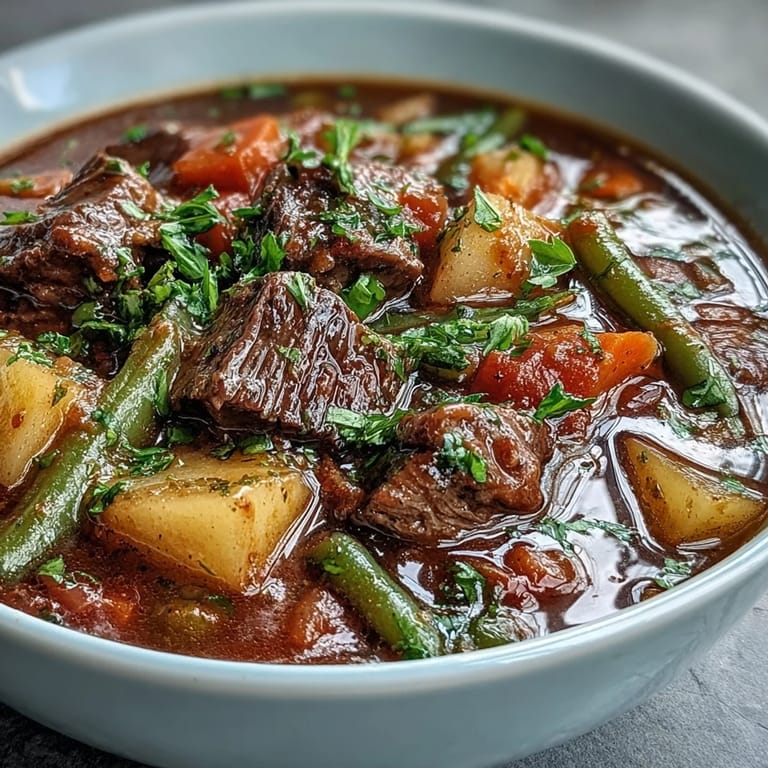
- Beef chuck, 1.5 lbs cut into 1-inch cubes: Chuck has enough fat running through it that it becomes impossibly tender after simmering, not stringy or tough like leaner cuts.
- Olive oil, 2 tbsp: Just enough to get a proper sear on the beef without making the soup taste greasy.
- Onion, 1 large diced: This is your flavor foundation, so don't skip the browning step—it makes all the difference.
- Garlic, 3 cloves minced: Add it after the softer vegetables so it doesn't burn and turn bitter.
- Carrots, 3 medium sliced: They add natural sweetness and hold their shape better than you'd expect.
- Celery, 2 stalks sliced: A classic trio with onion and carrot that forms the aromatic base of nearly every good soup.
- Potatoes, 2 medium peeled and diced: They thicken the broth naturally as they break down, creating body without cream.
- Parsnip, 1 peeled and diced (optional): I skip this sometimes and add it other times depending on my mood—it brings an earthy sweetness that's subtle but noticeable.
- Green beans, 1 cup trimmed and cut into 1-inch pieces: Add them earlier so they soften with everything else, not at the end when they stay too crisp.
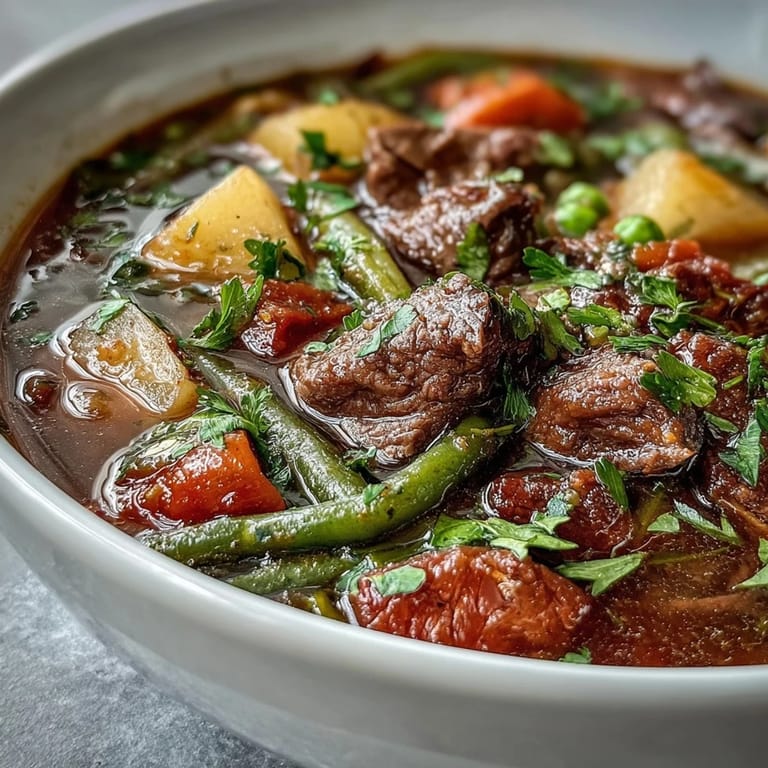
- Peas, 1 cup frozen: Frozen peas are honestly better than fresh here because they don't turn mushy and fall apart.
- Diced tomatoes, 1 can (14.5 oz) undrained: The acidity wakes up all the other flavors and keeps the soup from tasting one-dimensional.
- Beef broth, 8 cups: Use good broth if you can—it's literally half your soup, so don't cheap out on this one.
- Bay leaves, 2: Remove them before serving or your guests will wonder what they're chewing on.
- Dried thyme, 1 tsp: Thyme is earthy and subtle, the kind of herb that makes people ask what's in the soup without being able to name it.
- Dried oregano, 1 tsp: This adds a slight Mediterranean note that brightens everything up.
- Black pepper, ½ tsp: Start with this amount and adjust at the end—you always taste it better after it's cooked.
- Salt, 1 tsp plus more to taste: The broth is already salty, so go easy at first.
- Fresh parsley, 2 tbsp chopped for garnish: Don't skip this—fresh herb on top of something that's been simmering for hours feels like a small celebration.
Tired of Takeout? 🥡
Get 10 meals you can make faster than delivery arrives. Seriously.
One email. No spam. Unsubscribe anytime.
Instructions
- Get the beef golden:
- Heat your olive oil in a large pot over medium-high heat until you can feel the warmth radiating from it. Working in batches if needed, place the beef cubes in the pot and resist the urge to move them around—let them sit for a couple minutes so a deep brown crust forms on each side, which takes about five to seven minutes total. This isn't just about looks; you're building flavor that will carry through the entire pot.
- Soften your aromatics:
- Pull the beef out and set it on a plate, then add your onion, carrots, and celery to the same pot without washing it (all those browned bits are liquid gold). Let them cook undisturbed for about five minutes, then stir in your minced garlic and cook for just one more minute until everything smells incredible.
- Build the soup:
- Return the beef to the pot and add your potatoes, parsnip if you're using it, green beans, tomatoes with their juice, broth, bay leaves, thyme, oregano, pepper, and salt. Stir it all together so nothing sticks to the bottom.
- Let it simmer low and slow:
- Bring everything to a boil first—you'll see big bubbles breaking the surface—then turn the heat way down and partially cover the pot. Let it bubble gently for an hour and fifteen minutes, stirring every twenty minutes or so, until the beef tears apart when you poke it with a fork.
- Finish strong:
- Add your frozen peas and cook uncovered for another ten to fifteen minutes until every vegetable is soft enough to cut with the side of a spoon. This is when you taste it and decide if it needs more salt or pepper.
- Serve it warm:
- Fish out those bay leaves, ladle the soup into bowls, and scatter fresh parsley over the top like you mean it. The warm steam rising up when you set it down in front of someone is half the appeal.
 Save
Save There was a Wednesday in March when I made this soup for a friend who'd just lost her job, and she came over looking like she hadn't slept in days. We sat at my kitchen table with two steaming bowls between us, and she ate without talking, just the sound of the spoon against the bowl and the occasional sigh. By the third spoonful, something shifted in her face—not happiness exactly, but the kind of comfort that comes from being taken care of. That's when I understood that this soup isn't just dinner; it's a way of saying I'm thinking about you without having to find the right words.
How to Make It Your Own
The beauty of this soup is that it's a framework, not a rigid rulebook. I've made it with red potatoes instead of regular ones, added turnips when carrots were expensive, even thrown in half a cup of barley to make it more filling. One time I added a splash of Worcestershire sauce because I found a bottle at the back of my cabinet, and suddenly the whole pot tasted deeper and more complex. Your version of this soup should reflect what's in your pantry and what sounds good to you that day.
Timing and Make-Ahead Magic
This soup actually improves if you make it a day or two ahead and let the flavors get to know each other in the refrigerator. I've learned to prepare all my vegetables in the morning when I have time, cover them with plastic wrap, and then do the actual cooking when I get home. If you're really planning ahead, you can brown the beef and chop the vegetables the night before, which means the actual cooking becomes a relaxing twenty-minute process instead of something stressful.
Serving Suggestions and Storage Tips
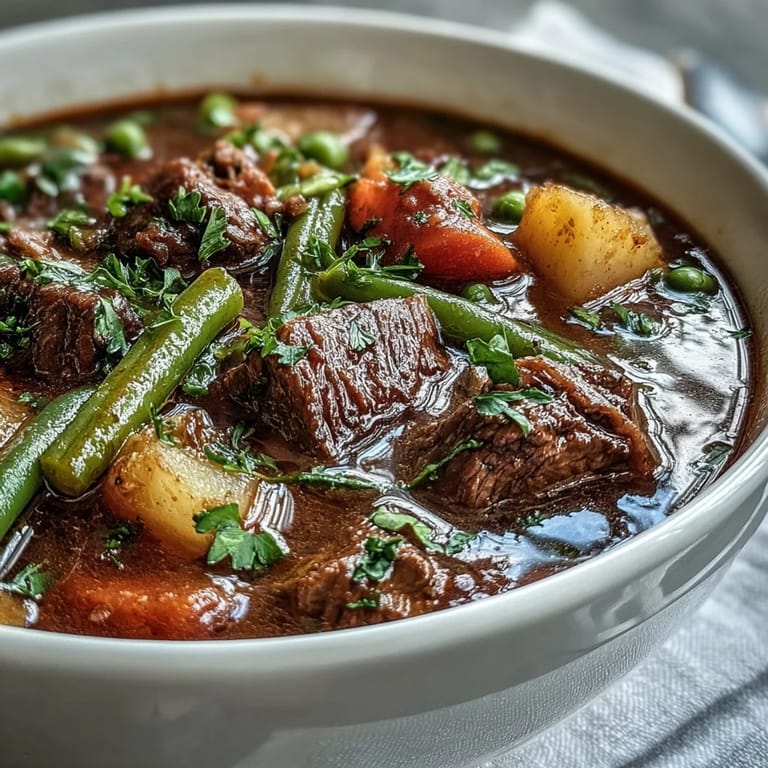
Serve this soup in whatever bowl makes you happy—ceramic, glass, even a mug if that's all you have. A thick slice of toasted bread alongside it is non-negotiable in my house, something sturdy enough to soak up the broth without falling apart. Leftovers keep beautifully in the refrigerator for up to four days and honestly taste better as the flavors continue to mingle and deepen.
- If you're freezing it, leave a little space at the top of your container because soup expands.
- Reheat gently on the stovetop with a splash of water or broth if it's thickened up too much in the cold.
- Fresh parsley should always be added right before serving so it stays bright green and tastes alive.
 Save
Save This soup has become the thing I make when I want to feel like I'm doing something meaningful in the kitchen, and the thing my friends ask for when they need something warm and real. It's proof that you don't need fancy techniques or hard-to-find ingredients to create something that sticks with people.
Recipe Help & Answers
- → How long does this soup take to make?
The total time is about 2 hours and 10 minutes, including 25 minutes of prep and 1 hour 45 minutes of cooking. Most of that is hands-off simmering time.
- → Can I use a different cut of beef?
Beef chuck works best because it becomes tender during long simmering. You could also use stew meat or round steak, but avoid lean cuts as they may become tough.
- → What vegetables can I add or substitute?
Feel free to add turnips, rutabaga, or corn. You can substitute sweet potatoes for regular potatoes, and the parsnip is optional if you're not fond of its flavor.
- → How should I store leftovers?
Leftovers keep well refrigerated for up to 4 days. The flavors actually improve overnight, making it great for make-ahead meals.
- → Can I make this in a slow cooker?
Yes! Brown the beef first, then add all ingredients to your slow cooker. Cook on low for 7-8 hours or high for 4-5 hours until the beef is tender.
- → Is this soup gluten-free?
Yes, all ingredients are naturally gluten-free. Just check your beef broth label to ensure no gluten-containing additives are present.