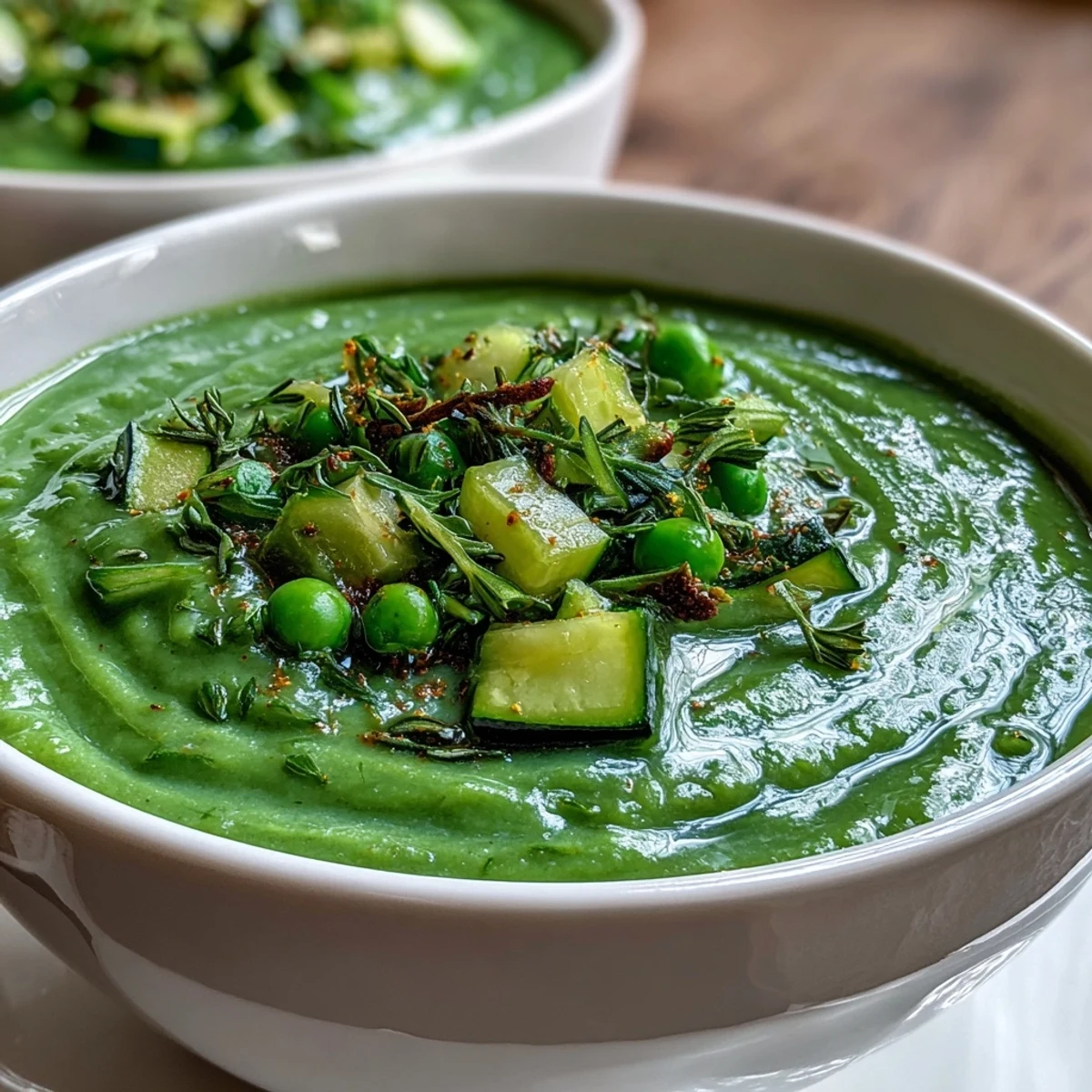
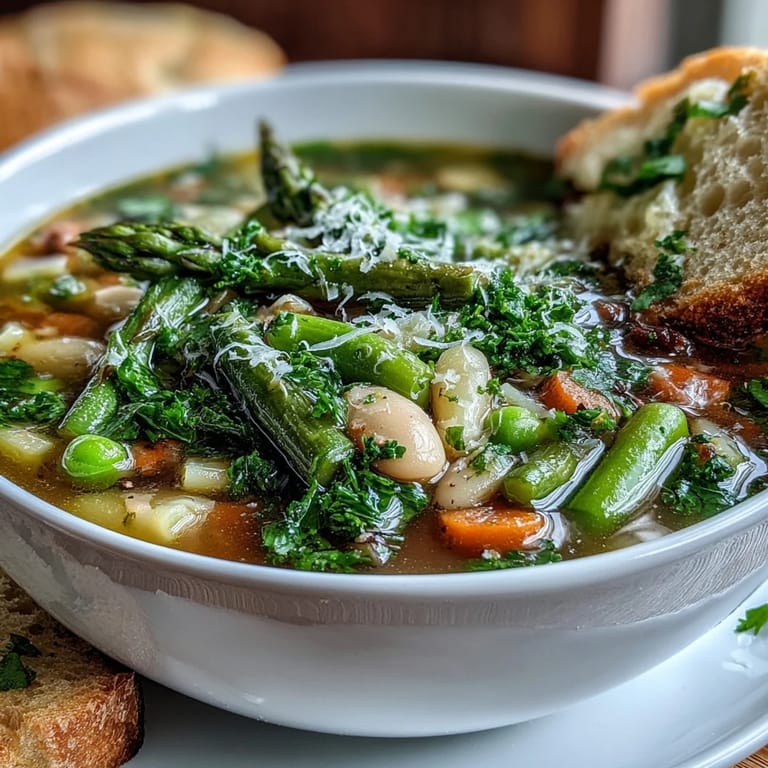
 Save
Save Last spring, I was standing in my kitchen on a particularly gray afternoon when my neighbor stopped by with a basket overflowing with asparagus from her garden. I had white beans simmering on the stove and suddenly realized I could transform them into something alive and green. That first bowl taught me that minestrone isn't about following rules—it's about celebrating whatever vegetables make you smile when you see them at the market. This version became my instant favorite because it tastes like spring itself, bright and generous.
I made this soup for my sister when she was moving to a new apartment, and she sat at my kitchen table spooning through bowl after bowl while we talked about everything we'd miss about this neighborhood. She asked for the recipe three times before leaving, each time like she was trying to memorize not just the ingredients but the feeling of being taken care of. That's when I knew this wasn't just lunch—it was something people needed.
Ingredients
- Olive oil: Use a generous tablespoon to build the base of your soup with a quiet sizzle that signals good things are coming.
- Onion, carrots, and celery: This holy trinity of vegetables creates an aromatic foundation—nothing fancy, just solid work that makes everything else taste better.
- Garlic: Mince it fine so it disappears into the broth and becomes pure flavor rather than noticeable chunks.
- Zucchini: Diced small keeps it from turning mushy and lets it soften into the soup without disappearing entirely.
- Asparagus: Cut into one-inch pieces so each spoonful delivers that tender, slightly grassy taste that screams spring.
- Peas: Frozen work perfectly here and honestly are fresher than most fresh ones by the time you buy them.
- Baby spinach or Swiss chard: Stir it in at the very end so it wilts gently into the warm broth instead of becoming an overcooked dark mass.
- White beans: Cannellini or Great Northern beans have a creamy texture that makes the broth feel richer without any cream involved.
- Small pasta: Ditalini or small shells work best because they cook in roughly the same time as everything else and don't dominate the bowl.
- Vegetable broth: Go low-sodium so you control the salt and the vegetables' flavors can actually shine through.
- Thyme, oregano, and bay leaf: These dried herbs create a subtle Mediterranean backbone that ties everything together without being heavy.
- Lemon zest and fresh parsley: Added at the very end, these bright elements wake up the entire soup and make it taste alive.
Tired of Takeout? 🥡
Get 10 meals you can make faster than delivery arrives. Seriously.
One email. No spam. Unsubscribe anytime.
Instructions
- Build your aromatic base:
- Heat olive oil in a large pot over medium heat and add onion, carrots, and celery together—let them soften for about five minutes, stirring occasionally until they turn translucent and smell almost sweet. You're not rushing this part; you're creating the foundation that makes every spoonful taste intentional.
- Wake up the garlic:
- Stir in minced garlic and cook for just one minute until the kitchen fills with that unmistakable, irresistible aroma. One minute is all you need before it can start to bitter, so stay close and keep the heat medium.
- Add the tender squash:
- Toss in diced zucchini and let it cook for two more minutes, which softens it slightly without letting it fall apart. You want it to stay present in the bowl, not become invisible.
- Pour in the broth and bring warmth:
- Add vegetable broth along with thyme, oregano, and a bay leaf, then bring everything to a gentle boil. A gentle boil, not a rolling one—you're coaxing flavors to marry, not forcing them.
- Add beans and pasta together:
- Stir in white beans and small pasta, then reduce the heat to simmer for ten minutes. The pasta absorbs the broth while everything gets tender, creating a soup that feels substantial without being heavy.
- Finish with spring vegetables:
- Add asparagus and peas and cook for another five to seven minutes until the pasta is tender and the asparagus has that bright, cooked-through quality. This is when the soup goes from good to memorable.
- Brighten with fresh elements:
- Stir in spinach or Swiss chard along with lemon zest and fresh parsley, then let everything cook for two more minutes until the greens wilt into the warm broth. Season with salt and pepper to taste, tasting as you go because everyone's palate is different.
- Finish and serve:
- Fish out the bay leaf before ladling soup into bowls, then top each with a small handful of Parmesan and a drizzle of extra virgin olive oil if you're feeling generous. Serve immediately while everything is warm and the flavors are singing.
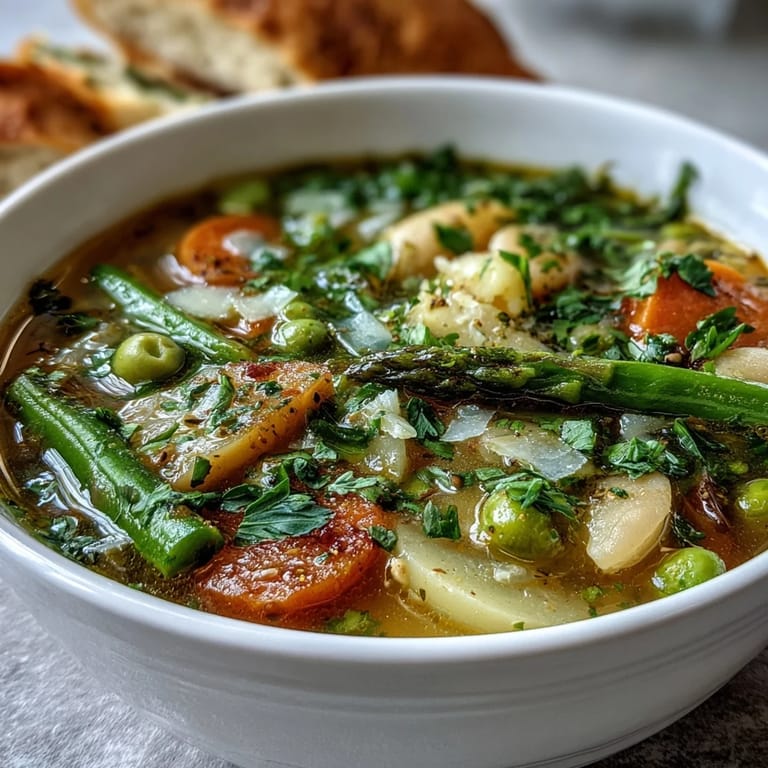 Save
Save There's a moment in cooking this soup when you first smell the garlic hitting the hot oil, then the herbs releasing into the broth, and suddenly your whole kitchen becomes a warm, welcoming place. That moment right before you ladle it into bowls is when you realize you've created something that tastes like care.
Why Spring Vegetables Matter Here
Spring vegetables are different from their summer and winter cousins—they're tender, delicate, and taste like they're waking up from a long sleep. Using asparagus, peas, and young zucchini in this soup means you're working with ingredients at their brightest and sweetest, which makes the entire dish feel lighter and more alive. This soup celebrates the season instead of just using whatever's available, and people can taste that intention in every spoonful.
The Magic of Adding Everything at the Right Time
I learned the hard way that dumping all the vegetables in at once creates a chaotic soup where some pieces are mushy and others are still crunchy. The magic happens when you add things in order—the sturdy vegetables first so they have time to soften and flavor the broth, then the delicate spring vegetables near the end so they stay bright and present in your bowl. It's the difference between a soup that feels thrown together and one that feels designed with care.
Serving and Storage Ideas
This soup tastes even better the next day after the flavors have had time to get to know each other, making it an excellent candidate for meal prep or bringing to someone who could use a warm meal. Store it in an airtight container in the refrigerator for up to four days, though the pasta will continue to absorb liquid, so you might want to add a splash of broth when you reheat it. Serve with crusty bread and maybe a squeeze of fresh lemon juice for anyone who wants to brighten it further.
- If you're making this for guests, prepare everything up through adding the broth ahead of time, then finish the vegetables and pasta when they arrive so the soup tastes freshly made.
- Frozen peas and asparagus work perfectly here and honestly save time without sacrificing any flavor or nutrition.
- Don't skip the lemon zest and fresh parsley at the end—these small additions are what make people say this tastes restaurant quality.
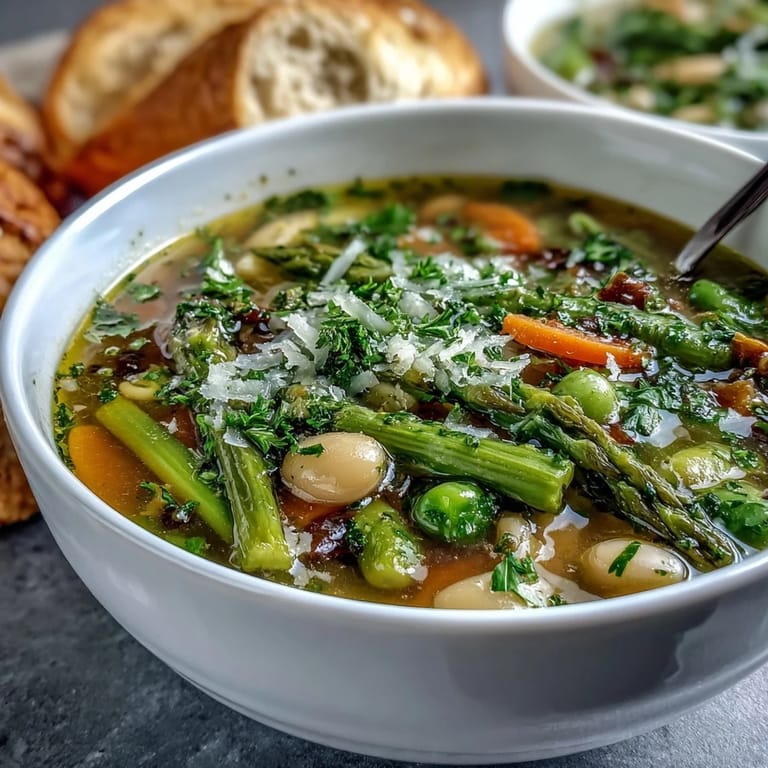 Save
Save Spring minestrone has become my go-to soup because it's simple enough to make on a regular Tuesday but generous enough to serve when people need feeding and comfort. Every time I make it, that kitchen fills with the smell of olive oil and herbs, and I'm reminded why cooking for people matters.
Recipe Help & Answers
- → Can I use frozen vegetables for this dish?
Yes, frozen peas and asparagus can be substituted and added towards the end of cooking to maintain their texture and color.
- → What pasta works best with this soup?
Small pasta shapes like ditalini or small shells work well, but gluten-free options can be used if preferred.
- → How do I make this dish vegan?
Simply omit the Parmesan cheese garnish or use a plant-based alternative for a vegan-friendly version.
- → Can I prepare this soup in advance?
Yes, it stores well refrigerated for up to 3 days and flavors deepen overnight. Reheat gently before serving.
- → What can I use instead of fresh herbs?
Dried thyme and oregano work fine, just add them during the simmering stage to infuse flavor.