 Save
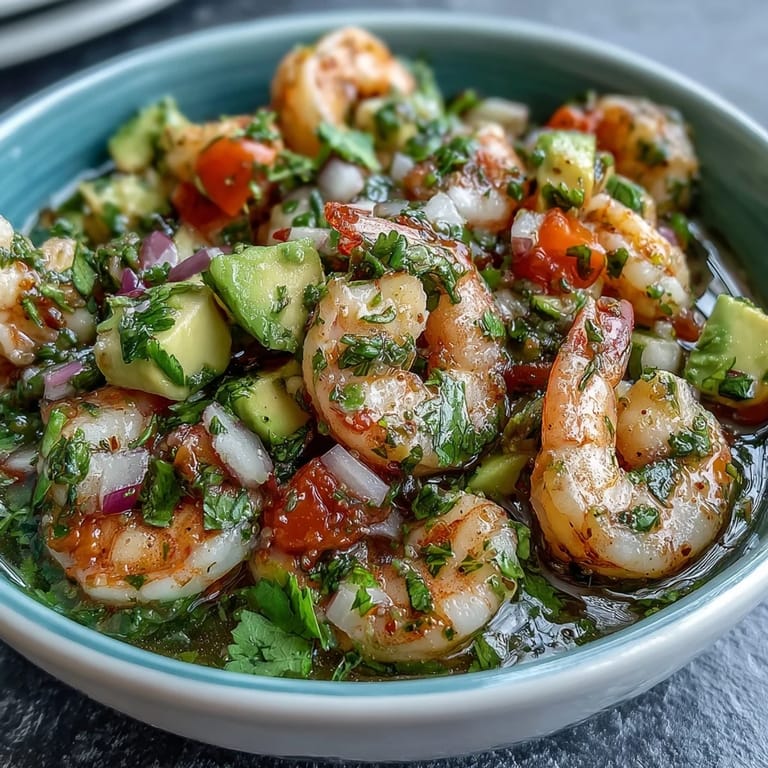
Save There's something almost magical about watching shrimp transform in lime juice—that moment when the raw flesh turns from translucent to opaque, cooked by nothing but citrus and time. I discovered this ceviche on a humid afternoon when my neighbor handed me a bag of the most beautiful shrimp I'd ever seen, still glistening from the fishmonger's ice. She mentioned ceviche in passing, and something about it stuck with me: the idea that you could create something so vibrant and fresh without ever turning on the stove felt like kitchen alchemy.
I'll never forget making this for my sister's surprise birthday dinner—she arrived early and caught me mid-chop, cilantro scattered across the cutting board and lime juice on my hands. She tasted a spoonful before I'd even finished prepping, and her face lit up in that way that made all the knife work worth it. That's when I realized ceviche isn't just about the ingredient list; it's about those few moments when someone tastes something and suddenly feels celebrated.
Ingredients
- Raw shrimp, 400 g (14 oz), peeled, deveined, and cut into 1 cm pieces: Quality matters here—look for shrimp that smell briny and fresh, never fishy, because they're going raw into the bowl.
- Freshly squeezed lime juice, 120 ml (½ cup) from about 4–5 limes: This is your cooking agent, so don't reach for bottled; the real juice makes all the difference in texture and brightness.
- Small red onion, finely diced: The acidity tenderizes it slightly, and it adds a gentle sharpness that balances the richness of avocado.
- Jalapeño or red chilli, 1 medium, seeded and finely chopped: Seeding gives you heat control without the overwhelming bite that seeds can bring.
- Garlic clove, 1, minced: A whisper of garlic deepens the flavor without overpowering the delicate shrimp.
- Sea salt, ½ tsp: This enhances everything and helps the shrimp release its natural juices during marinating.
- Ripe avocado, 1, diced: Add this at the very end so it stays creamy and doesn't turn gray from oxidizing.
- Medium tomatoes, 2, seeded and diced: Seeding prevents excess water from pooling at the bottom of your bowl.
- Small cucumber, 1, peeled, seeded, and diced: Cucumber adds a cool crunch that keeps each bite interesting.
- Fresh cilantro, 3 tbsp, finely chopped: It's herbal and bright, bringing that authentic Latin American flavor that ties everything together.
- Lime wedges and tortilla chips or tostadas for serving: These are optional but they're not really optional—they complete the experience.
Tired of Takeout? 🥡
Get 10 meals you can make faster than delivery arrives. Seriously.
One email. No spam. Unsubscribe anytime.
Instructions
- Combine shrimp and lime juice:
- In a glass or ceramic bowl, mix the shrimp pieces with fresh lime juice, making sure every piece gets coated. You'll see them start to change color almost immediately, which is the lime juice working its magic.
- Let them cure:
- Cover and refrigerate for 30 minutes, giving it a stir halfway through. The shrimp will go from raw-looking to opaque and tender—this is the whole point, so don't skip this step or rush it.
- Add the aromatic base:
- Stir in the diced red onion, jalapeño, minced garlic, and sea salt, then let it sit for 5 minutes so the flavors mingle. This brief rest helps the onion soften slightly while staying crisp.
- Fold in the finishing touches:
- Gently incorporate the avocado, tomatoes, cucumber, and cilantro—gentle is the word here because you want those avocado pieces to stay intact and creamy. Taste and adjust the salt or heat to your preference.
- Serve immediately:
- Transfer to a chilled serving bowl and garnish with lime wedges, with tortilla chips on the side if you like. Eat it right away while everything is cold and the flavors are at their brightest.
 Save
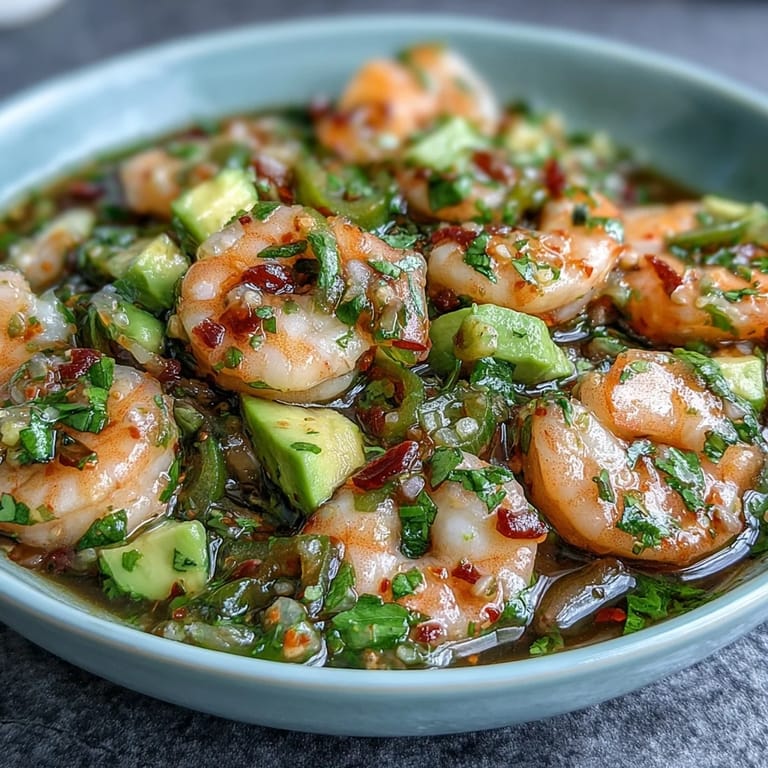
Save There's a moment during every ceviche dinner when conversation stops and everyone just eats, spoon after spoon, appreciating something that tastes like summer and celebration all at once. It became my go-to dish for those nights when I wanted to feel like I'd done something special without spending hours in the kitchen.
The Science of the Cure
What's happening when you submerge raw shrimp in lime juice isn't cooking in the traditional sense—there's no heat involved, which is why ceviche feels almost mystical the first time you make it. The acid in the lime juice denatures the proteins, breaking them down and transforming the texture from translucent and raw to opaque and firm, just like cooking would do. Once you understand this, you'll start experimenting with other marinades and proteins, but lime juice with shrimp is the perfect place to learn.
Variations Worth Trying
I've made this ceviche a dozen different ways, swapping in mango when it's in season, adding pomegranate seeds for tartness, or mixing half lime juice with lemon for a subtler citrus note. Some friends bring heat with habanero instead of jalapeño, while others go mild and let the shrimp shine on its own. The beauty is that once you nail the basic technique, the recipe becomes your playground.
Timing and Storage Tips
Ceviche is at its absolute best within a few hours of assembly, when the avocado hasn't darkened and every ingredient still tastes alive and bright. If you're making this ahead for guests, keep the shrimp marinating in lime juice in the fridge, and fold in the vegetables and herbs no more than 30 minutes before serving. This little bit of planning keeps everything fresh and prevents the avocado from turning that sad shade of brown.
- Prep your vegetables and herbs earlier in the day, storing them separately in airtight containers to save yourself time right before guests arrive.
- If you're adding hot sauce for extra heat, drizzle it on individual servings rather than mixing it into the whole batch so everyone can control the fire level.
- Never let ceviche sit for more than a day in the fridge; the longer the shrimp marinates, the mushier it becomes.
 Save
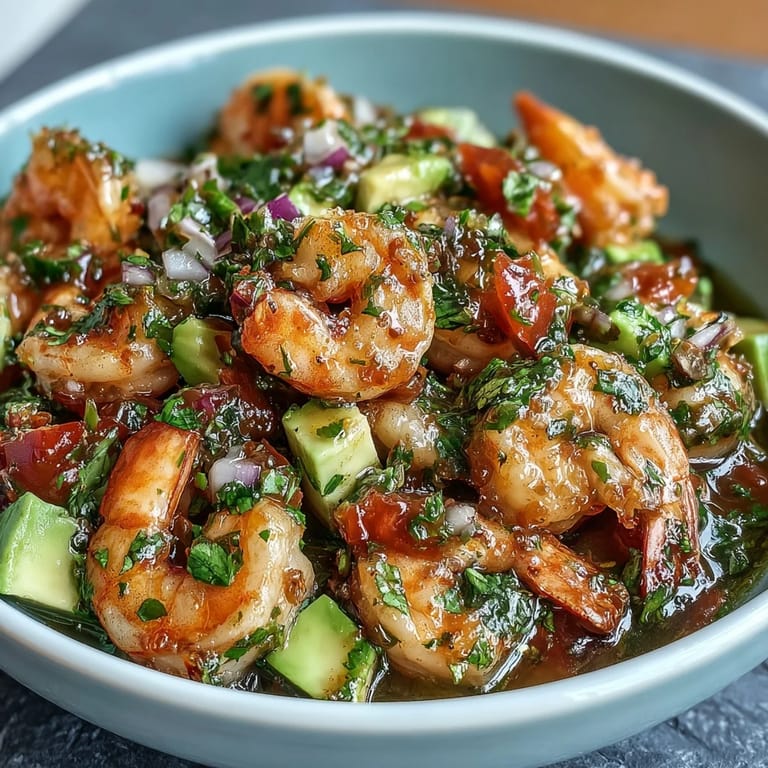
Save Every time I serve ceviche, I remember that afternoon with my neighbor and my sister's surprised smile. It's become the appetizer I reach for when I want something that tastes elegant without requiring me to slave over a hot stove.
Recipe Help & Answers
- → How long should the shrimp marinate?
Marinate the shrimp in lime juice for about 30 minutes until it turns opaque and 'cooked' by the acidity.
- → Can I adjust the spice level?
Yes, increase or decrease chilli or jalapeño based on desired heat, or add hot sauce for extra kick.
- → Is it necessary to peel and devein the shrimp?
Peeling and deveining improves texture and flavor, making the shrimp more pleasant to eat in this preparation.
- → What can I serve it with?
Serve chilled with lime wedges and optionally tortilla chips or tostadas for added crunch.
- → Can I substitute lime juice with other citrus?
Yes, lemon juice can be used for a slightly different citrus note while maintaining acidity for marinating.