 Save
Save Last Tuesday, while rummaging through my pantry looking for something to accompany grilled fish, I spotted a jar of white miso paste wedged behind the sesame oil. That's when it clicked, why not blur the line between my love of roasted vegetables and the umami depths of Japanese cooking? The result was this miso-butter glaze that turned ordinary carrots and sweet potatoes into something that made my dinner guests actually pause mid-bite to ask what I'd done differently. It's become the side dish I reach for whenever I want something impressive without the fuss.
I made this for my sister last month when she was visiting and mentioned feeling stuck in her usual vegetable rotation. Watching her taste the charred edge of a carrot coated in that glossy miso-butter glaze, then immediately ask for the recipe, felt like the highest compliment. She's now made it twice already and texted me a photo of her version with roasted Brussels sprouts, which honestly made my whole week.
Ingredients
- Carrots: Peel and cut into 1-inch pieces so they roast evenly and develop sweet, caramelized edges without drying out.
- Sweet potatoes: Cube them to match the carrot size, and don't skip the peeling because the skin can toughen during roasting.
- Red bell pepper: Cut into chunks roughly the same size as your other vegetables so everything finishes at the same time.
- Zucchini: Slice into rounds about a quarter-inch thick, and know that it'll soften more than the root vegetables so it gets softer and sweeter as it roasts.
- Red onion: Cut into wedges rather than dice so the layers stay intact and develop this subtle caramelized sweetness.
- Broccoli florets: Keep them smaller than you might normally cut them since they'll soften quickly once they hit the heat.
- Unsalted butter: The base of your glaze, and softening it first makes it blend seamlessly with the miso paste instead of creating little pockets of unmixed paste.
- White miso paste: This is your umami anchor, milder and slightly sweet compared to red miso, and it dissolves beautifully into the butter.
- Maple syrup or honey: Just enough to balance the saltiness of the miso and soy sauce, encouraging those caramelized edges to develop.
- Soy sauce: Adds depth and saltiness, but resist the urge to add more than called for or your vegetables will taste more salty than savory.
- Olive oil: Helps the glaze coat evenly and prevents sticking on the baking sheet.
- Rice vinegar: A small amount cuts through the richness and brightens the final flavor, making each bite feel more lively.
- Garlic: Mince it finely so it distributes throughout the glaze rather than leaving harsh chunks.
- Black pepper: A modest amount adds gentle heat without overpowering the delicate umami notes.
Tired of Takeout? 🥡
Get 10 meals you can make faster than delivery arrives. Seriously.
One email. No spam. Unsubscribe anytime.
Instructions
- Heat your oven and prep your workspace:
- Set the oven to 425°F and line your baking sheet with parchment paper, this prevents sticking and makes cleanup almost effortless. You'll want everything ready to go once you've mixed your glaze.
- Gather and cut your vegetables:
- Toss all your cut vegetables into a large bowl, and yes, it'll look like a lot at first but they shrink down noticeably as they roast. Don't stress about perfect uniformity, but try to keep sizes roughly similar so slower vegetables like carrots and sweet potatoes cook through at the same rate as the quicker-cooking broccoli and zucchini.
- Mix your miso-butter glaze:
- In a separate bowl, whisk the softened butter with miso paste until smooth and creamy, then add the maple syrup, soy sauce, olive oil, rice vinegar, minced garlic, and pepper. The mixture should be glossy and well combined, with no visible streaks of miso paste remaining.
- Coat the vegetables evenly:
- Pour that glaze over your vegetables and toss generously with a spatula or wooden spoon until every piece gets a good coating. This is where the magic starts, the glaze clinging to every surface and promising caramelization.
- Spread and roast:
- Arrange the vegetables in a single layer on your prepared baking sheet, and here's the key, don't overcrowd them or they'll steam instead of roast. Pop them into the oven for 25 to 30 minutes, stirring halfway through so the bottom pieces get their turn facing the heat and developing those crispy, caramelized edges.
- Finish and serve:
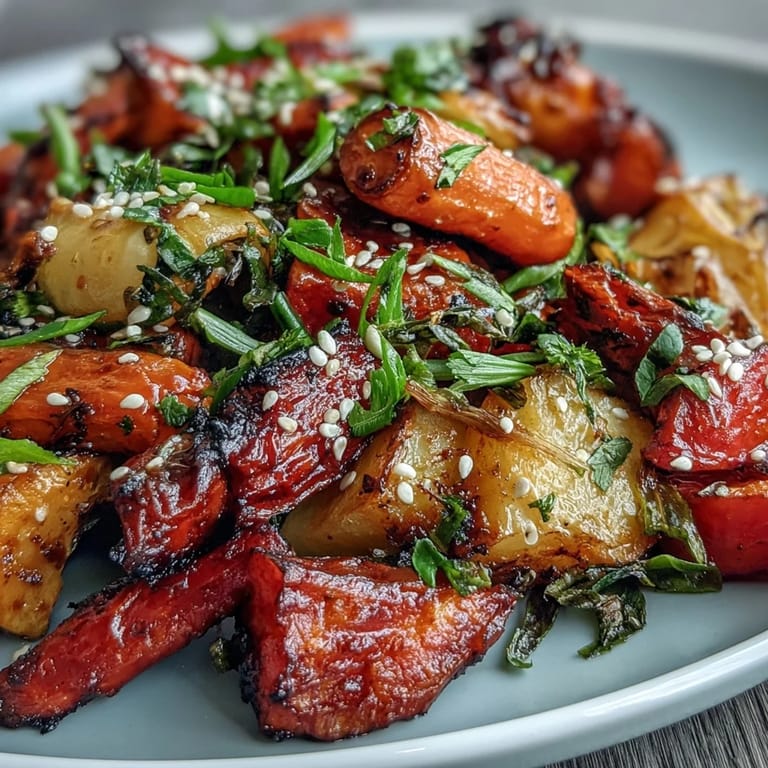
- When the vegetables are golden and tender with charred edges, transfer them to a serving platter and scatter sesame seeds and fresh herbs over the top. Serve while still warm so the flavors are at their most vibrant.
 Save
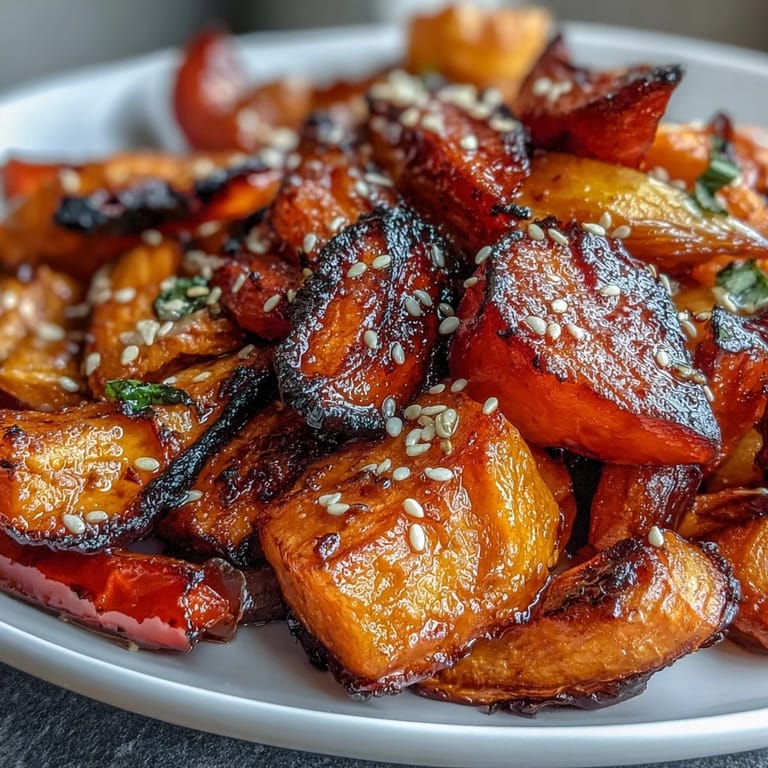
Save There's something quietly satisfying about watching a sheet of humble vegetables transform into something glossy and deeply savory. My neighbor smelled them roasting through our shared wall and actually knocked on my door to ask what I was making, which felt like the ultimate kitchen validation.
Choosing and Preparing Your Vegetables
The beauty of this recipe is its flexibility with the seasons. In autumn, I lean toward root vegetables and add parsnips, while in summer I go lighter with zucchini and bell peppers. The one thing I've learned is that harder vegetables like carrots and sweet potatoes benefit from being cut slightly smaller than the softer ones, because they need those extra minutes in the oven to soften properly.
Understanding the Miso-Butter Magic
White miso is a revelation if you've only used the red kind for soups. It's subtly sweet and less aggressive, making it perfect for vegetables where you want umami depth without funk or bitterness. The butter acts as a vehicle, melting into every crevice and carrying the miso's savory richness straight onto each piece of vegetable as they roast together in the heat.
Making It Work for Your Dietary Needs
I've made this vegan multiple times using quality plant-based butter, and honestly, the results are nearly identical because the miso paste is already providing so much flavor that the butter type matters less than you'd think. The roasting process creates the same caramelization and depth regardless of whether you're using dairy or not, so don't hesitate to adapt it to what your kitchen needs.
- Vegan butter swaps in seamlessly if you're avoiding dairy, though you might need to let it soften a bit longer than regular butter.
- If you're avoiding soy, use tamari or coconut aminos in place of the soy sauce, keeping the same amount for balance.
- These vegetables pair beautifully with rice, grilled tofu, roasted fish, or even tossed through a grain bowl for lunch the next day.
 Save
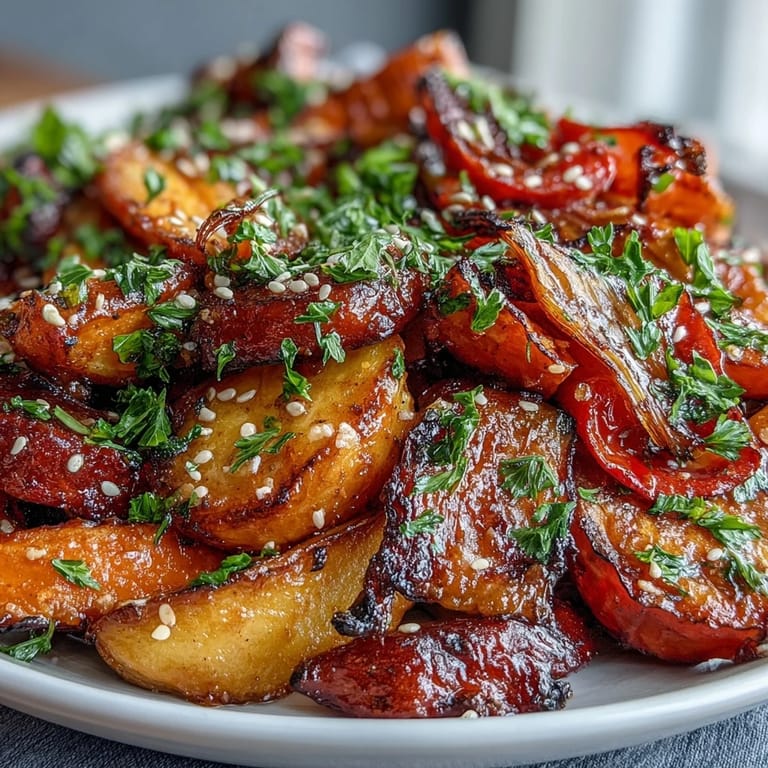
Save This recipe has quietly become my secret weapon for making weeknight dinners feel intentional and special. There's real comfort in knowing you can turn vegetables, butter, and miso into something that makes people ask for your recipe.
Recipe Help & Answers
- → What vegetables work best for this dish?
Carrots, sweet potatoes, bell pepper, zucchini, red onion, and broccoli provide great texture and flavor. Seasonal swaps like parsnips or Brussels sprouts are also excellent.
- → Can I make a vegan version?
Yes, use plant-based butter instead of dairy butter to keep the dish fully plant-based without compromising flavor.
- → How should I roast the vegetables for best results?
Roast at 425°F (220°C) for 25-30 minutes, stirring halfway through to ensure even caramelization and tender edges.
- → What is the purpose of the miso in the glaze?
Miso adds a savory umami depth that enhances the natural sweetness of the roasted vegetables.
- → Are there suggested pairings for this dish?
This dish pairs wonderfully with steamed rice, grilled fish, or tofu to make a well-rounded meal.