 Save
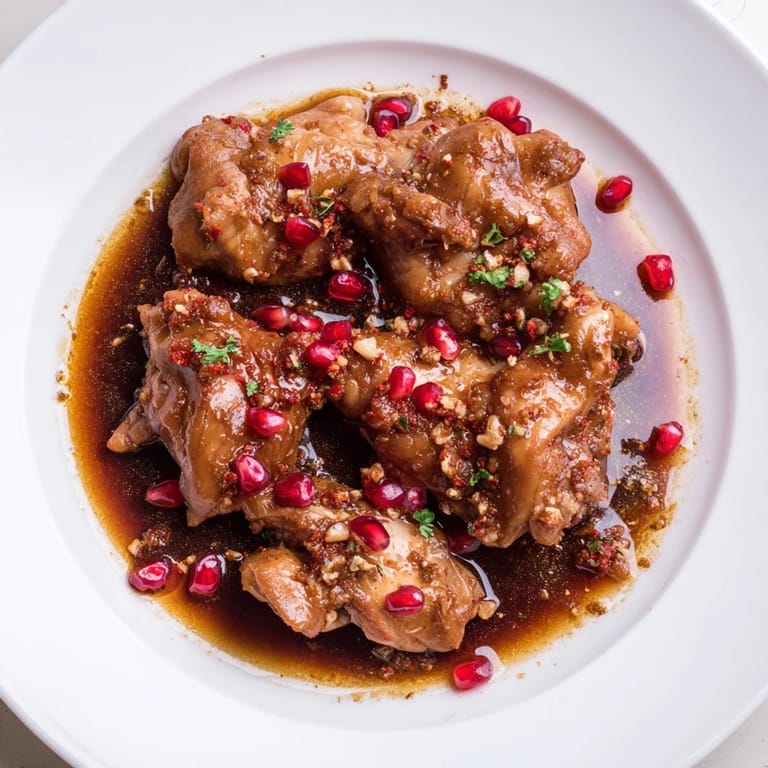
Save The first time I tasted fesenjan, it was at a neighbor's dinner table on a cold winter evening, and I remember being struck by how a sauce could be both elegant and comforting at the same time. There was this moment when the pomegranate hit my tongue, then the warmth of cinnamon, then the earthy richness of walnuts, and I found myself asking for the recipe before dessert was even cleared. It took me a few attempts to get the balance right, but once I did, this stew became the dish I make whenever I want to feel like I'm cooking something truly special.
I made this for my sister's birthday dinner when she was going through a rough patch, and watching her face light up when she tasted it reminded me why cooking matters. She kept asking for more rice to soak up every last drop of sauce, and by the end of the night, the whole mood had shifted. Fesenjan has a way of making an ordinary Tuesday feel like a celebration.
Ingredients
- Boneless chicken thighs or duck (700 g / 1.5 lbs), cut into large pieces: Thighs stay moist and tender through the long simmer, while duck brings a more authentic, luxurious depth if you're feeling adventurous.
- Salt and black pepper (1/2 tsp each): Season early so the flavors have time to meld into the meat.
- Vegetable oil (2 tbsp): Use a neutral oil that won't compete with the delicate spice profile.
- Large onion, finely chopped (1): Onions are your foundation here, turning golden and sweet as they cook down.
- Walnuts, finely ground (250 g / 2 cups): Grind them yourself if you can, as freshly ground walnuts have a creamier, more vibrant flavor than pre-ground.
- Pomegranate molasses (500 ml / 2 cups): This is the soul of the dish, bringing both tartness and slight sweetness that's impossible to replicate with other ingredients.
- Water (500 ml / 2 cups): It dilutes the sauce to the right consistency without watering down the flavor.
- Sugar (2 tbsp, adjust to taste): The sweet-sour balance is what makes fesenjan memorable, so taste as you go.
- Ground cinnamon, turmeric, and cardamom (1/2 tsp, 1/4 tsp, and 1/4 tsp): These warm spices tie everything together and give the stew its signature complexity.
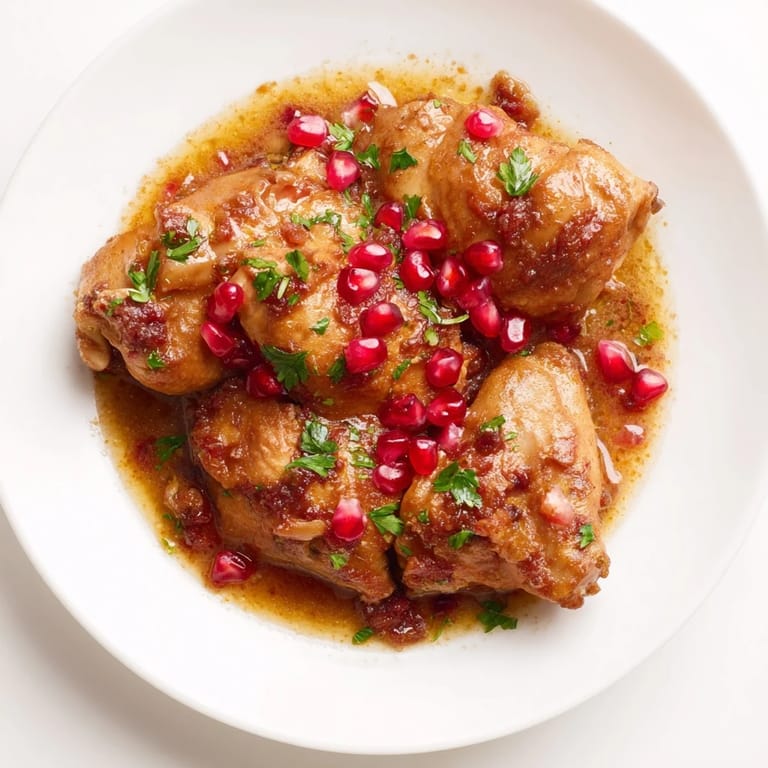
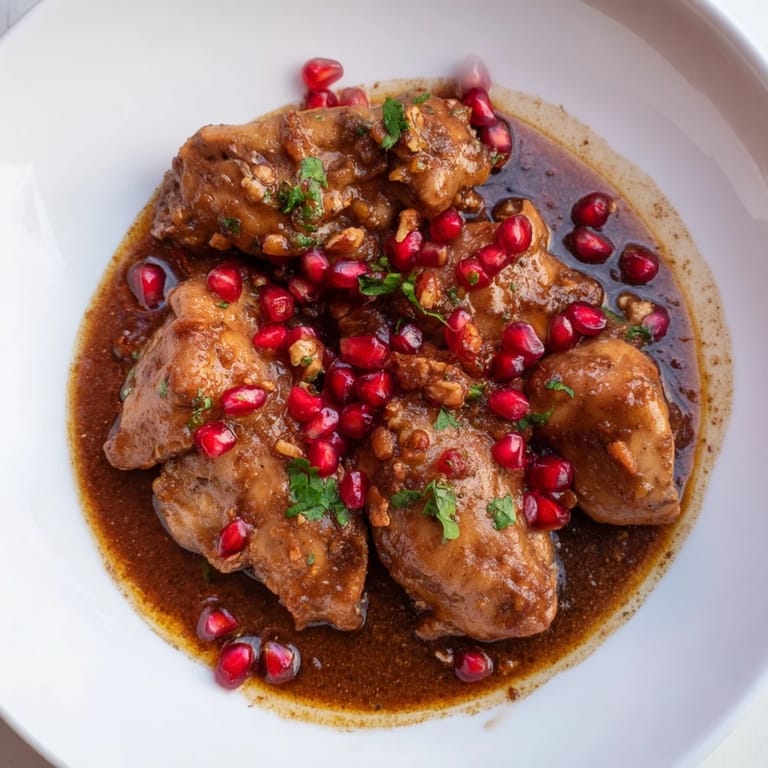
- Pomegranate seeds and fresh parsley (optional garnish): They add brightness and visual appeal when you're ready to serve.
Tired of Takeout? 🥡
Get 10 meals you can make faster than delivery arrives. Seriously.
One email. No spam. Unsubscribe anytime.
Instructions
- Season your meat:
- Sprinkle salt and black pepper generously over the chicken or duck pieces and let them sit for a minute so the seasoning actually sticks.
- Build your aromatic base:
- Heat the oil in your pot over medium heat until it shimmers, then add the chopped onion and let it cook undisturbed for a few minutes so it gets those golden, caramelized edges. Stir occasionally until it's softened and fragrant, about 8 to 10 minutes total.
- Brown the meat:
- Increase the heat slightly and add your seasoned pieces to the pot, letting them sit on each side without moving them around too much at first. You want a golden crust to form, which takes about 5 to 7 minutes total.
- Toast the walnuts:
- Stir in the finely ground walnuts and cook for 2 to 3 minutes, stirring constantly so they don't burn and stick to the bottom of the pot. You'll start to smell their rich, nutty aroma filling your kitchen.
- Build the sauce:
- Pour in the pomegranate molasses, water, sugar, and all the spices, stirring well so everything comes together in one cohesive sauce. Give the pot a good mix so no walnut clumps hide at the bottom.
- Simmer low and slow:
- Bring everything to a gentle boil, then drop the heat to low and cover the pot. Let it bubble away quietly for about an hour, stirring every 15 minutes or so to keep things from sticking.
- Finish with patience:
- Uncover the pot and simmer for another 30 minutes, stirring more frequently now as the sauce thickens and that beautiful walnut oil rises to the surface. Taste a spoonful and adjust the sugar or pomegranate molasses until the balance feels right to you.
- Serve with purpose:
- Ladle the stew over steamed basmati rice and finish with pomegranate seeds and fresh parsley if you have them.
 Save
Save There was a moment last spring when I made this for friends who had never had Persian food before, and one of them asked if this is what food was supposed to taste like. That question stayed with me because it made me realize fesenjan isn't just a recipe, it's a reminder that taking time with food, layering flavors carefully, and letting things cook down to their essence creates something people remember.
The Art of Sweet and Sour Balance
Fesenjan lives in that beautiful space between sweet and sour, and getting it right is less about following exact measurements and more about tasting and trusting your palate. Start with the 2 tablespoons of sugar I've suggested, but know that you might need less if your pomegranate molasses brand is already quite sweet, or more if you prefer the sauce to lean toward dessert-like richness. I've had batches that needed an extra tablespoon of sugar, and others that needed none at all, depending on the molasses and the season.
Meat Choices and Variations
Duck is the traditional choice in many Persian households, and if you can find it, it's worth seeking out because the fattier meat stands up beautifully to the intense sauce and stays tender even with extended cooking. Chicken thighs are more practical for everyday cooking and deliver nearly the same comfort, just with a slightly lighter mouthfeel. I've also made this with mushrooms when vegetarian friends visited, and while it's a different dish entirely, it's equally worthy, so don't hesitate to experiment based on what you have or what you're craving.
Serving and Storage Wisdom
Fesenjan tastes even better the next day when the flavors have had time to settle and deepen, so don't be shy about making it ahead for a dinner party. It reheats gently on the stovetop without losing any of its luxurious quality, and it keeps in the refrigerator for up to four days in an airtight container.
- Always serve over steamed basmati rice or saffron rice to catch every drop of that gorgeous sauce.
- A sprinkle of fresh pomegranate seeds and parsley at the end transforms the presentation from homey to elegant without any extra effort.
- If you're doubling the recipe for a crowd, don't double the spices all at once, add them gradually and taste as you go.
 Save
Save This stew has become my go-to dish for marking moments that matter, and I hope it becomes yours too. There's something about fesenjan that turns an ordinary meal into something people talk about for years.