 Save
Save There's something about the smell of cumin hitting hot olive oil that instantly transports me to a small Tel Aviv café on a Saturday morning. I was traveling alone, jet-lagged and hungry, and ordered shakshuka without knowing quite what to expect. The waiter set down this cast-iron pan with eggs nestled in a ruby-red sauce, and I spent twenty minutes tearing off pieces of pita and scooping it all up, feeling completely present for the first time in days. Now whenever I make it at home, that same aroma brings back that exact feeling of discovery.
I made this for my neighbor last week who'd been having a rough month, and she got tears in her eyes when I set it down—not from the chili, but because something about sharing food cooked with care broke through her exhaustion in a way words couldn't. We ate straight from the pan with crusty bread, and she asked for the recipe three times before leaving. That's when I realized shakshuka isn't really about technique at all; it's about creating a moment.
Ingredients
- Olive oil (2 tbsp): Use good quality oil here—it's not hidden in the background, and a peppery one adds wonderful depth to the sauce.
- Yellow onion (1 medium, finely chopped): The sweetness balances the spices, so don't rush the sautéing; let it turn translucent and almost golden.
- Red bell pepper (1, diced): The color and slight sweetness are essential, and it softens into the sauce beautifully if you cut it small.
- Garlic (3 cloves, minced): Fresh and finely minced matters because raw garlic bits can taste harsh in the finished dish.
- Red chili (1 small, finely chopped): Fresh chili gives a bright heat that lingered longer than I expected, so start with less if you're unsure.
- Crushed tomatoes (1 can, 400g): This is your sauce base, and I learned the hard way that good canned tomatoes beat mediocre fresh ones.
- Fresh tomatoes (2 medium, chopped): These add texture and acidity; if they're not ripe, your sauce won't sing.
- Tomato paste (1 tsp): A small amount concentrates the flavor without overpowering, so resist the urge to add more.
- Ground cumin (1 tsp): Toast it in your mind as you add it—this is the spice that defines the whole dish.
- Sweet paprika (1 tsp): Don't confuse this with smoked paprika unless you want a different flavor entirely.
- Cayenne pepper (¼ tsp, optional): Use it sparingly; heat builds as the sauce simmers.
- Ground coriander (½ tsp): This subtle spice ties everything together in a way people can't quite name.
- Salt and black pepper: Season as you go, especially after the sauce thickens.
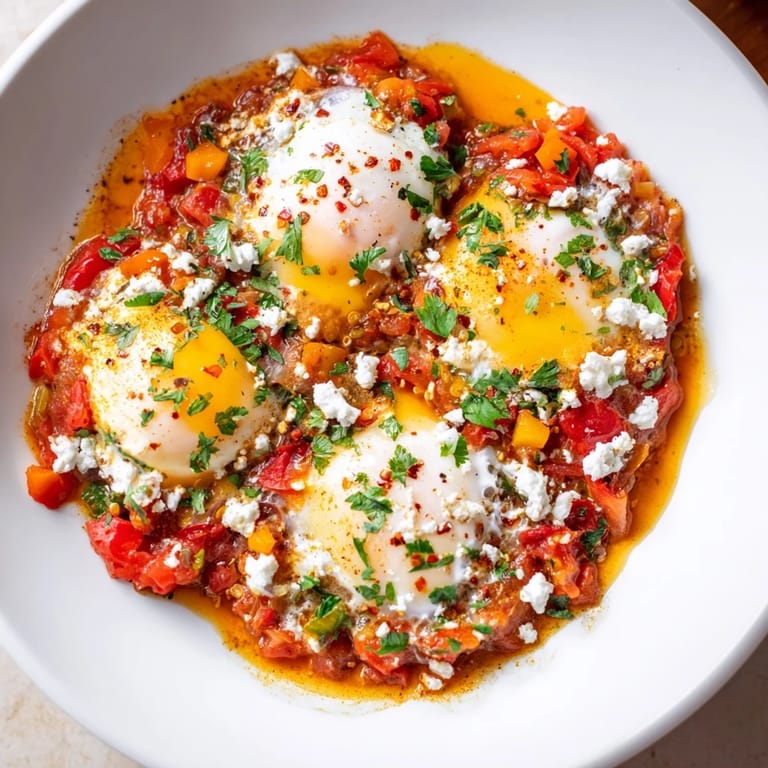
- Large eggs (4): Room temperature eggs cook more gently and evenly than cold ones pulled from the fridge.
- Fresh parsley (2 tbsp, chopped): Brighten the dish at the very end; don't cook it down.
- Fresh cilantro (2 tbsp, chopped): This is your choice to make—some people skip it, but it adds a peppery freshness that elevates everything.
- Feta cheese (crumbled, optional): The salty, tangy contrast against the soft yolk is honestly what converts skeptics into believers.
Tired of Takeout? 🥡
Get 10 meals you can make faster than delivery arrives. Seriously.
One email. No spam. Unsubscribe anytime.
Instructions
- Warm your pan and build your base:
- Heat olive oil in your skillet over medium heat until it shimmers, then add onion and bell pepper. Let them soften for 5 to 7 minutes, stirring occasionally; you're not rushing, just coaxing out their sweetness.
- Wake up the aromatics:
- Stir in garlic and chili, cooking just until fragrant—about a minute. This moment smells incredible and means your pan is exactly the right temperature.
- Build the sauce:
- Add both tomatoes and tomato paste, stirring well, then sprinkle in all your spices at once. The cumin will bloom as the sauce warms, and the whole kitchen will smell like something special.
- Let it simmer and develop:
- Reduce heat to medium-low and let the sauce bubble gently for 10 to 12 minutes, stirring occasionally. You're watching for it to thicken and for the flavors to deepen; taste and adjust seasoning now.
- Create nests for your eggs:
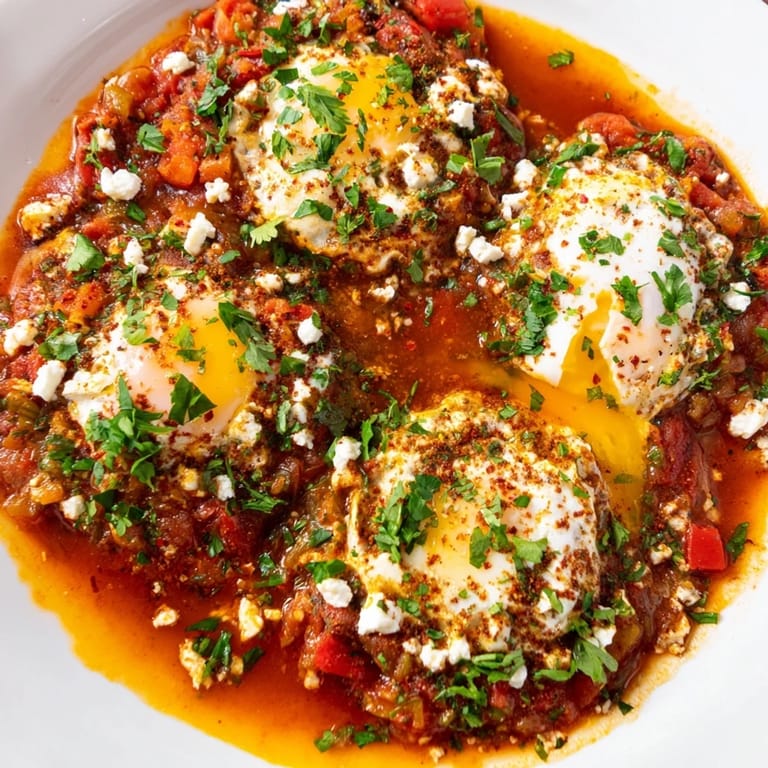
- Using the back of a spoon, make 4 shallow wells in the sauce, spacing them so the eggs won't touch. Crack each egg carefully into its own well, trying to keep yolks intact.
- Cover and cook gently:
- Place a lid on the pan (or even a baking sheet works) and cook over medium-low heat for 6 to 8 minutes. Peek after 6 minutes; the egg whites should be set while yolks jiggle softly.
- Finish and serve:
- Remove from heat, scatter fresh herbs and feta over everything, and serve straight from the pan with warm pita or crusty bread. Eating directly from the communal pan is part of the experience.
 Save
Save My most vivid shakshuka memory isn't actually in a kitchen—it's standing in the doorway watching my partner make this for the first time without a recipe, trusting their instincts about when to add heat and when to let things be. Watching someone cook with confidence, tasting their version of a dish you love, that's when food becomes something more than sustenance.
The Sauce Is Everything
The magic of shakshuka lives entirely in the sauce. I used to think the eggs were the star, but I was wrong—they're simply the vehicle for that spiced tomato magic. Your sauce should taste delicious on its own before any egg ever touches it, so taste it generously as you cook and don't be shy with seasoning. If it tastes a little thin, let it bubble away a bit longer; if it's too thick, a splash of water brings it back. The texture should be somewhere between soup and stew, clinging to the back of a spoon but still moving freely in the pan.
Variations Worth Trying
Once you understand the base formula, shakshuka becomes a canvas for whatever is in your kitchen. I've made it with sautéed spinach folded in just before the eggs, which turns it into something closer to a full meal. Roasted eggplant cubed and added to the sauce brings an earthy richness that completely changes the character. Some mornings I add a handful of labneh or Greek yogurt to the side, creating a cool contrast against the warm, spiced sauce. The beauty is that the recipe doesn't break—it just becomes a different version of itself, still absolutely worth making.
Serving and Pairing Wisdom
Shakshuka is social food—it demands to be shared. Serve it in the pan you cooked it in, set it in the middle of the table, and let people gather around with bread. The warmth of the pan keeps everything at the perfect temperature, and there's something about communal eating that makes food taste better. Pita is traditional and perfect, but good crusty bread, sourdough, or even soft focaccia all work beautifully.
- Pair it with a cooling side like labneh, yogurt, or a bright cucumber salad to balance the warmth and spice.
- Fresh mint or extra cilantro on the side lets people customize their heat level and flavor.
- Serve this as part of breakfast, brunch, a light dinner, or an appetizer—it truly works in all contexts.
 Save
Save This is the kind of recipe that gets better every time you make it, because you learn what your stove does, what spice level you actually prefer, and how you like your yolks cooked. Trust yourself to adjust and season as you go.
Recipe Help & Answers
- → What spices give shakshuka its distinctive flavor?
Cumin, sweet paprika, coriander, and optional cayenne pepper create the warm, spiced profile of shakshuka’s tomato sauce.
- → Can I adjust the heat level in this dish?
Yes, adding or omitting red chili and cayenne pepper allows you to control the spiciness to your liking.
- → What type of pan is best for cooking shakshuka?
A large skillet or cast-iron pan with a lid works best to evenly cook the sauce and gently poach the eggs.
- → How do you know when the eggs are perfectly cooked?
Cook until the egg whites are set but yolks remain soft, usually 6–8 minutes covered over medium heat.
- → What are good accompaniments for serving?
Warm pita bread, crusty bread, or labneh and Greek yogurt complement the dish beautifully.