 Save
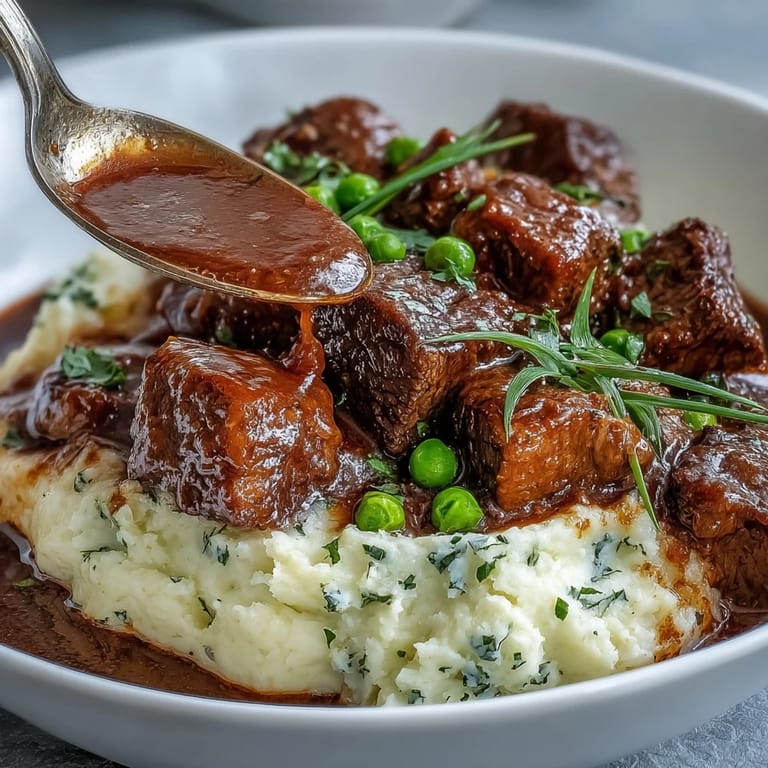
Save There's something about a proper Irish stew that makes you want to slow down, even on a busy weeknight. Years ago, a friend from Dublin taught me that the secret wasn't in doing anything fancy, just in letting good ingredients talk to each other for a while. When I decided to lighten it up without losing that soul-warming quality, I discovered that cauliflower mash could be just as comforting as potatoes, if not more so. This version keeps all the richness you crave but lets you enjoy it without the heaviness afterward.
I made this for my partner on a rainy autumn afternoon when we both needed something that felt like a hug. We sat at the kitchen counter while it simmered, and the smell of thyme and beef stock slowly took over the whole apartment. By the time I ladled it into bowls, we were both already smiling before the first spoonful hit our lips.
Ingredients
- Lean beef stew meat, 1 lb (450 g): Trimmed well so you're not paying for fat you'll trim away anyway; one-inch cubes cook through evenly without drying out.
- Olive oil, 1 tbsp: Just enough to create a good sear without making the stew greasy.
- Onion, diced: The flavor foundation; don't skip browning it after the beef.
- Carrots and celery: These soften into the broth and add natural sweetness and body.
- Garlic, 3 cloves minced: Added after vegetables so it doesn't burn; this timing makes all the difference.
- Beef broth, 3 cups (700 ml) low-sodium: Low-sodium lets you control salt and taste the actual beef flavor.
- Red wine, 1 cup (240 ml) dry: The acid cuts through richness; if you skip it, use extra broth and add a splash of vinegar.
- Tomato paste, 2 tbsp: A surprising ingredient that adds umami depth without being noticeable as tomato.
- Worcestershire sauce, 2 tsp: The secret savory note that makes people ask what that incredible flavor is.
- Thyme and rosemary, 1 tsp dried each: Dried herbs are stronger than fresh, so measure carefully; fresh would need triple the amount.
- Bay leaves, 2: Fish these out before serving or your guest will find one; learned that lesson once.
- Salt and pepper: Taste as you go; the broth and Worcestershire bring salt too.
- Frozen peas, 1 cup (150 g): Added at the end so they stay bright and don't turn mushy.
- Cauliflower, 1 large head: Cut into florets roughly the same size so they cook evenly.
- Unsalted butter, 2 tbsp and low-fat milk, 2 tbsp: The butter is essential for creaminess; the milk helps achieve the right texture without heaviness.
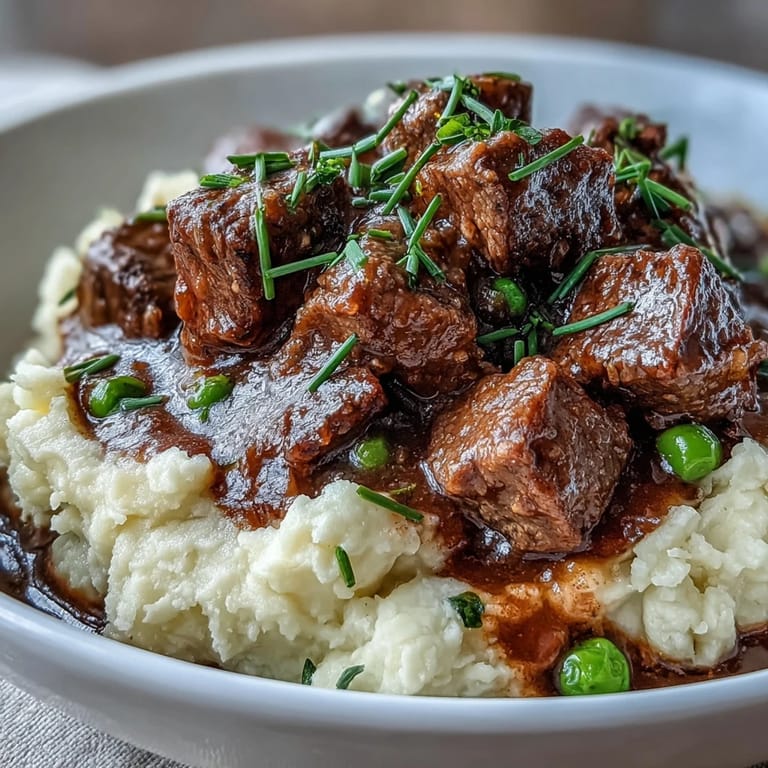
- Fresh chives for garnish: Optional but worth it; that fresh green note lifts the whole dish.
Tired of Takeout? 🥡
Get 10 meals you can make faster than delivery arrives. Seriously.
One email. No spam. Unsubscribe anytime.
Instructions
- Prepare and sear the beef:
- Pat the meat dry with paper towels and season generously with salt and pepper. Heat olive oil in a large, heavy pot over medium-high heat until it shimmers, then brown the beef in batches without crowding the pan—this takes about 3-4 minutes per side. Don't rush this step; the browned bits (called fond) become liquid gold later.
- Build the aromatic base:
- Return the pot to medium heat and add diced onion, carrots, and celery. Sauté for about 5 minutes until the onion softens and turns translucent at the edges. Add minced garlic and cook for another minute until fragrant, then stir in tomato paste, thyme, rosemary, and bay leaves, cooking everything together for 1 minute.
- Deglaze and simmer:
- Return the beef to the pot and pour in the red wine, scraping the bottom with a wooden spoon to loosen all those flavorful brown bits. Add beef broth and Worcestershire sauce, then bring everything to a gentle simmer. Reduce heat to low, cover, and let it cook for 1 hour 15 minutes, stirring occasionally, until the beef is fork-tender and the sauce has deepened in color.
- Finish the stew:
- Remove the lid, add the frozen peas, and simmer uncovered for another 5 to 10 minutes until peas are heated through and the stew has reduced slightly. Taste and adjust salt and pepper; remember that bay leaves provide subtle flavor but no saltiness.
- Make the cauliflower mash:
- While the stew simmers, cut cauliflower into florets and boil them in salted water for 10 to 12 minutes until they're very tender and breaking apart easily. Drain thoroughly, transfer to a food processor with unsalted butter and milk, and blend until completely smooth and creamy. Season with salt and pepper to taste.
- Serve and garnish:
- Ladle the hot stew into bowls and mound the warm cauliflower mash in the center or on the side. Finish with fresh chives if you have them.
 Save
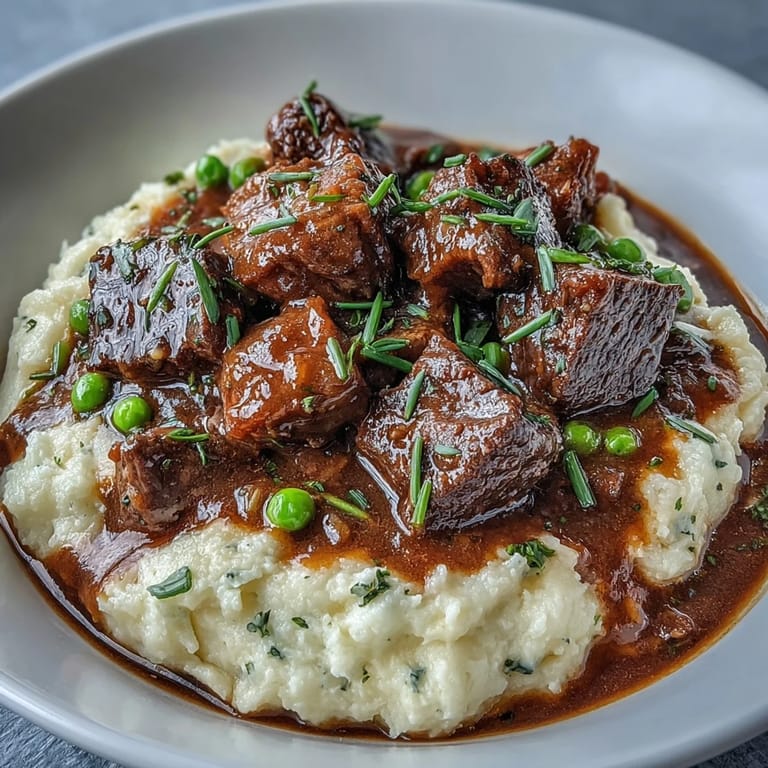
Save That evening with the stew taught me something I keep coming back to: the best dishes aren't the complicated ones, they're the ones that make you feel seen and cared for. This one does that without pretense.
Why Cauliflower Works Here
When I first tried replacing potatoes with cauliflower mash, I was skeptical. Potatoes have this earthy sweetness that feels irreplaceable, but cauliflower brings something different—a subtle, almost buttery creaminess when blended with butter and milk. The neutral flavor actually lets the stew shine instead of competing with it. Plus, there's something satisfying about the texture contrast between the tender beef and silky mash that feels just as indulgent as the heavier version.
The Wine Question
I use dry red wine because the acidity brightens the stew and prevents it from tasting one-dimensional. A friend swears by substituting Guinness instead, which adds a subtle roasted note that's distinctly Irish. If you skip alcohol entirely, use extra broth and add a teaspoon of red wine vinegar to keep that brightness. The wine cooks off completely, so there's no alcohol remaining—just flavor.
Storage, Pairing, and Small Tweaks
This stew keeps beautifully in the refrigerator for three days and freezes well for up to two months; thaw it overnight and reheat gently over low heat. For serving, I like pairing it with a light-bodied red wine or an Irish ale that won't overpower the dish. If you want the stew thicker, remove about half a cup of cooked vegetables, mash them with a fork, and stir the mixture back in—it creates body without flour or cornstarch.
- Sweet potatoes can replace some of the carrots if you want earthiness and a hint of sweetness.
- A splash of balsamic vinegar stirred in at the very end adds complexity without tasting vinegary.
- Fresh parsley or thyme scattered over the finished bowl adds brightness that matters more than you'd expect.
 Save
Save This dish has quietly become one of my weeknight staples because it delivers comfort without guilt and tastes like someone spent hours on it when really you're just managing one pot for an hour and a half. That's the kind of magic worth keeping around.
Recipe Help & Answers
- → What cut of beef works best for this dish?
Lean beef stew meat cut into one-inch cubes is ideal as it becomes tender when slow-cooked, absorbing flavors well.
- → Can I substitute red wine in the stew?
Yes, you can use additional beef broth or a splash of Guinness for a richer taste without alcohol.
- → How do I achieve a creamy cauliflower mash?
Boil the cauliflower until very tender, then blend it with butter and low-fat milk until smooth and creamy.
- → Is this dish suitable for gluten-free diets?
Yes, this stew and cauliflower mash contain no gluten ingredients, making it naturally gluten-free.
- → What is a good side pairing or drink option?
A light-bodied red wine or Irish ale pairs beautifully to complement the rich, savory flavors.