 Save
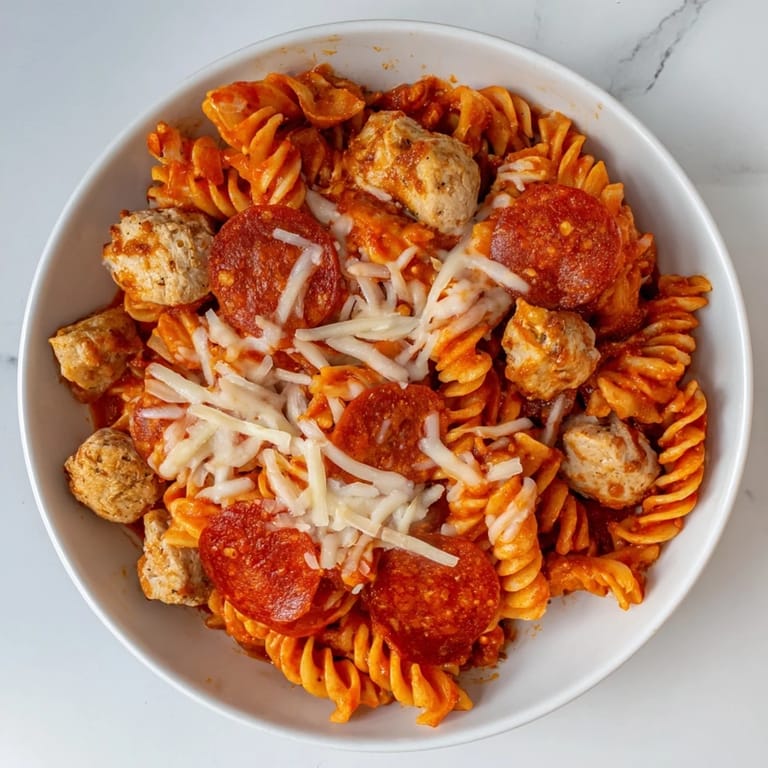
Save I discovered this dish on a Tuesday night when I had exactly twenty minutes before friends arrived for dinner and my refrigerator had leftover rotini, a container of marinara, and somehow an entire package of pepperoni I'd forgotten about. That chaos in my kitchen turned into something so satisfying that my guests kept asking for seconds, and it became the go-to recipe I reach for when I want something that tastes indulgent but doesn't demand hours of my time.
I made this for my neighbor Sarah last month when she mentioned craving something comforting but didn't want to order takeout again, and watching her face when she tasted that first bite told me everything—the way pasta absorbs sauce alongside the crispy bits of pepperoni, how the cheese gets those perfect bubbling edges in the pan, it all just works together.
Ingredients
- Chicken breast: Cut into bite-sized pieces so it cooks evenly alongside the pasta and stays tender in the sauce.
- Pepperoni: Use quality pepperoni sliced or quartered, as it releases its oils and flavor into the whole dish.
- Rotini pasta: The spiral shape catches sauce beautifully, though penne or fusilli work just as well.
- Mozzarella cheese: Shredded works perfectly and melts into gooey pockets throughout; add half during cooking and top with the rest.
- Parmesan cheese: Grated Parmesan adds a sharp, salty note that balances the richness.
- Marinara or pizza sauce: The base of everything, so use one you actually enjoy eating.
- Onion and garlic: The aromatics that make your kitchen smell like you've been cooking all day.
- Red bell pepper: Adds sweetness and color; optional but it keeps the dish from feeling one-dimensional.
- Olive oil: Use enough to coat the pan and start the chicken properly.
- Italian herbs and red pepper flakes: Season to your preference; taste as you go.
- Chicken broth: Keeps the pasta hydrated as it cooks and becomes part of the sauce.
Tired of Takeout? 🥡
Get 10 meals you can make faster than delivery arrives. Seriously.
One email. No spam. Unsubscribe anytime.
Instructions
- Start with the chicken:
- Heat olive oil over medium heat in a large deep skillet and add your chicken pieces with a light sprinkle of salt and pepper. You'll know they're ready to move to the next step when they've lost their raw look and have taken on a light golden color, usually 3–4 minutes.
- Build the flavor base:
- Add your chopped onion, minced garlic, and diced bell pepper if using them. Let these soften for a couple of minutes until they're fragrant and the onion becomes translucent; this is where the magic of layering flavors begins.
- Introduce the pepperoni:
- Stir in your pepperoni and let it warm through for about a minute, allowing its oils to start seasoning the pan.
- Combine everything:
- Add your uncooked rotini, sauce, chicken broth, Italian herbs, and red pepper flakes all at once, stirring well so the pasta is mostly submerged. This might look like a lot of liquid, but trust the process—the pasta will drink it all up.
- Let it simmer:
- Bring the mixture to a gentle boil, then reduce heat to low, cover, and let it bubble away for 12–14 minutes while you stir once or twice. The pasta should be tender but still have a little resistance when you bite it, and most of the liquid should be absorbed by now.
- Melt in the cheese:
- Stir in half the mozzarella and all of the Parmesan, then top with the remaining mozzarella. Cover and cook for another 2–3 minutes until the cheese is melted and bubbly on top.
- Rest and serve:
- Remove from heat and let everything settle for 2 minutes before serving, which gives the flavors a moment to meld and makes plating easier.
 Save
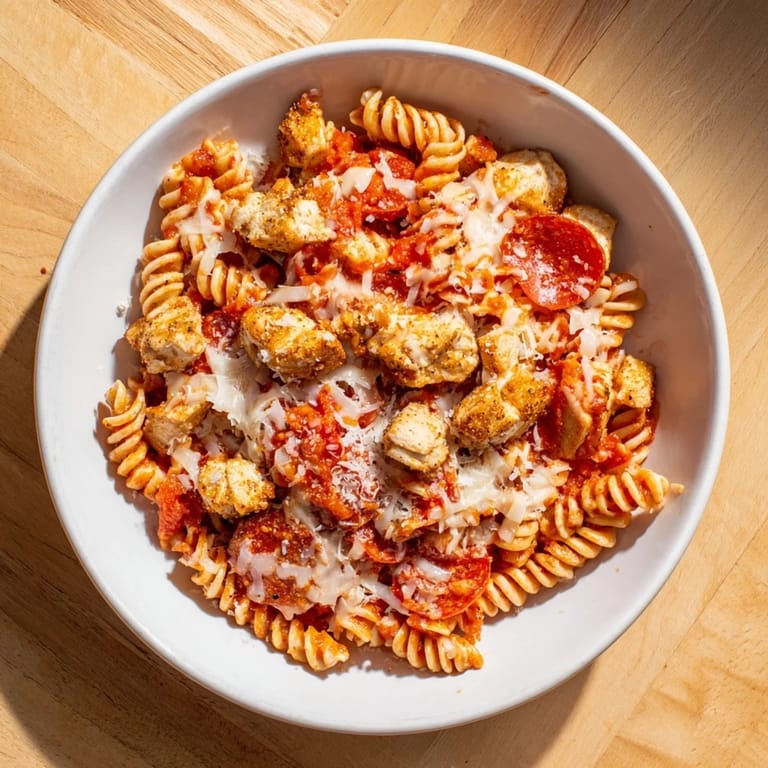
Save There's a moment right when the cheese bubbles up and you lift that lid, and the steam rises with this wonderful blend of pepperoni, herbs, and melted mozzarella that makes you forget how simple the whole thing actually was. It's one of those dishes that feels like more effort than it takes, which is exactly why I keep coming back to it.
Why This Works as One-Pan Magic
The genius of cooking everything in one pan is that nothing simmers in plain water; instead, the pasta cooks in a flavorful broth that's enriched by the chicken, pepperoni, and aromatics already in the pan. By the time the pasta is tender, it's absorbed all that seasoning, and the starch from the pasta helps thicken the sauce naturally. Your cleanup is faster, your kitchen is happier, and honestly, you end up with better results than if you'd cooked the pasta separately.
Customizing to Your Taste
This recipe is a wonderful canvas for your own preferences; I've made it with mushrooms instead of bell pepper, used spicy pepperoni when I'm craving heat, and once even threw in some fresh basil at the end because it was sitting on my counter. The core technique stays the same, so you're free to experiment without worrying about ruining dinner.
Serving and Pairing Ideas
Serve this straight from the pan if you're cooking for casual gatherings, or plate it individually if you want it to feel a bit more polished. A simple green salad alongside cuts through the richness, and if you're inclined toward wine, a light red like Chianti or even a crisp white works beautifully.
- Sprinkle extra fresh herbs or a tiny drizzle of olive oil on top just before serving for a professional-looking finish.
- If any leftovers make it to the next day, they reheat gently in the microwave or oven without drying out.
- Consider doubling this recipe if you're feeding a crowd; it scales easily and tastes even better when there's a bit more for people to share.
 Save
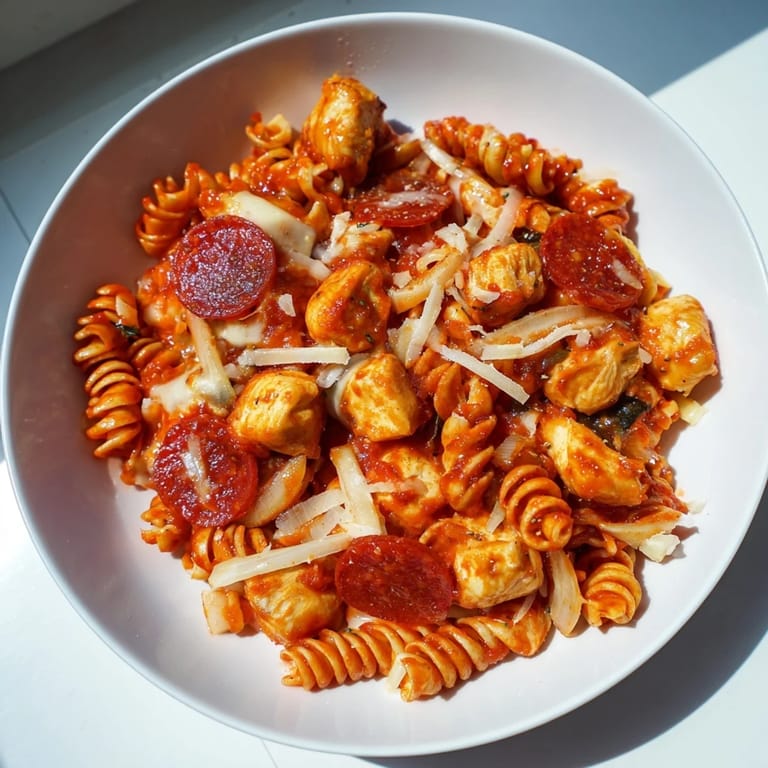
Save This dish has become my answer to those nights when I want something satisfying without the fuss, and it never disappoints. Every time I make it, I'm grateful for that accidental Tuesday-night discovery.
Recipe Help & Answers
- → Can I use other pasta types?
Yes, penne or fusilli are great substitutes and hold the sauce well.
- → How can I make it spicier?
Use spicy pepperoni and increase crushed red pepper flakes to add more heat.
- → Is it possible to add vegetables?
Absolutely! Bell peppers add sweetness, but mushrooms or olives work well too.
- → What type of cheese works best?
Shredded mozzarella and grated Parmesan provide the ideal creamy and sharp contrast.
- → How do I prevent the pasta from sticking?
Ensure enough liquid covers the pasta during simmering and stir occasionally to keep it separated.