 Save
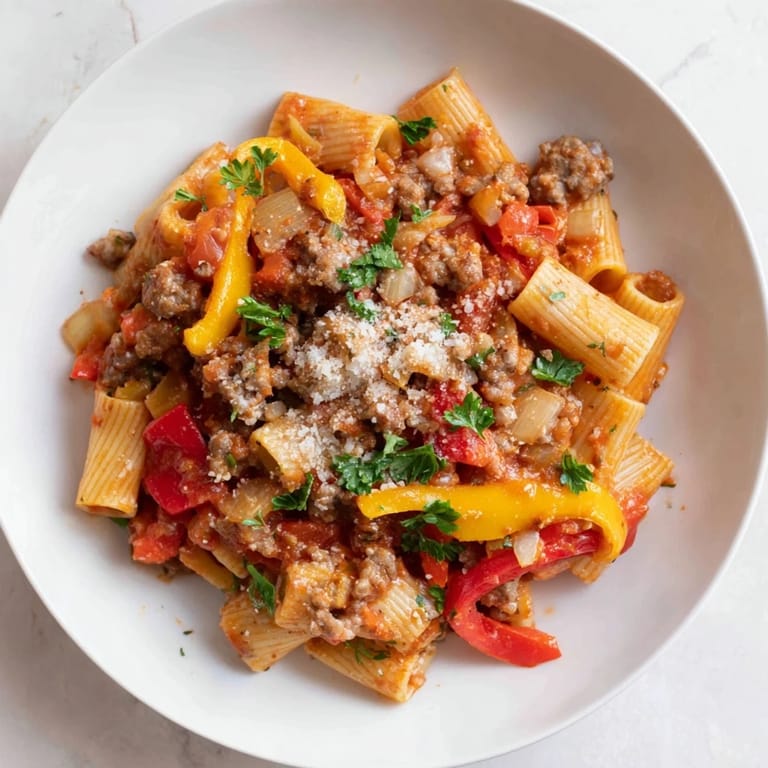
Save My neighbor Marco taught me this dish on a crowded Sunday afternoon when his kitchen smelled like garlic and caramelized peppers. He moved the sausage around the pan with practiced sweeps, explaining that the key was letting those bell peppers slowly turn golden instead of rushing them. I watched the way the sauce clung to the penne, how everything came together in one skillet like it was meant to be simple all along. That first forkful made me understand why this dish has stayed beloved for generations.
I made this for my partner on a rainy Wednesday when we both needed something warm and satisfying. The kitchen filled with steam from the boiling pasta water, and I could hear the sausage crackling before I even looked at the stove. By the time we sat down, the whole apartment smelled incredible, and somehow that simple dinner turned into a really good night.
Ingredients
- Italian sausage (1 lb, casings removed): This is the backbone of the dish, so pick good quality if you can. Mild lets the pepper flavors shine, but spicy adds a nice kick if that's your preference.
- Red, yellow, and green bell peppers (1 of each, sliced): The different colors aren't just pretty; they each bring slightly different flavor notes as they cook down. Don't skip the yellow ones.
- Large onion (1, thinly sliced): Onions get sweet and almost silky when they have time to caramelize, which is exactly what happens here.
- Garlic (3 cloves, minced): Add it after the peppers soften or it can turn bitter. You'll know it's right when you smell that sharp, fresh aroma hit the pan.
- Penne or rigatoni pasta (12 oz): The ridges in these shapes catch the sauce beautifully. Don't go for spaghetti here; it won't hold up the same way.
- Crushed tomatoes (14 oz can) and tomato paste (2 tbsp): The paste adds depth and richness that you can't replicate with tomatoes alone. Trust this combination.
- Oregano and basil (1 tsp and 1/2 tsp dried): These dried herbs are essential to the Italian-American character of the dish. Fresh basil at the end makes it even better if you have it.
- Red pepper flakes (1/2 tsp, optional): A gentle warmth, not heat. It rounds out the flavor profile in a subtle way.
- Olive oil (2 tbsp): This is where the sausage gets its golden crust, so don't use cooking spray.
- Fresh parsley and Parmesan (for serving): These aren't afterthoughts. The parsley brings brightness, and the Parmesan adds a savory finish that makes every bite feel complete.
Tired of Takeout? 🥡
Get 10 meals you can make faster than delivery arrives. Seriously.
One email. No spam. Unsubscribe anytime.
Instructions
- Get your water boiling and sausage ready:
- Fill a large pot with salted water and let it come to a rolling boil while you prepare everything else. Salt the water generously—it should taste like the sea. Have the sausage out of the casing and broken into rough pieces, ready to go.
- Brown the sausage:
- Heat olive oil in a large skillet over medium heat until it shimmers slightly. Add the sausage and break it into smaller pieces with a wooden spoon as it cooks, stirring occasionally. After about 5 to 7 minutes, it should be golden and cooked through with no pink inside. Transfer it to a clean plate.
- Build the base with peppers and onions:
- Keep the heat at medium and add your sliced peppers and onions to the same skillet. Don't stir constantly; let them sit for a minute or two so they develop some color. After about 5 to 6 minutes, they should be soft and starting to caramelize at the edges, filling the kitchen with a sweet, savory smell.
- Wake up the pan with garlic:
- Add the minced garlic and stir everything together. Cook for just 1 minute until the raw garlic smell transforms into something fragrant and inviting. This is a tiny step that makes a real difference.
- Build the sauce:
- Stir in the tomato paste first, letting it cook for about 30 seconds to lose its raw edge. Then add the crushed tomatoes, oregano, basil, red pepper flakes if using, and salt and black pepper to taste. The sauce will bubble gently; let it simmer for 5 minutes so the flavors marry together.
- Bring the sausage back and simmer:
- Return the cooked sausage to the skillet and stir everything together. Simmer for 3 to 4 minutes more. If the sauce looks too thick, add a splash of that reserved pasta water to loosen it.
- Finish with pasta:
- By now your pasta should be cooked to al dente and drained. Add it to the skillet and toss everything together, letting it heat through for 1 to 2 minutes. The sauce should coat the pasta nicely, clinging to every ridge.
- Serve:
- Divide among bowls or plates, top with fresh chopped parsley and a generous handful of grated Parmesan cheese. Serve right away while everything is still warm.
 Save
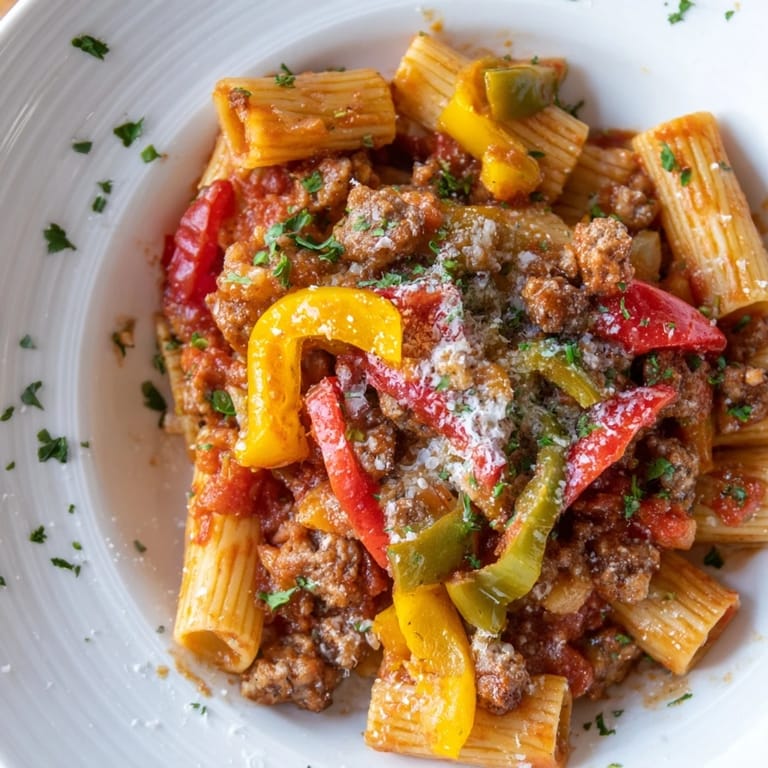
Save I remember my friend Sarah saying, after her first bite, that this was the kind of food that makes you feel taken care of. That stuck with me because cooking it suddenly felt less like following steps and more like giving people something they'd remember.
Why This Dish Works
There's something about the combination of sweet caramelized peppers and onions against savory browned sausage that just balances perfectly. The tomato sauce ties everything together without being heavy or complicated. It's the kind of meal that feels restaurant-quality but comes from one pan and your own hands. The flavors aren't fighting; they're working together in a way that makes you want another forkful.
Variations to Explore
This recipe has enough flexibility that you can make it your own without losing what makes it special. Some nights I'll add a splash of red wine to the sauce for something richer, or use chicken sausage when I want it lighter. A handful of fresh spinach stirred in at the end adds color and nutrition without changing the basic character. Even switching the pasta shape changes how the sauce clings and feels on your fork, so don't think you have to stick to penne.
Pairing and Serving Ideas
This pasta loves a robust Italian red wine like Chianti or a Sangiovese; the acidity cuts through the richness beautifully. A simple green salad with lemon dressing on the side feels right, giving you something fresh alongside all that savory comfort. If you're making this for a crowd, you can keep the components warm separately and finish it all together right before serving, which takes away some of the stress of timing everything perfectly.
- Serve with crusty bread to soak up every drop of sauce left in your bowl.
- A squeeze of fresh lemon over everything at the table brightens up the whole dish.
- Don't be shy with the Parmesan; it's meant to be generous.
 Save
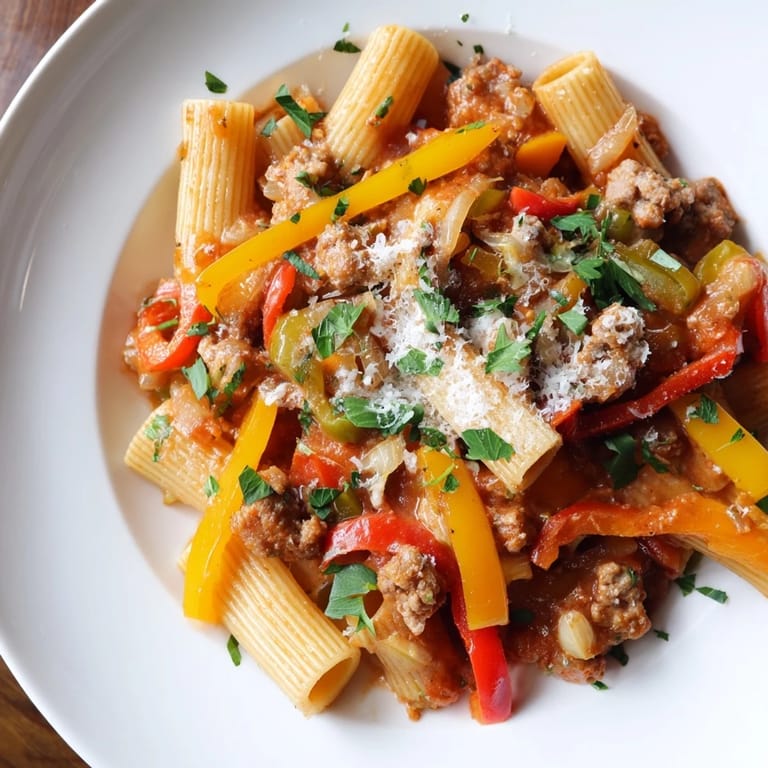
Save This is the kind of dish that reminds you why cooking at home matters. It fills your kitchen with warmth and brings people to the table hungry and ready.
Recipe Help & Answers
- → What type of sausage works best for this dish?
Italian sausage, either mild or spicy, is ideal for its rich seasoning and texture. For a lighter option, turkey or chicken sausage can be used.
- → Can different pasta shapes be used?
Yes, penne or rigatoni work well as they hold the sauce effectively, but other tubular or ridged varieties can also be substituted.
- → How can I adjust the spice level?
Adjust the crushed red pepper flakes quantity or omit them altogether to control heat according to your preference.
- → Is it possible to add more vegetables?
Additional vegetables like mushrooms or zucchini can be incorporated during the sauté step for extra nutrition and flavor.
- → What is the best way to serve this dish?
Serve hot, garnished with fresh parsley and grated Parmesan cheese to add brightness and a savory finish.
- → Can leftover sauce be stored separately?
Yes, storing the sauce and pasta separately helps maintain texture; reheat gently before combining.