 Save
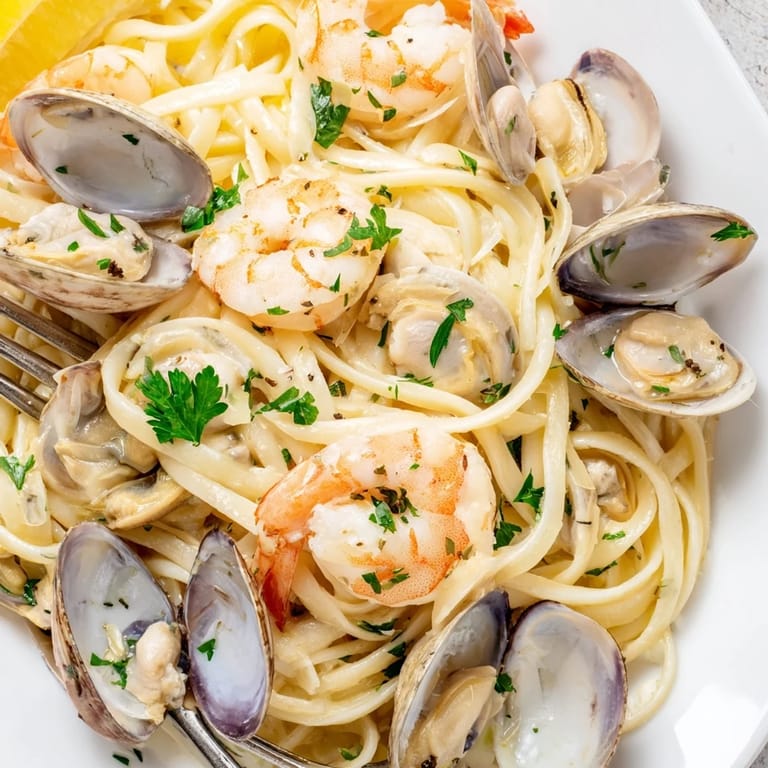
Save The smell of garlic hitting olive oil in my tiny apartment kitchen transports me back to a rainy Tuesday when I decided I needed to learn how to cook properly. My roommate watched skeptically as I hauled home bags of shellfish from the market. That first attempt was chaotic with shells everywhere and sauce splattering my stove, but the first bite made me understand why Italian grandmothers never measure anything.
I made this for my parents on their anniversary last winter. My dad usually complains about shellfish being too much work until he realized how quickly the clams popped open in the pan. We sat around the table for hours with empty shells piling up and bread soaking up the remaining sauce. It is now the most requested meal for every family celebration.
Ingredients
- 200 g large shrimp: Peeled and deveined saves precious time and keeps the sauce clean
- 250 g fresh clams: Scrub them thoroughly under cold water until the water runs clear
- 250 g fresh mussels: Pull off the beards and discard any that do not close when tapped
- 400 g dried linguine: The flat shape holds onto the sauce better than spaghetti
- 3 tbsp extra virgin olive oil: This becomes the base of your sauce so use something you enjoy
- 4 garlic cloves: Thinly slice them instead of mincing for gentler sweetness
- 1 small shallot: Finely chopped adds sweetness without harsh onion flavor
- ½ tsp red pepper flakes: Optional but beautiful background heat
- 200 ml dry white wine: Pinot Grigio or Sauvignon Blanc work perfectly
- 250 ml fish or chicken stock: Homemade stock makes a noticeable difference
- 2 tbsp unsalted butter: Adds silkiness and gloss to finish the sauce
- Zest of ½ lemon: Brightens the entire dish and cuts through richness
- 2 tbsp fresh lemon juice: Add right at the end for fresh acidity
- Salt and black pepper: Taste before serving since seafood is naturally salty
- 3 tbsp chopped fresh parsley: Brings color and freshness to the final bowl
- Lemon wedges: Essential for squeezing over individual portions
Tired of Takeout? 🥡
Get 10 meals you can make faster than delivery arrives. Seriously.
One email. No spam. Unsubscribe anytime.
Instructions
- Get your pasta water ready:
- Bring a large pot of salted water to boil and cook linguine until just al dente. Reserve ½ cup pasta water before draining and set aside.
- Build the flavor foundation:
- Heat olive oil in a large deep skillet over medium heat. Add garlic and shallot then sauté until fragrant and soft for about 2 minutes. Toss in red pepper flakes if you want some warmth.
- Sear the shrimp quickly:
- Increase heat to medium high and add shrimp to the pan. Sauté for just 1 minute per side until they begin turning pink then remove to a plate.
- Steam the shellfish:
- Add clams and mussels to the skillet with white wine. Cover tightly and cook for 3 to 4 minutes until shells begin to open. Discard any that refuse to open.
- Create the sauce base:
- Pour in the stock and bring everything to a gentle simmer. Cook uncovered for 2 to 3 minutes then return the shrimp to the pan.
- Bring it all together:
- Add cooked linguine to the skillet with reserved pasta water. Toss in butter lemon zest and juice. Gently toss everything over low heat until pasta is coated and seafood is heated through.
- Finish and serve:
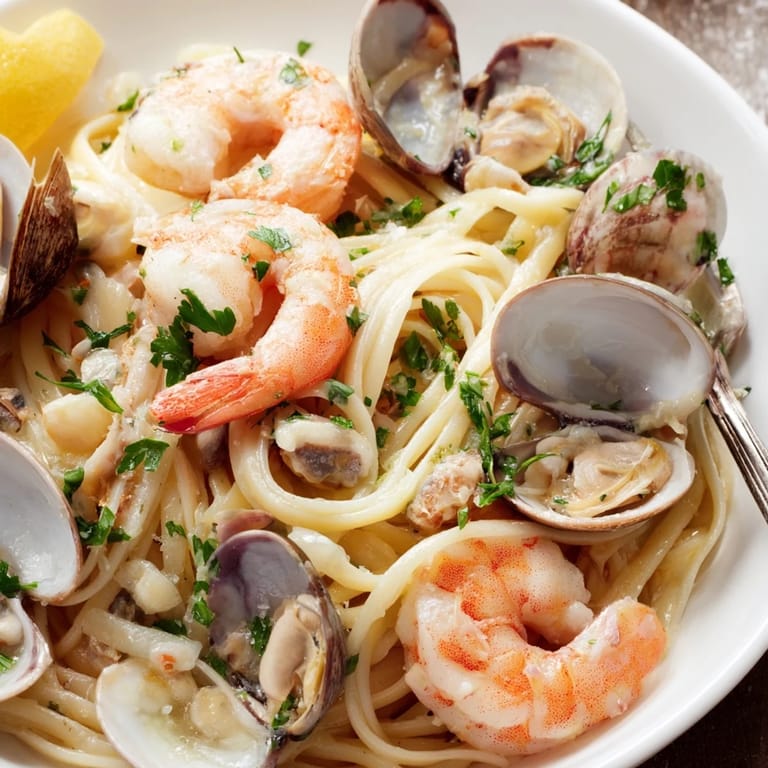
- Season with salt and pepper then serve immediately in shallow bowls. Sprinkle with parsley and add lemon wedges for squeezing.
 Save
Save This dish became a Friday tradition during my first year of teaching when I needed something celebratory to end the week. The rhythm of cleaning shellfish and reducing wine became my meditation. Those Friday nights taught me that beautiful food does not need hours of work to feel special.
Timing Is Everything
Mise en place becomes your best friend with seafood pasta. Have everything chopped and measured before you turn on any heat. The moment shellfish hits the pan the clock starts ticking and you cannot afford to search for parsley or wine glasses.
The Pasta Water Secret
That starchy pasta water creates the silky texture that emulates restaurant quality sauces. Adding it a splash at a time while tossing creates glossy coating that clings to every strand of linguine. I keep a mug of it nearby until the very last toss.
Building Your Seafood Variations
The foundation of this recipe works with almost any combination from the sea. Scallop and shrimp sing together while adding chunks of firm fish like halibut creates a more substantial meal.
- Always add quicker cooking seafood like shrimp last to prevent toughening
- Substitute calamari rings for mussels if you prefer tender texture
- A splash of cream at the end transforms this into a richer version
 Save
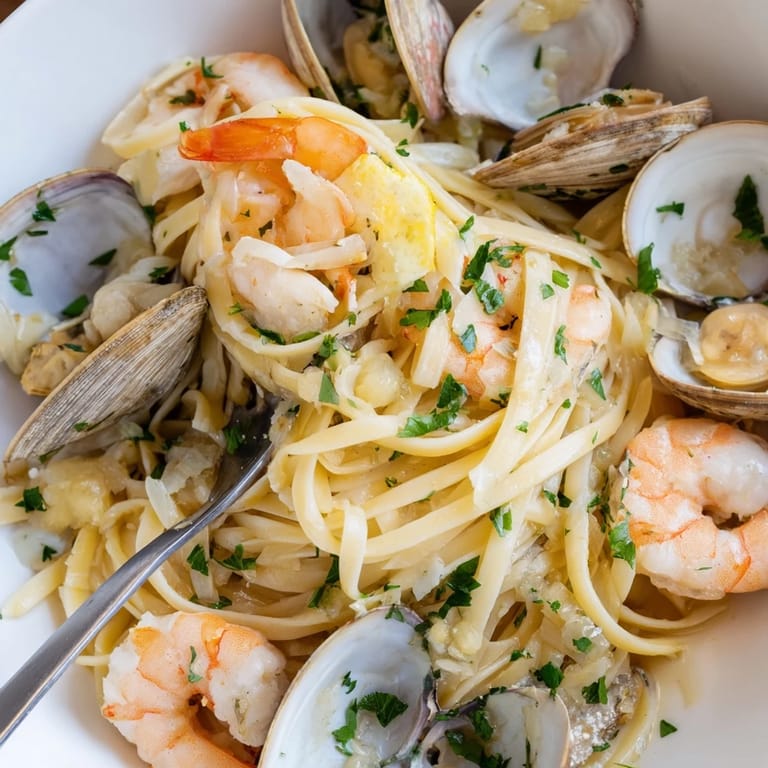
Save There is something magical about the way a table full of people falls silent when they first taste a properly cooked seafood pasta. That quiet moment before the conversation picks up again is why I keep coming back to this recipe.
Recipe Help & Answers
- → What type of wine works best for this dish?
A dry white wine like Pinot Grigio, Sauvignon Blanc, or Vermentino works beautifully. Avoid sweet wines as they'll alter the sauce's balance. The wine you choose to cook with should be one you'd enjoy drinking.
- → How can I tell if clams and mussels are fresh?
Fresh clams and mussels should have tightly closed shells. Give them a quick tap—if they don't close, discard them. Also check that they smell like the ocean, not fishy. Scrub shells under cold water before cooking to remove any sand or debris.
- → Can I use frozen seafood instead of fresh?
Fresh seafood yields the best texture and flavor, but frozen shrimp work in a pinch. Thaw completely and pat dry before cooking. Avoid frozen clams and mussels as they tend to become rubbery and lose their delicate briny taste.
- → What pasta shape alternatives work well?
While linguine's long strands are traditional, fettuccine, spaghetti, or angel hair also work beautifully. For something different, try linguine's wider cousin, tagliatelle, which holds the sauce exceptionally well.
- → How do I prevent the pasta from becoming gummy?
Cook the linguine until just al dente, reserve some starchy pasta water before draining, and toss the noodles with the sauce immediately. The starch helps emulsify the sauce, creating a silky coating rather than a sticky mess.
- → Can this be made ahead of time?
The sauce base can be prepared a few hours in advance and gently reheated. However, cook the pasta just before serving to prevent it from becoming mushy. Seafood is best cooked immediately before eating for optimal texture.