 Save
Save I discovered the magic of the Snail Shell Spiral on a lazy Sunday afternoon at a farmers market in Provence, where a chef was arranging vegetables with such care and precision that I had to stop and watch. The way she layered those colorful slices reminded me of something alive, something breathing. That moment changed how I thought about cooking—it wasn't just about taste anymore, it was about creating something that made people pause and smile before they even took a bite. I've been recreating that spiral ever since, and every time I do, I remember that feeling of standing there, completely mesmerized by the simple beauty of vegetables arranged with intention.
I made this for my sister's dinner party last spring, and watching her guests lean over the plate before even touching it told me everything I needed to know. One of them actually said, 'This is too beautiful to eat,' but then she did, and the flavors matched the presentation perfectly. That's when I realized this dish isn't just about impressing people—it's about giving them a moment where food feels like art.
Ingredients
- Eggplant: One small one, sliced lengthwise into thin, delicate ribbons. Eggplant is the star that holds everything together with its subtle, almost silky texture when roasted. I've learned that the smaller, younger eggplants are less bitter and roast more evenly.
- Zucchini: A medium one, thinly sliced lengthwise. Its mild flavor and tender texture make it the perfect base layer that lets the other vegetables shine without overwhelming them.
- Red bell pepper: Seeded and thinly sliced. The sweetness and color are non-negotiable—this is your visual anchor and brings that fresh, bright flavor that ties everything together.
- Yellow squash: Thinly sliced lengthwise. It's similar to zucchini but with a slightly warmer tone that adds visual rhythm to your spiral without changing the flavor profile drastically.
- Carrot: One small one, peeled and thinly sliced lengthwise. Carrots bring a gentle sweetness and earthiness, plus that beautiful golden-orange color that makes the spiral feel complete.
- Goat cheese: 100g, softened to room temperature. This is your canvas. Its tanginess and creamy texture create the perfect base for the vegetables to rest on. I always let it sit out for a bit before mixing.
- Crème fraîche: 2 tablespoons. This softens the goat cheese and makes it spreadable while adding a subtle richness that doesn't overpower.
- Fresh basil: 2 tablespoons, finely chopped. Basil is the spirit of this dish—it brings brightness and those green, peppery notes that make everyone say, 'Wait, what is that flavor?'
- Fresh thyme: 1 tablespoon of leaves. Thyme is understated but essential. It grounds all those fresh vegetable flavors and adds an herbal depth that keeps the dish from feeling too delicate.
- Olive oil: 2 tablespoons. Good olive oil matters here. It's the bridge between the vegetables and heat, helping them roast gently without becoming bitter.
- Sea salt: ½ teaspoon. Sea salt has larger crystals that don't dissolve as immediately, giving you better control over seasoning the vegetables evenly.
- Freshly ground black pepper: ¼ teaspoon. Freshly ground pepper is not negotiable—pre-ground loses its life too quickly and this dish deserves better.
- Pine nuts: 1 tablespoon, lightly toasted. These add a buttery crunch that keeps you engaged throughout each bite. Toasting them yourself is a game-changer.
- Microgreens: For garnish, optional but recommended. They add a peppery freshness and visual drama that feels intentional, not accidental.
Tired of Takeout? 🥡
Get 10 meals you can make faster than delivery arrives. Seriously.
One email. No spam. Unsubscribe anytime.
Instructions
- Get Your Oven Ready:
- Preheat your oven to 200°C (400°F) and line a baking tray with parchment paper. You want that oven properly heated so the vegetables roast evenly and develop just a hint of sweetness without browning too much. This is important—a cooler oven will steam them instead of roast them.
- Prepare Your Vegetables:
- Using a sharp chef's knife or a mandoline (carefully, please), slice all your vegetables lengthwise into thin, even slices. The consistency matters because thin slices roast at the same rate. If you're using a mandoline, watch your fingertips—I learned this the hard way. Aim for slices about as thick as a coin.
- Season and Oil:
- Lightly brush both sides of each vegetable slice with olive oil—not too much, just enough so they glisten. Season them gently with sea salt and freshly ground pepper. Think of this as seasoning them as a team, not individually. Spread them on your prepared baking tray in a single layer, trying not to crowd them too much.
- Roast Until Pliable:
- Roast for 10-12 minutes. You're not trying to cook them through or brown them—you just want them to become soft and pliable enough to arrange without cracking. If you bend a piece and it snaps, they need another minute or two. Let them cool on the tray for a few minutes so they're warm but handleable.
- Make Your Cheese Base:
- While the vegetables roast, combine your softened goat cheese, crème fraîche, finely chopped basil, and thyme leaves in a small bowl. Mix until completely smooth and uniform. This should feel creamy and spreadable, like a gentle cloud you're about to paint with vegetables. Taste it quietly to yourself—this is your foundation.
- Spread the Spiral Base:
- On a large serving plate, starting from the dead center, spread a thin layer of your goat cheese mixture in a continuous spiral that winds outward like a snail shell. Don't make it too thick—you want the vegetables to be the star. The cheese should be just visible between the layers, not dominating. Take your time with this part. It's meditative.
- Arrange the Vegetables:
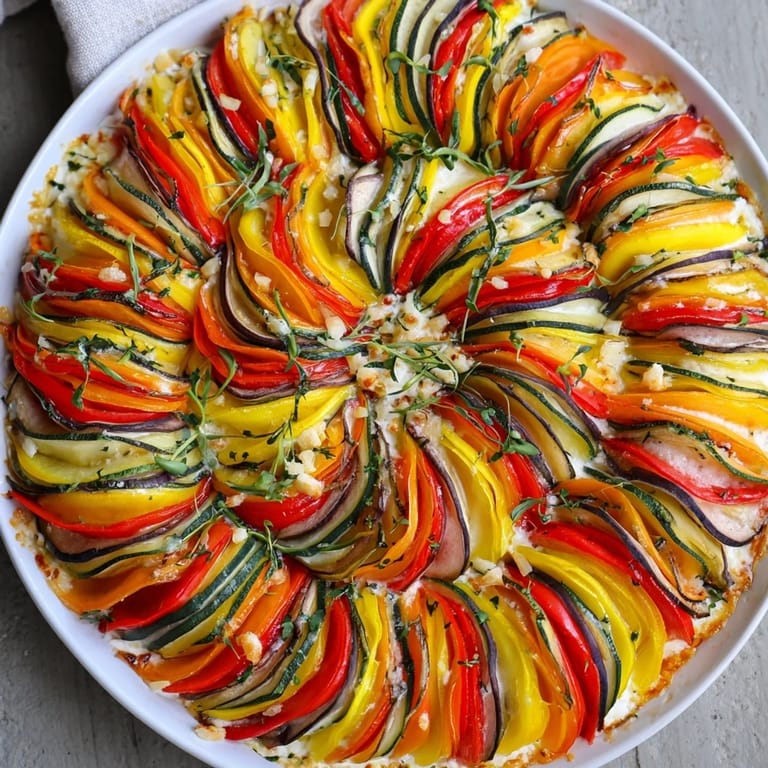
- Beginning at the center where you started your cheese spiral, arrange your roasted vegetable slices, overlapping them slightly, in a continuous spiral over the cheese mixture. Alternate your colors as you go—eggplant, then zucchini, then red pepper, then yellow squash, then carrot, then back to eggplant. The slight transparency of the roasted vegetables and the color contrast create that visual magic. Watch how the light catches each layer.
- Finish and Serve:
- Sprinkle the toasted pine nuts over the spiral, focusing them toward the center where they'll catch the eye first. Add microgreens as a final touch if you have them—they add a fresh pop of color and a hint of peppery bite. Serve at room temperature. The flavors open up as it cools, and everything tastes better when it's had a moment to settle.
 Save
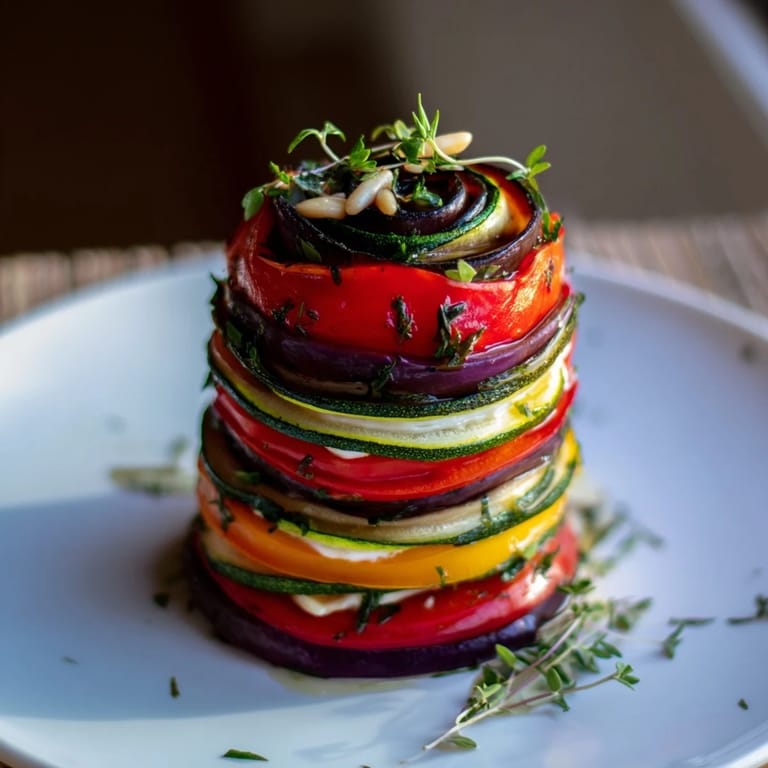
Save The first time someone told me, 'This tastes even better than it looks,' I understood why I keep making this dish. It's one of those rare moments in cooking where everything aligns—the visual impact, the flavors, the textures, the effort—and it all feels like it was meant to be.
The Art of the Spiral
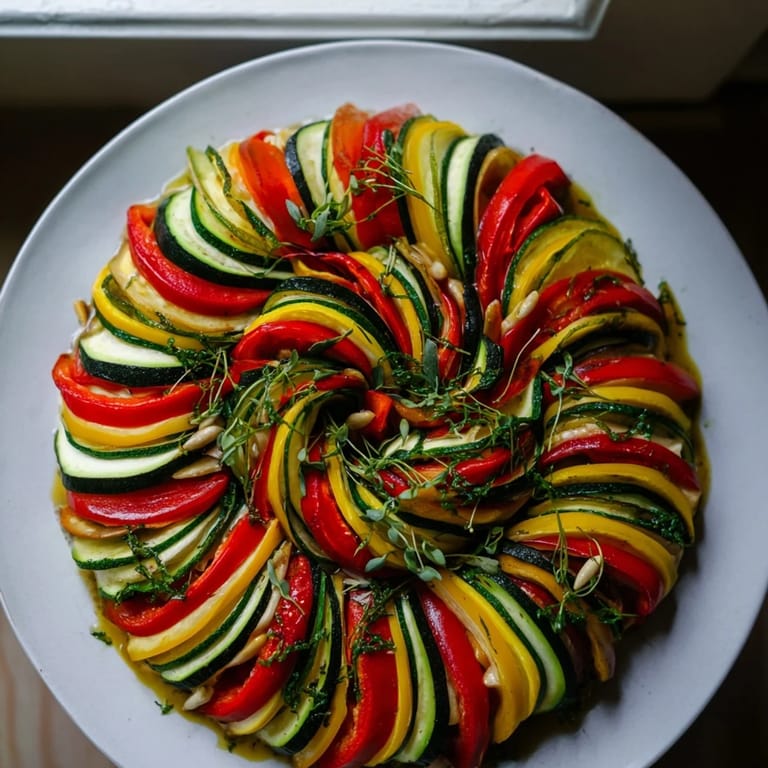
There's something ancient and grounding about a spiral. It appears in nature constantly—in shells, in galaxies, in the way water drains and storms form. When you create a spiral on a plate, you're tapping into something deeper than just presentation. It creates a natural rhythm that guides people's eyes and, eventually, their forks. Each bite follows the spiral, so the flavor progression feels intentional rather than random. I've noticed that people eat spirals differently than they eat regular plated food—there's more attention, more deliberation, more joy.
Vegetable Slicing Mastery
The quality of your vegetable slices determines everything. This is where patience becomes your best ingredient. A mandoline is faster, yes, but a good sharp knife gives you more control and feels more connected to your ingredients. I prefer the knife, especially for eggplant which can be temperamental. Let your blade do the work—don't force it. If you're using a mandoline, slice everything first, then arrange it. If you're using a knife, you can slice and roast in batches. Either way, consistency in thickness is what matters most. Thin slices also mean the roasting time is predictable and nothing gets overdone while something else is still raw.
Variations and Personal Touches
This is where you make the dish your own. The structure—the spiral, the goat cheese base, the herbs—that's fixed. But the vegetables? That's your canvas. I've made versions with thinly sliced roasted beets that add an earthy sweetness and a jewel-tone purple that feels almost luxurious. Sweet potatoes work beautifully too, bringing warmth and a gentle caramelized flavor. In the spring, I've added thin asparagus spears arranged radially around the center—they add height and a fresh snap. In the summer, paper-thin slices of heirloom tomato layered at the end add brightness. The only rule I follow is to roast heartier vegetables and keep lighter ones raw or barely cooked, and to alternate textures and colors thoughtfully.
- Roasted beets or sweet potatoes add color variation and a slightly deeper, more earthy flavor profile
- In warmer months, consider adding raw tomato slices or even thin cucumber ribbons as an outer layer for freshness
- For extra richness, drizzle a tiny bit of good balsamic reduction around the spiral just before serving—it adds visual drama and a sophisticated tang
 Save
Save Every time I make this dish, I'm reminded that the most impressive meals are often the simplest ones, made with intention and a little bit of love. Serve it with crusty bread to catch every bit of that creamy, herbaceous goodness.
Recipe Help & Answers
- → How do I prepare the vegetables for the spiral?
Thinly slice the vegetables lengthwise and roast them briefly to soften while maintaining shape, ensuring easy layering in the spiral.
- → Can I make this dish vegan?
Yes, substitute goat cheese and crème fraîche with plant-based cheese spreads to maintain creamy texture without dairy.
- → What herbs complement the cheese mixture?
Fresh basil and thyme finely chopped are blended with the cheese to enhance the dish’s aromatic profile.
- → How should the spiral be assembled?
Spread the cheese mixture in a spiral on the plate, then layer the roasted vegetable slices in a continuous overlapping spiral from center outward.
- → What garnishes work best for final presentation?
Lightly toasted pine nuts add crunch and microgreens provide a fresh, vibrant touch to the finished dish.