 Save
Save I discovered this dish during a lazy afternoon scrolling through my grandmother's old recipe notes, only to find she'd sketched margins about a dinner party where three of her friends each brought a dish from their heritage—Mediterranean, Asian, and Middle Eastern. Instead of choosing, she wondered aloud what would happen if she cooked all three at once, side by side. That question stuck with me, and years later, I finally tried it. The result was magic: three distinct flavor worlds on one plate, each bold enough to stand alone but somehow better together.
The first time I made this for my partners' book club, I was nervous about juggling three pans, but something clicked. The eggplant softened while the ginger hit its perfect fragrance, and then—right on cue—the chickpeas were warming through. It was like conducting an orchestra I'd never rehearsed with, and somehow we all arrived at the finish line together. Watching everyone pile their plates differently, talking about the contrasts and weird combinations they loved, reminded me that the best meals aren't about perfection—they're about options.
Ingredients
- Extra-virgin olive oil (Mediterranean cluster): Good oil transforms eggplant from sad to savory; don't skip the quality here.
- Eggplant: Dice it small so it softens quickly and absorbs those oregano notes.
- Red bell pepper: Adds sweetness and brightness that keeps the cluster from feeling heavy.
- Zucchini: Slice thin enough to cook through without becoming mushy.
- Cherry tomatoes: Halve them so the juices mingle with the oil.
- Garlic: Mince fine; it should disappear into flavor, not shout at you.
- Dried oregano: The Mediterranean's signature—this is non-negotiable.
- Toasted sesame oil (Asian cluster): Use the real stuff; the smoky warmth is irreplaceable.
- Shiitake mushrooms: Slice thick enough to have texture but thin enough to cook in a few minutes.
- Snap peas: They stay crisp-tender if you don't overcook them; learn to love the slight snap.
- Carrot: Julienne thin so it cooks evenly and picks up the ginger-soy magic.
- Soy sauce or tamari: Tamari is your gluten-free friend; both bring umami that makes vegetables taste meatier.
- Ginger: Grate it fresh; the warmth is what makes this cluster sing.
- Rice vinegar: A small splash, but it brightens everything and prevents the Asian cluster from tasting muddy.
- Red onion (Middle Eastern cluster): Slice thin so it softens into almost jam-like sweetness.
- Cooked chickpeas: If you're using canned, rinse them well to remove the tin taste.
- Cooked bulgur or quinoa: Cook it with a little stock if you can; it absorbs flavor better than plain water.
- Ground cumin, coriander, and cinnamon: This spice trio is ancient and alive—buy them fresh if possible.
- Fresh parsley: Add it at the end so it keeps its brightness and doesn't taste like cooked hay.
- Lemon juice: Squeeze it fresh; bottled changes the whole equation.
- Feta cheese (optional): Crumble it coarse; it's the salty punctuation mark.
- Toasted sesame seeds: Toast them yourself if you have time; it takes ninety seconds and changes everything.
- Fresh mint or cilantro: One or both—whichever speaks to your mood.
Tired of Takeout? 🥡
Get 10 meals you can make faster than delivery arrives. Seriously.
One email. No spam. Unsubscribe anytime.
Instructions
- Set yourself up for success:
- Prep every vegetable first and arrange your three skillets side by side before you turn on any heat. This is not laziness; this is survival. Once things start cooking, you'll have no time to chop.
- Build the Mediterranean warmth:
- Heat your good olive oil until it shimmers, then add the eggplant. Let it sit for a minute before stirring—this is when it picks up color and flavor. Once it starts softening, add the bell pepper, zucchini, tomatoes, and garlic in that order, leaving small spaces between additions. Season as you go, and keep stirring occasionally. You're looking for tender vegetables with a little bit of oil clinging to them, fragrant enough that you want to eat the skillet.
- Coax out the Asian freshness:
- In a separate skillet, let the sesame oil get hot and fragrant—almost smoky. Add mushrooms and let them brown slightly before stirring. They should get a little color, not pale. Then add snap peas and carrot, and keep the heat high enough that things stay bright and crisp-tender, not mushy. Pour in the soy sauce, ginger, and vinegar at the end, taste it, and if it feels flat, squeeze more vinegar in. This cluster should taste bright and alive.
- Warm the Middle Eastern soul:
- In your third skillet, let the oil get warm and add red onion. Cook it gently, stirring now and then, until it softens and turns almost transparent at the edges. This takes about three minutes and is worth the patience. Then add chickpeas, bulgur, and the spice trio. Stir often so nothing sticks or burns. When everything is warm through, taste it—you might need more salt than you think. At the very end, scatter parsley over the top and squeeze lemon juice across everything. Don't stir too much; let the bright green and yellow stay distinct and visible.
- Bring it all together:
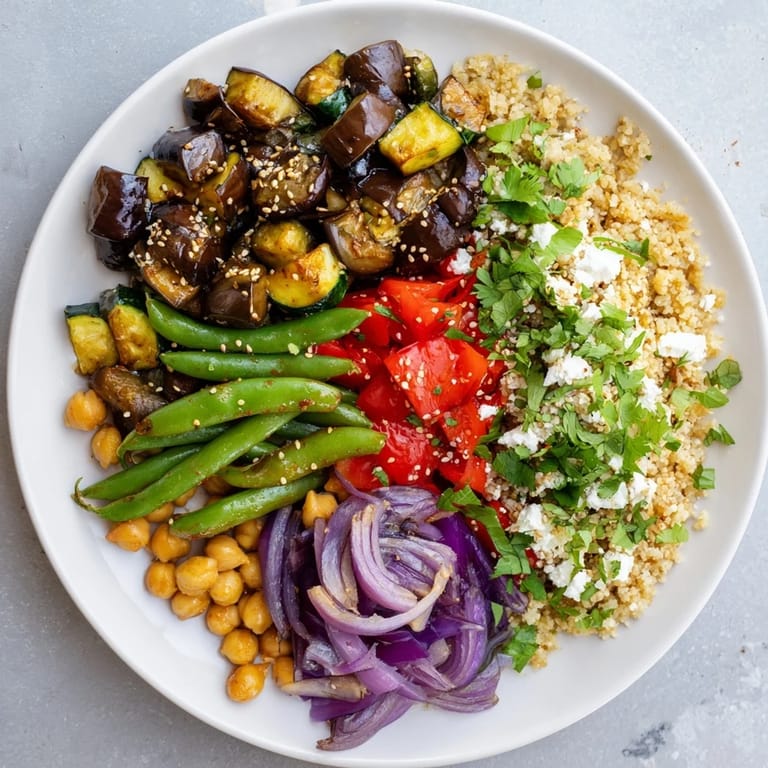
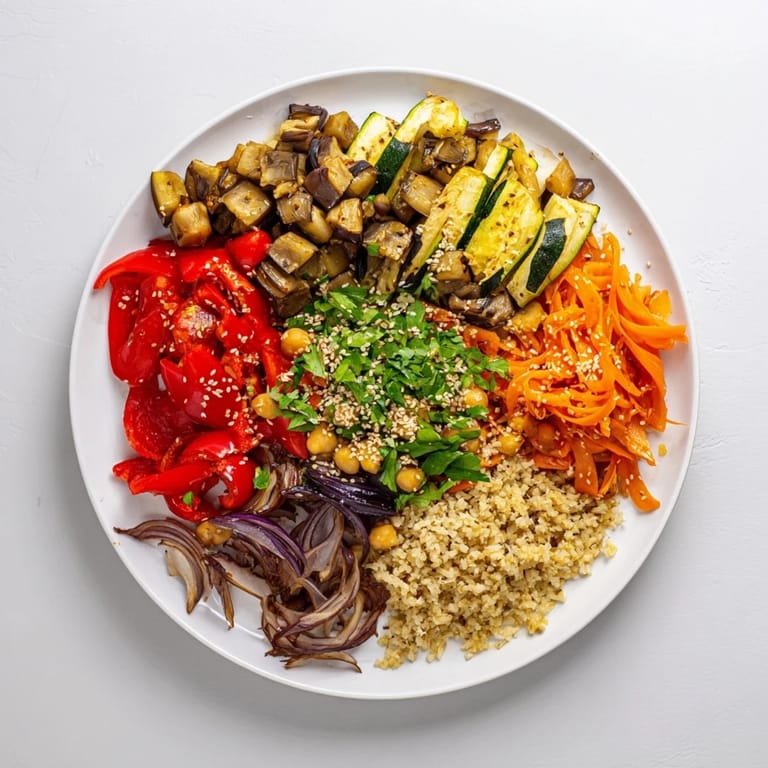
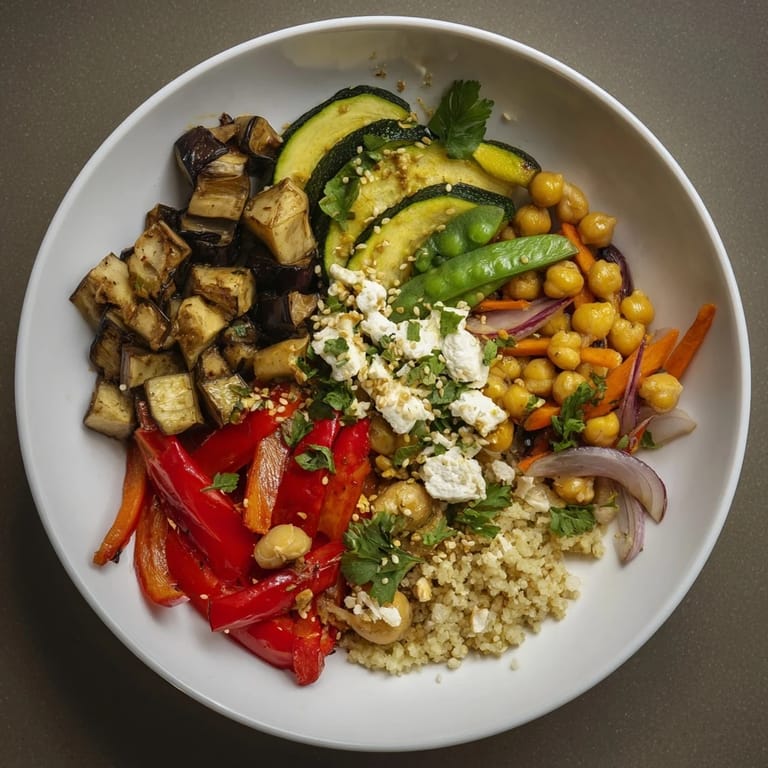
- Arrange the three clusters on a large platter or divide them across individual plates, each cluster sitting proudly in its own space. The clusters should look intentional, like you planned this celebration. Top with feta, sesame seeds, and fresh herbs as you go.
- Invite people to play:
- Serve warm and encourage people to mix and match, to taste the Mediterranean eggplant alone, then with a bite of Asian mushroom, then with a spoonful of chickpea. Some will build chaos on their plate; others will eat each cluster in reverent silence. Both are correct.
 Save
Save I'll never forget watching my friend Sarah taste each cluster separately, then pause. She built a forkful with eggplant, a mushroom, and a chickpea, added feta and mint, and closed her eyes for a full five seconds. When she opened them, she said, 'This is what I didn't know I needed,' and it felt like the highest compliment a cook could receive. That moment made me understand: this dish isn't about being impressive—it's about giving people permission to discover their own favorite story.
Why These Three Cuisines?
The Mediterranean, Asian, and Middle Eastern traditions aren't random picks—they're three of the world's oldest food cultures, each with their own way of talking to vegetables. The Mediterranean says, 'Let's make oil and time do the talking.' Asia says, 'Season boldly and keep everything alive and bright.' The Middle East says, 'Spices are love letters written to chickpeas.' When you cook all three at once, you're not just making dinner—you're having a conversation with centuries of kitchen wisdom, and your palate gets to be the translator.
The Beauty of Clusters
I love serving food in clusters instead of as one mixed dish because it lets each flavor keep its identity. There's something powerful about saying, 'Here's everything, and here's how they each taste alone, and now you choose.' It's less about me deciding what's right and more about trusting people to build their own meal. This approach also means if someone hates ginger, they can skip the Asian cluster entirely without feeling like they're missing out. Everyone gets a win.
Making It Your Own
Once you've made this recipe once, you'll start swapping things: roasted cauliflower instead of eggplant, broccoli instead of snap peas, white beans instead of chickpeas. The structure stays the same—three clusters, each honoring its own tradition—but the cast of vegetables changes with the season and your mood. That's the gift of this recipe: it teaches you how three flavor families think, so you can play with them forever.
- Protein ideas: grilled chicken breast, marinated tofu, slow-cooked lamb shoulder, or even crispy chickpea crumbles.
- Seasonal swaps: asparagus and peas in spring, roasted tomatoes in summer, roasted root vegetables in fall, kale in winter.
- Bread pairing: warm flatbread or pita for scooping, or serve over rice or couscous if you want something more substantial.
 Save
Save This recipe taught me that the best meals aren't about one perfect dish—they're about invitation, about giving people space to discover what they actually love. Make it, watch people eat it, and remember that you just gave them a little piece of the whole world on one plate.
Recipe Help & Answers
- → What cooking oils are used in the clusters?
Extra-virgin olive oil is used for Mediterranean and Middle Eastern clusters; toasted sesame oil is used for the Asian cluster.
- → Can I substitute bulgur with a gluten-free grain?
Yes, quinoa is a great gluten-free alternative to bulgur in the Middle Eastern cluster.
- → How do I add extra protein to this dish?
Grilled chicken, tofu, or lamb can be incorporated into any cluster for added protein.
- → What garnishes complement this flavor combination?
Crumbled feta cheese, toasted sesame seeds, and fresh mint or cilantro enhance the dish’s aroma and texture.
- → What is an ideal beverage pairing?
A crisp Sauvignon Blanc or a light-bodied red wine like Pinot Noir pairs well with the diverse flavors.