 Save
Save My neighbor brought me a basket of vegetables from her garden one April morning, and I stood in the kitchen wondering what to do with all that color. The carrots still had dirt on them, the peas were almost too pretty to shell, and I knew I wanted something that would let each vegetable shine without fuss. That afternoon, I made this soup for the first time, and it tasted like spring smelled.
I made a double batch the week my sister had her baby and dropped off containers at her house every other day. She told me later that it was the only thing she wanted to eat, warm and easy and not too rich when everything else felt like too much. I think about that whenever I make it now, how sometimes the simplest food does the most.
Ingredients
- Boneless, skinless chicken breasts: They poach gently right in the broth and shred easily, giving you tender bites without any extra pans to wash.
- Carrots: Slice them on a slight angle so they look prettier in the bowl and cook evenly without turning mushy.
- Zucchini: Add this toward the end or it will fall apart, I learned that the hard way when my first batch turned into green mush.
- Fresh or frozen peas: Frozen peas are honestly just as good and they keep their sweetness and bright color better than the ones that have been sitting in the crisper too long.
- Yellow onion: This builds the base flavor, and chopping it fine means it almost melts into the broth.
- Celery: It adds that subtle background flavor that makes the soup taste like someone who knows what they are doing made it.
- Garlic: Two cloves minced and cooked just until fragrant, not browned or it will taste bitter.
- Low sodium chicken broth: You want control over the salt, and starting with low sodium means you can adjust to your taste without ending up with something too salty to fix.
- Bay leaf: One dried leaf adds a quiet herbal note that you would miss if it were not there.
- Dried thyme: I keep both dried and fresh on hand, but dried works perfectly here and does not wilt into little gray strings.
- Fresh parsley: Stir it in at the end and save some for the top, it wakes up the whole bowl.
- Salt and black pepper: Taste as you go, the soup needs more than you think but add it in stages.
- Lemon juice: Optional but I almost always add it, just half a lemon brightens everything and makes the vegetables taste more like themselves.
Tired of Takeout? 🥡
Get 10 meals you can make faster than delivery arrives. Seriously.
One email. No spam. Unsubscribe anytime.
Instructions
- Start with the aromatics:
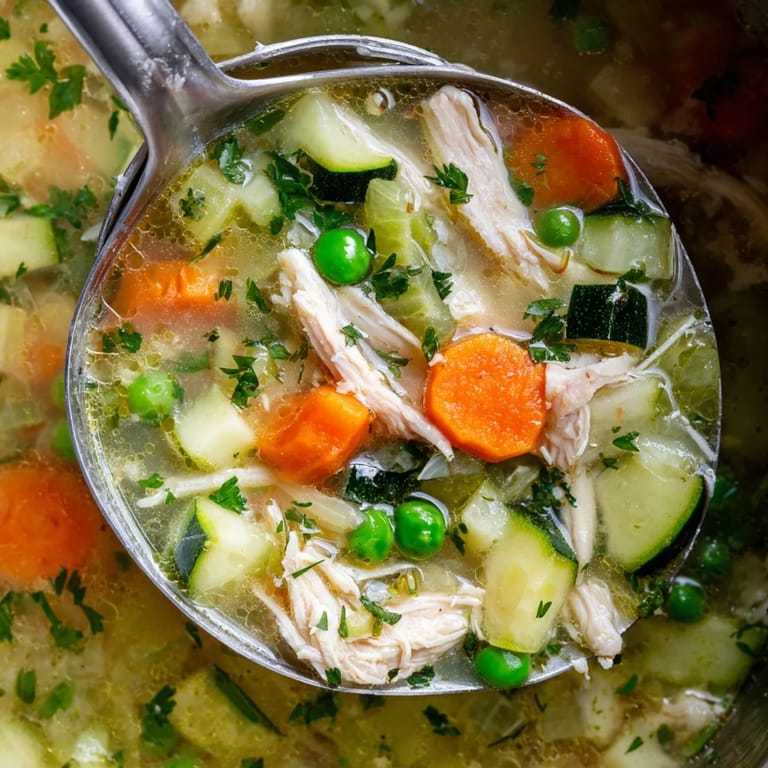
- Heat a drizzle of olive oil in a large pot over medium heat, then add the onion, celery, and carrots. Let them sauté for four or five minutes until the onion turns translucent and the kitchen starts to smell sweet and savory.
- Add the garlic:
- Stir in the minced garlic and cook for just one minute, stirring so it does not stick to the bottom or brown.
- Build the broth:
- Pour in the chicken broth, add the bay leaf and thyme, and bring everything to a gentle boil. The steam will smell like comfort.
- Poach the chicken:
- Add the chicken breasts whole, reduce the heat to a simmer, cover the pot, and let them cook for fifteen to eighteen minutes until cooked through. Pull them out with tongs and shred them on a plate with two forks.
- Add the tender vegetables:
- Drop the zucchini and peas into the pot and cook for five to seven minutes until just tender but still bright. Do not overcook or they lose their color and texture.
- Finish and season:
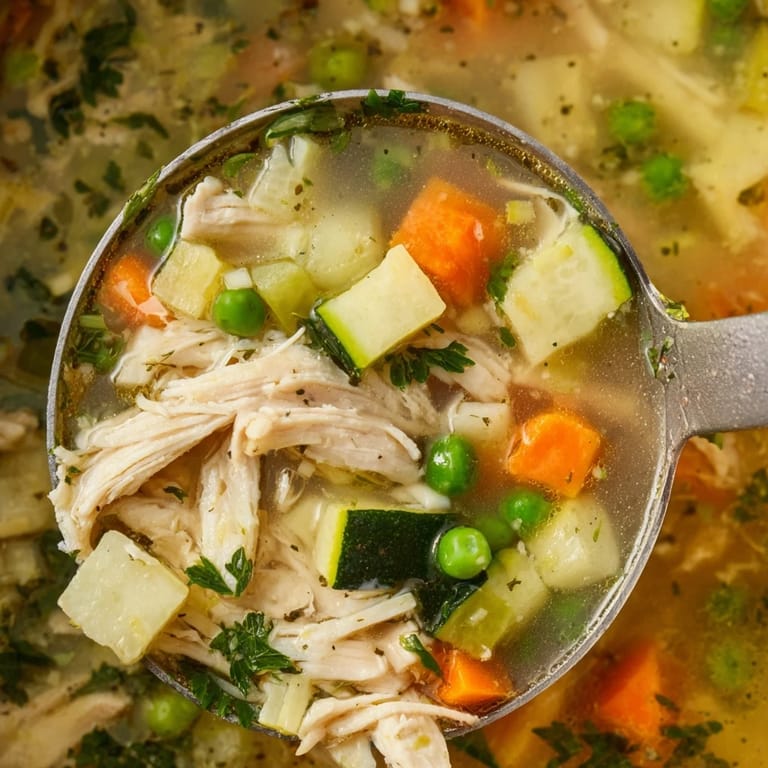
- Return the shredded chicken to the pot, stir in the parsley and lemon juice if using, then season generously with salt and pepper. Remove the bay leaf, ladle into bowls, and garnish with extra parsley.
 Save
Save One night I served this to friends who showed up unexpectedly, and I was worried it was too simple. But they went back for seconds and someone said it tasted like the kind of soup you wish your mom had made. I realized then that this soup does not need to try hard, it just needs to be exactly what it is.
Making It Heartier
If you want something more filling, add a handful of small pasta like ditalini or orzo in the last eight minutes of cooking, or stir in cooked rice when you add the chicken back. I have done both and they turn it into a meal that sticks with you without feeling heavy.
Swapping the Vegetables
You can use whatever spring vegetables you have on hand, asparagus tips or green beans work beautifully in place of peas or zucchini. I have also added baby spinach at the very end and it wilts into the soup in about thirty seconds, adding color and a little earthiness.
Storing and Reheating
This soup keeps in the fridge for up to four days and freezes well for up to three months. Reheat it gently on the stove, adding a splash of broth or water if it has thickened up. The vegetables may soften a bit more but the flavor only gets better.
- Let the soup cool completely before transferring it to airtight containers.
- If freezing, leave a little headspace because liquid expands.
- Garnish with fresh parsley after reheating, not before storing, so it stays bright green.
 Save
Save This soup has become my go to whenever I want something that feels like taking care of someone, including myself. It is light but satisfying, simple but never boring, and it tastes like paying attention to good ingredients.
Recipe Help & Answers
- → Can I use rotisserie chicken instead of cooking chicken breasts?
Yes, absolutely. Shred 2 cups of rotisserie chicken and add it in step 8 instead of cooking fresh breasts. This reduces your total time to about 30 minutes.
- → What vegetables work best as substitutions?
Asparagus, green beans, spinach, or diced bell peppers work wonderfully. Add firmer vegetables earlier (with carrots) and tender greens toward the end to maintain proper texture.
- → How do I make this soup heartier?
Stir in cooked rice, small pasta, or orzo in the final step. You can also add diced potatoes early in cooking, or top bowls with crusty bread for dipping.
- → Can I freeze this soup?
Yes, freeze in airtight containers for up to three months. Thaw overnight in the refrigerator and reheat gently on the stovetop, adding fresh parsley just before serving.
- → What broth should I use for gluten-free preparation?
Choose certified gluten-free chicken broth or make your own by simmering chicken bones with aromatics. Always check labels, as some commercial broths contain hidden gluten.
- → How can I add more flavor without salt?
Squeeze fresh lemon juice, add a splash of white wine, increase herbs like thyme or dill, or include fresh ginger and garlic for depth and aromatic complexity.