 Save
Save The scent of rosé mingling with cake batter is surprisingly intoxicating—it instantly sets a celebratory mood in the kitchen. When I made this cake for the first time, a stray petal from the bouquet nearby landed right into the mixing bowl, showering everything with laughter between me and my best friend. That moment set the tone: this was more than dessert, it was part of the party. The delicate pink tones gliding through each layer made me realize a cake could be both whimsical and elegant. Sometimes, a recipe becomes memorable simply because it begs you to pause, look around, and smile at the magic happening in your own kitchen.
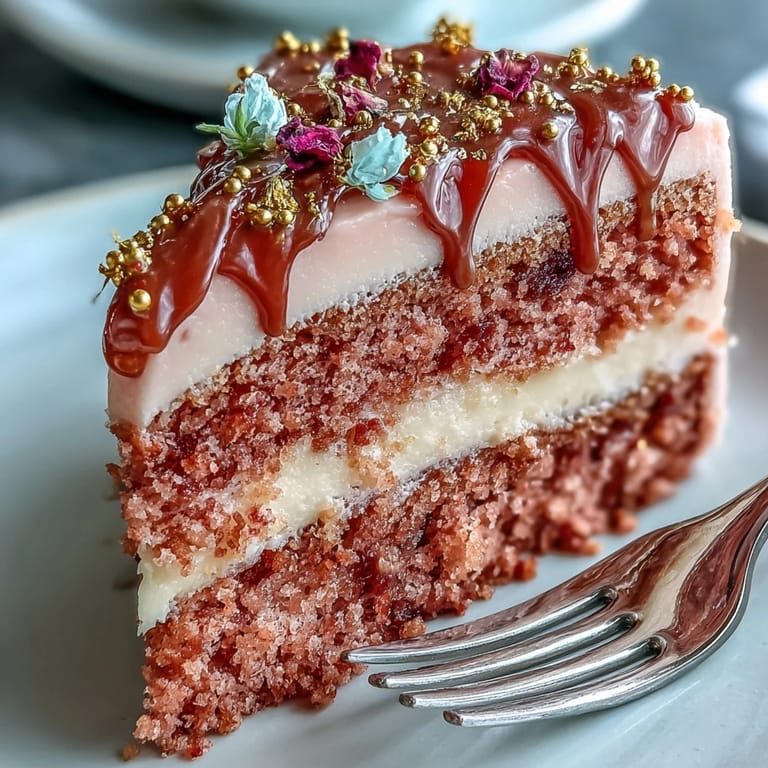
The first time I brought this cake to a bridal shower, I was as nervous about the gold drip as I was about the speeches. By the end, the bride had taken a sparkling photo with the cake, and every plate was wiped clean—the highest compliment at any party. It struck me how food reflects excitement and new beginnings, and here, even hesitant guests asked for second helpings. That gold luster survived hugs, laughs, and one accidental frosting thumbprint that we patched with an extra flower. It was an edible celebration, and I felt part of it in a tiny, golden way.
Ingredients
- All-purpose flour: The backbone of the cake; sift well for an airy crumb and make sure to measure lightly.
- Cornstarch: This is my secret for a velvet-soft texture—don’t skip it.
- Unsweetened cocoa powder: Just enough for depth, not dominance; a good sift prevents lumps.
- Baking soda: Gives the cake its delicate lift, so check your box isn’t past its prime.
- Salt: Enhances all those gentle flavors, a pinch can make the difference.
- Unsalted butter: Room temperature butter creams better and makes the batter billowy; patience pays off here.
- Granulated sugar: Brings sweetness and lightness; blend until fluffy for best results.
- Light brown sugar: Adds a caramel note that pairs beautifully with wine and vanilla.
- Eggs: Room temp eggs mix in smoothly and help the cake rise evenly.
- Rosé wine: The true star—pick one you'd actually drink for that soft bouquet in the cake.
- Buttermilk: Keeps the crumb moist and tender; don’t sub regular milk, or you’ll miss out.
- Vanilla extract: Rounds out all the flavors—no cutting corners with imitation here.
- Pink gel food coloring: Only if you want an Instagram-worthy hue; a little dab does it.
- Cream cheese: Must be very soft before using, or you’ll fight lumps in your frosting.
- Confectioners’ sugar: Sift to avoid surprise chunks, and adjust for your perfectly smooth finish.
- White chocolate chips: Melt gently for a flawless drip—keep an eye so it doesn’t seize.
- Heavy cream: This turns the white chocolate into ganache; just a splash at a time.
- Edible gold luster dust: The fun part—swirl a little or a lot depending on your golden ambitions.
- Clear vodka or lemon extract: Used for making the gold paint, and evaporates away quickly.
- Edible flowers or gold leaf: Optional, but these give your finished cake that wow factor without fuss.
Tired of Takeout? 🥡
Get 10 meals you can make faster than delivery arrives. Seriously.
One email. No spam. Unsubscribe anytime.
Instructions
- Set the stage:
- Preheat your oven to 350°F (175°C) and line three 8-inch pans; nothing beats tidy, parchment-lined edges later.
- Sift and combine:
- Inhale as you sift together the flour, cornstarch, cocoa powder, baking soda, and salt—the gentle cocoa tinge always surprises.
- Cream the butter and sugars:
- Beat butter, granulated, and brown sugar until pale and fluffy; it should look like the inside of a cloud and smell like caramel daydreams.
- Add eggs and vanilla:
- One egg at a time, mixing well, then swirl in vanilla; if it looks glossy, you’re on track.
- Mix the rosé and buttermilk:
- In a jug, blend the rosé wine and buttermilk; it may look odd but makes the crumb heavenly.
- Combine the batters:
- On low speed, alternate adding dry ingredients and the rosé mix, ending with flour—add a touch of pink gel coloring here if you want the blush to pop.
- Pan and smooth:
- Divide the silky batter evenly into pans and level the tops with a spatula for even-rise confidence.
- Bake and cool:
- Bake for about 28–32 minutes, checking with a toothpick for doneness; cool in the tins 10 minutes, then on a wire rack completely.
- Whip the frosting:
- Beat softened cream cheese and butter until velvety, then gradually add confectioners’ sugar, vanilla, and salt until dreamily spreadable.
- Assemble the cake:
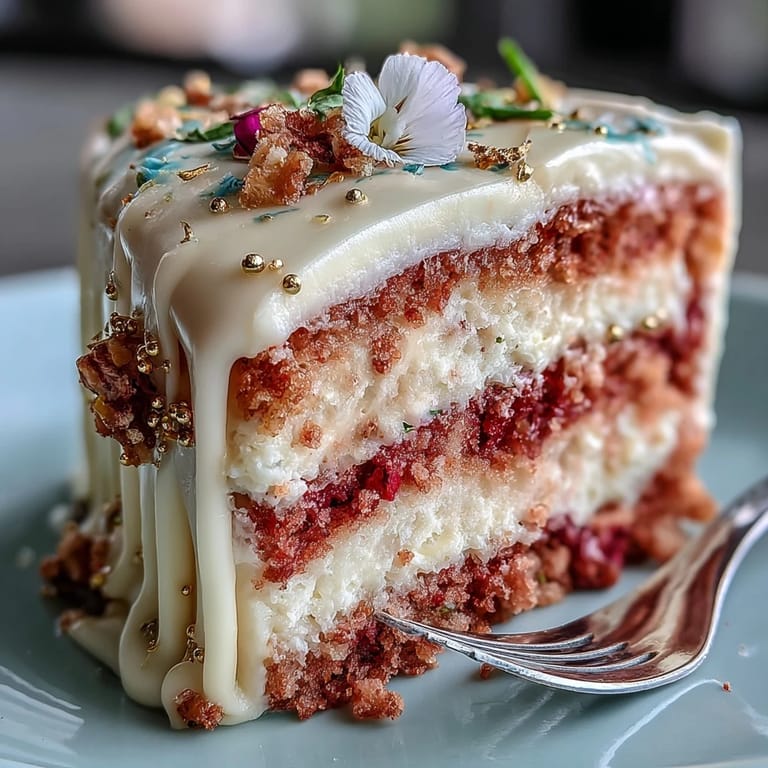
- Layer up with frosting between each cake tier, then smooth all around; chill to set before decorating.
- Gold drip magic:
- Melt white chocolate chips and heavy cream, cool briefly, and gently spoon drips over the chilled cake edges; chill to set.
- Paint it gold:
- Mix the gold luster dust with a few drops of vodka or lemon extract, then brush each drip with a steady hand for a shimmering finish.
- Final flourishes:
- Add edible flowers or gold leaf if you like, then step back and admire your work (and snap a photo, trust me).
 Save
Save 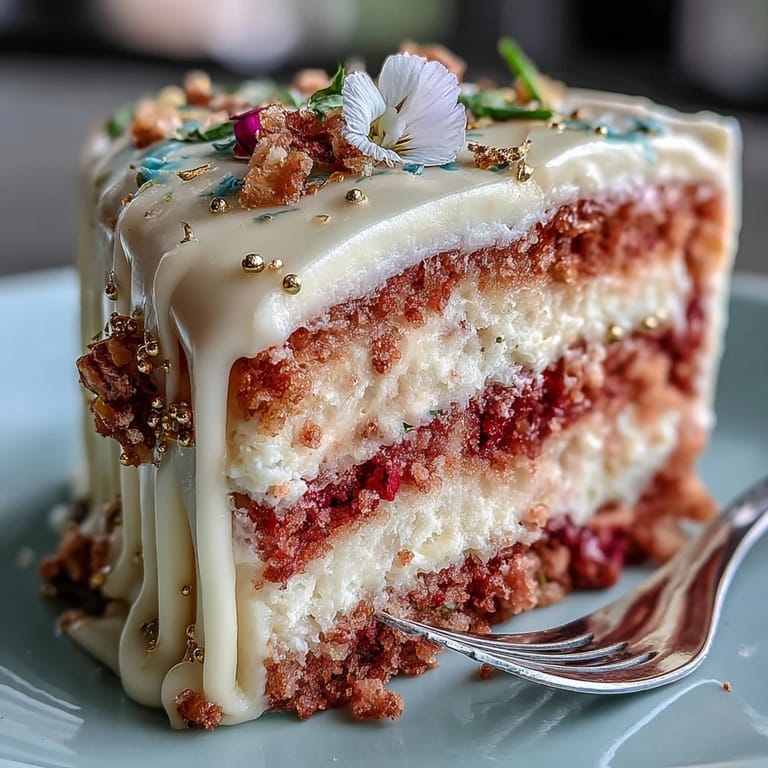 Save
Save When the last slice was served and laughter still lingered in the air, I realized this cake is as much about the people you share it with as the wine in the batter. It’s the kind of bake that gets people talking, snapping photos, and eventually requesting the recipe for their own soon-to-be celebrations.
Secrets to Getting That Perfect Pink Hue
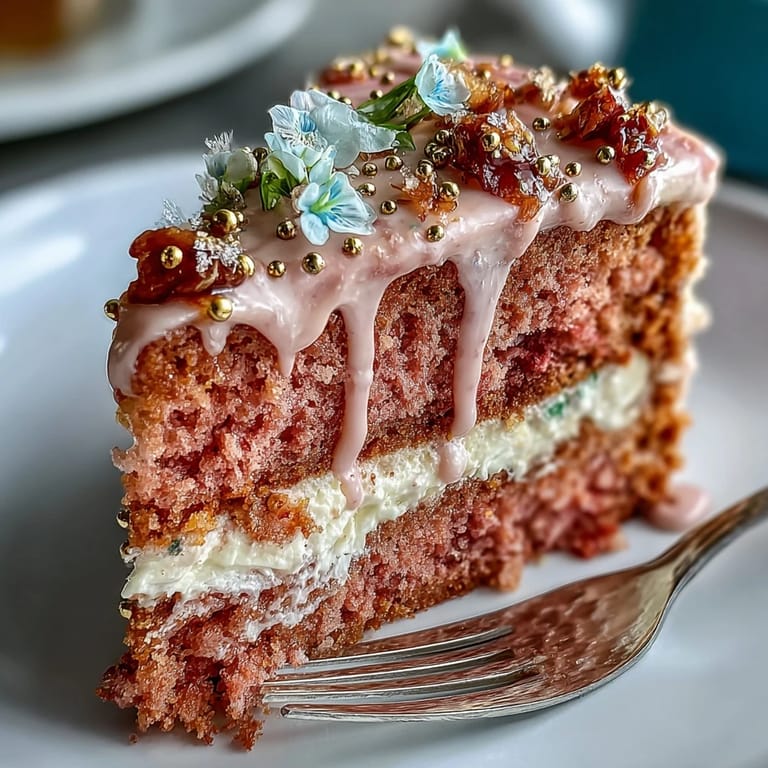
I found that adding the gel food coloring incrementally lets you control the final look—start with a toothpick’s worth and build up. If your rosé is already a vivid shade, you may need even less, so keep a gentle hand. Using a clear glass bowl helps you see when the color’s truly even. If you prefer a blush tone, skip coloring and let the wine do the work. Remember, the color deepens as the cake bakes, so don’t worry if the batter seems too pale.
All About The Gold Drip
The key to a dramatic but controlled gold drip is waiting until the ganache is just thick enough—if you drip when it’s hot, it can run all the way down. Ambient temperature makes a big difference, so if your kitchen’s warm, pop the cake in the fridge for a few just before decorating. Use a teaspoon for more dainty drips and a spoon for bold effects. You can adjust the shimmer by layering on more luster after the first coat sets. Taking your time painting each drip gold turns decorating into a mini mindfulness session.
What to Do With Leftover Bits and Bobs
Cake trimmings from leveling layers never go to waste. Save them for impromptu cake pops or blitz into crumbs to top ice cream. A swipe of spare cream cheese frosting on warm trimmings is a baker’s reward. Leftover ganache makes magical coffee drizzle or dip for strawberries.
- Freeze extra cake layers for another celebration.
- Mix leftover luster dust with syrup for pretty cocktails.
- Any unused frosting keeps for a week—spread on muffins or pancakes for breakfast indulgence.
 Save
Save 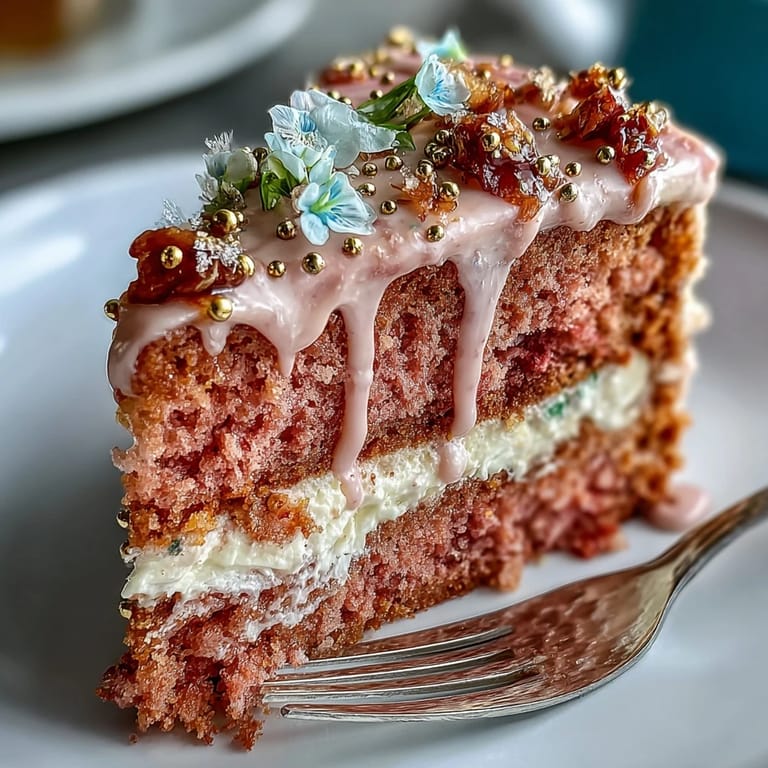 Save
Save This cake always sparks delight, whether decked out in florals or simply painted gold. Set aside a slice for yourself—you earned it.
Recipe Help & Answers
- → Can I make this without alcohol?
Yes. Substitute the rosé with pink grape juice or sparkling cider for the same color and fruit-forward sweetness while keeping the liquid ratio the same.
- → How do I get an even pink hue in the layers?
Use a small amount of concentrated pink gel coloring and add it to the batter gradually until you reach the desired shade; natural rosé will impart a subtle blush, so color can be adjusted to taste.
- → How do I keep the cream cheese frosting stable?
Ensure cream cheese and butter are at the same room temperature and beat until smooth before adding sifted confectioners’ sugar. Chill briefly to firm up before final smoothing and piping.
- → What’s the best way to achieve a controlled gold drip?
Cool the ganache until slightly thickened but still pourable, then use a spoon or small piping bag to apply short drips. Let the ganache set before brushing on diluted edible gold luster for a clean finish.
- → Can this be made ahead of time?
Yes. Bake layers a day ahead and wrap tightly. Assemble and chill the frosted cake the day before decorating; add the ganache drip and gold paint on the day of service for best appearance.
- → What type of rosé is best for flavor?
Choose a dry to off-dry rosé with bright berry and floral notes; a quality bottle adds subtle aroma and depth without overpowering the cocoa-tinged velvet crumb.