 Save
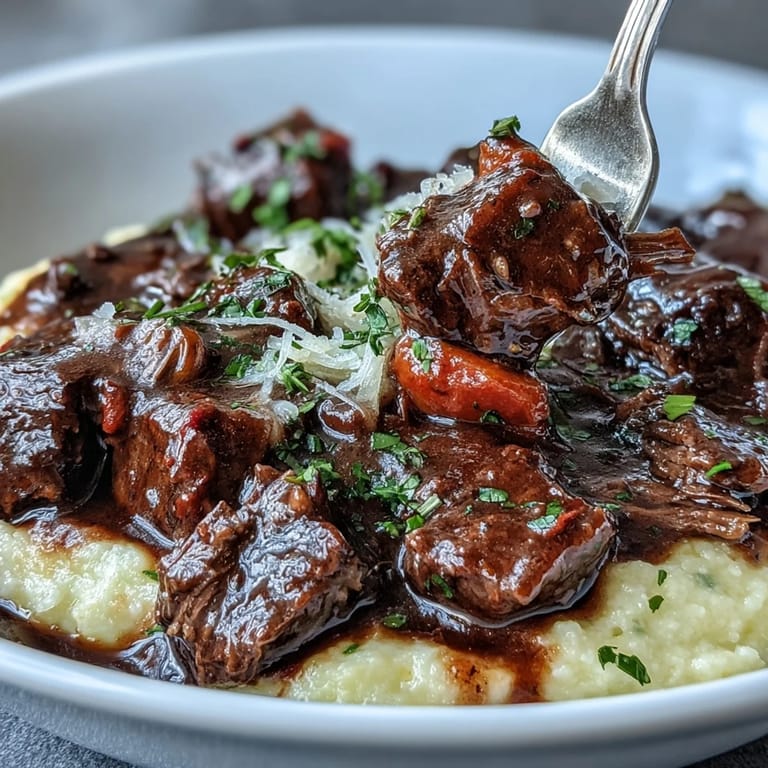
Save My neighbor knocked on my door one January evening holding a parcel wrapped in brown paper. Inside were two pounds of venison from his cousin's estate, lean and deep red, and a small bottle of homemade sloe gin. He said they went together like snow and silence. I had no idea what he meant until I made this stew the following Saturday, windows steaming, the house smelling like something out of a forgotten hunting lodge.
I served this to friends during a power outage once, ladling it by candlelight straight from the pot. We ate with mismatched bowls and no one said much, just the scrape of spoons and the occasional hum of approval. One friend later told me it was the best thing she'd eaten all year, and I think the darkness made it taste even better.
Ingredients
- Venison shoulder or stewing venison (800 g, cut into 3 cm cubes): Look for well-marbled cuts if possible, they break down beautifully and stay moist during the long braise.
- Olive oil (2 tbsp): Use enough to coat the bottom of your pan so the meat browns evenly without sticking.
- Onion (1 large, finely chopped): A yellow or brown onion works best here for its sweetness and body.
- Carrots (2, sliced): Cut them thick so they hold their shape and add little bursts of sweetness throughout the stew.
- Celery stalks (2, diced): Dont skip this, it adds an earthy backbone that balances the richness.
- Garlic cloves (2, minced): Fresh is essential, it blooms in the pan and perfumes the whole base.
- Tomato paste (2 tbsp): Cooking it for a minute before adding liquid deepens its flavor and removes any tinny edge.
- Sloe gin (150 ml): This is the magic ingredient, tart and fruity with a hint of almond from the stones.
- Beef or game stock (400 ml, gluten-free if needed): Homemade is lovely, but a good quality store-bought works just fine.
- Redcurrant jelly (1 tbsp): It adds a gentle sweetness and helps thicken the sauce just slightly.
- Bay leaves (2): Remove them before serving, but let them work their quiet herbal charm while it simmers.
- Fresh thyme (2 sprigs): The woody, floral notes tie everything together beautifully.
- Juniper berries (1 tsp, lightly crushed): A gentle crush releases their piney, gin-like oils without overpowering the dish.
- Salt and freshly ground black pepper: Season boldly, venison can take it.
- Whole milk (750 ml): This makes the polenta luxuriously creamy and smooth.
- Water (250 ml): Thins the milk just enough so the polenta cooks evenly.
- Polenta (150 g, quick-cooking or regular): Stir constantly to avoid lumps, patience here pays off.
- Unsalted butter (40 g): Stir it in at the end for a silky, rich finish.
- Grated Parmesan cheese (50 g): Use real Parmigiano-Reggiano if you can, the flavor is incomparable.
Tired of Takeout? 🥡
Get 10 meals you can make faster than delivery arrives. Seriously.
One email. No spam. Unsubscribe anytime.
Instructions
- Brown the venison:
- Heat the olive oil in a large, heavy-based casserole over medium-high heat until shimmering. Brown the venison cubes in batches, letting them sit undisturbed for a minute or two on each side so they develop a deep, caramelized crust, then set aside on a plate.
- Soften the vegetables:
- In the same pan, add the onion, carrots, and celery, scraping up any browned bits stuck to the bottom. Cook for 5 to 7 minutes until everything softens and the onion turns translucent, then stir in the garlic and tomato paste, cooking for another minute until fragrant.
- Deglaze with sloe gin:
- Return the venison and any resting juices to the pan. Pour in the sloe gin and let it bubble vigorously for about 2 minutes, the alcohol will cook off and leave behind a beautiful fruity sweetness.
- Build the stew:
- Add the stock, redcurrant jelly, bay leaves, thyme, and juniper berries, then season generously with salt and pepper. Stir everything together so the jelly dissolves and the herbs are submerged.
- Simmer low and slow:
- Bring the stew to a gentle simmer, then cover with a lid and reduce the heat to low. Let it cook for 2 hours, stirring occasionally, until the venison is so tender it nearly melts on your tongue.
- Start the polenta:
- While the stew is cooking, heat the milk and water in a saucepan until just simmering but not boiling. Gradually whisk in the polenta in a slow, steady stream to avoid lumps, then cook over low heat, stirring constantly, for 5 to 10 minutes (or according to packet instructions) until thick and creamy.
- Finish the polenta:
- Stir in the butter and Parmesan until fully melted and combined. Season to taste with salt, the polenta should be smooth, rich, and just pourable.
- Serve:
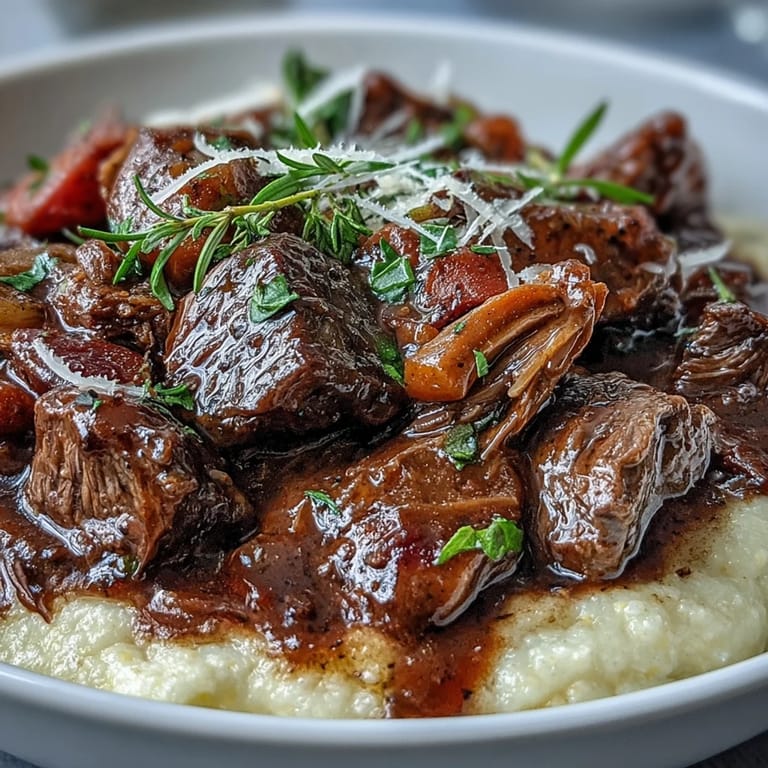
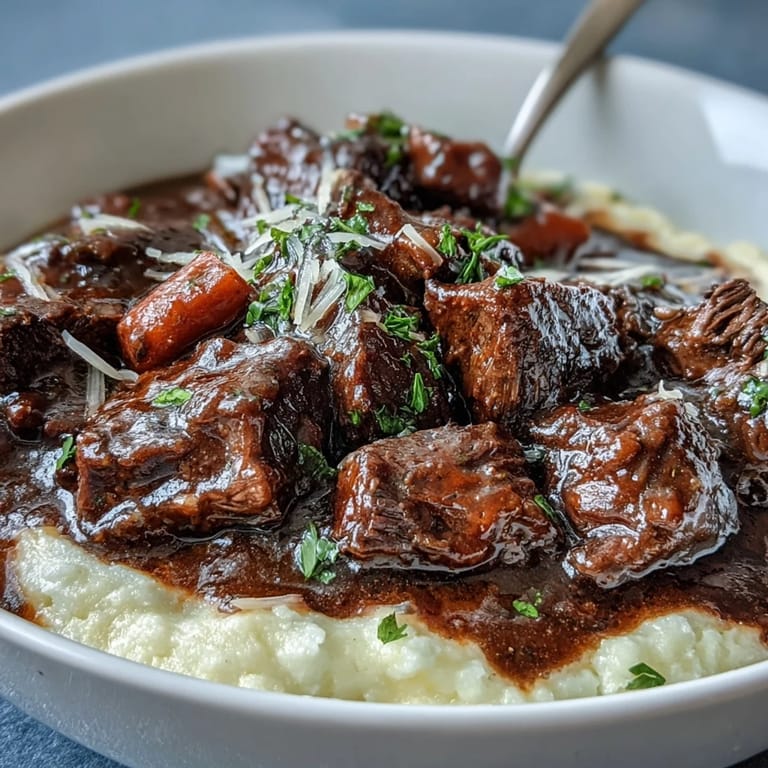
- Remove the bay leaves and thyme sprigs from the stew. Ladle generous spoonfuls of creamy polenta into shallow bowls, then top with the venison stew, making sure each serving gets plenty of that glossy, dark sauce.
 Save
Save 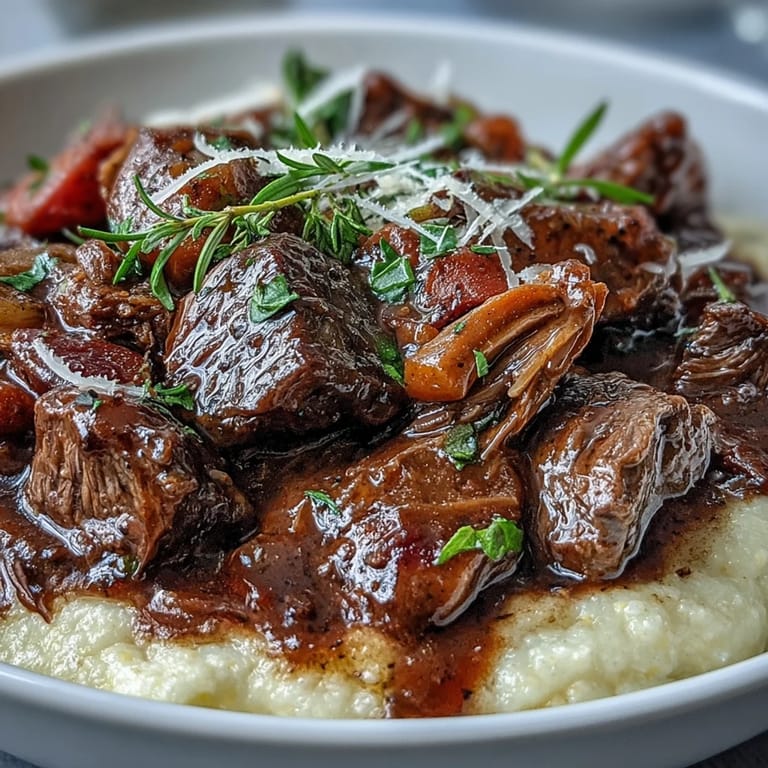 Save
Save The first time I made this, I forgot to remove the bay leaves and my father-in-law nearly choked on one. Now I fish them out with a spoon before I even think about serving, and I always count them twice. Despite that moment of panic, he still asks for this stew every winter, bay leaf incident and all.
What to Do with Leftovers
The stew tastes even better the next day after the flavors have had time to settle and deepen. I like to reheat it gently on the stovetop with a splash of stock, then serve it over fresh polenta or even mashed potatoes. Once, I spooned cold stew into a pie dish, topped it with puff pastry, and baked it until golden, it was gone in minutes.
Choosing Your Venison
Shoulder or stewing cuts are ideal because they have enough connective tissue to become melt-in-your-mouth tender with slow cooking. Avoid lean loin or backstrap, they dry out quickly and are better saved for quick searing. If you can find wild venison, the flavor is deeper and more complex, but farmed venison works beautifully too and tends to be a bit milder.
Make It Your Own
If you cant find sloe gin, a good-quality port or blackberry liqueur makes a fine substitute, though youll lose some of that wild hedgerow character. A splash of red wine added with the gin deepens the sauce even further, especially if you like things rich and bold. I sometimes toss in a handful of dried porcini mushrooms for an earthy, umami boost that plays beautifully with the juniper.
- Garnish with fresh parsley or a few thyme leaves for a pop of color and brightness.
- Serve with a robust red wine like Shiraz, Malbec, or Cabernet Sauvignon.
- Double the recipe and freeze half, this stew freezes beautifully for up to three months.
 Save
Save  Save
Save This is the kind of dish that makes winter feel less like endurance and more like an excuse to slow down and savor something warm. I hope it fills your kitchen with the same kind of quiet contentment it brings to mine.
Recipe Help & Answers
- → Can I substitute the venison with another meat?
Yes, beef chuck or lamb shoulder work well as substitutes. Use the same cooking time and method for tender, braised results.
- → What can I use instead of sloe gin?
Port, red wine, or berry liqueurs like cassis make excellent alternatives. They provide similar depth and fruity notes to complement the venison.
- → Can I make this ahead of time?
Absolutely. The stew actually improves when made a day ahead, allowing flavors to meld. Reheat gently and prepare fresh polenta when ready to serve.
- → How do I know when the venison is tender enough?
The meat should easily fall apart when pressed with a fork. If still tough after 2 hours, continue simmering in 30-minute intervals until tender.
- → Can I use instant polenta?
Yes, quick-cooking polenta works perfectly and reduces cooking time to about 5 minutes. Follow package directions and stir in butter and Parmesan at the end.
- → What sides pair well with this dish?
Roasted root vegetables, steamed green beans, or a simple arugula salad complement the rich stew beautifully without overwhelming the flavors.