 Save
Save There's something about the first warm evening of summer that makes you want to abandon your kitchen entirely, and that's exactly when I discovered how much magic a few quality ingredients could bring to a simple bowl of orzo. My neighbor had given me a small basket of cherry tomatoes from her garden, still warm from the sun, and while I was standing there with them, my mom called from across the fence asking what I'd make. Ten minutes later, she was tasting this salad for the first time, and I watched her smile deepen with each bite. It became the dish I brought to every gathering after that.
I remember making this for a potluck at work on a Tuesday, thinking I'd thrown together something forgettable. But somehow my Tupperware came back empty, and three people asked me for the recipe by the end of lunch. That's when I realized this wasn't just a side dish—it was a conversation starter, the kind of thing that makes people slow down and actually taste what they're eating instead of rushing through their meal.
Ingredients
- Orzo pasta (1 cup, 180 g): Orzo has this rice-like shape that catches the dressing beautifully, and when it's cooked to just al dente, it has a slight springiness that keeps the salad from feeling mushy. I learned the hard way that slightly undercooking it makes all the difference.
- Cherry tomatoes (1 cup, 150 g), halved: The small ones burst with juice and flavor in ways that regular tomatoes sometimes can't match. Halving them lets the dressing seep inside and coat them completely.
- Fresh mozzarella balls (1 cup, 125 g), halved: These creamy pockets of mild cheese soften slightly when they meet the warm pasta, which creates this luxurious texture you just don't get with harder cheeses. Bocconcini are worth hunting down at the grocery store.
- Fresh basil leaves (1/4 cup, 10 g), sliced: Tear or slice this at the last moment before serving if you can—it bruises easily, and those dark spots affect not just appearance but the delicate flavor too.
- Extra-virgin olive oil (3 tbsp): This is where you don't skimp. Good olive oil is the backbone of the dressing and the whole experience tastes different when you use one you actually enjoy.
- Balsamic vinegar (2 tbsp): The sharpness here balances the creaminess of the cheese and cuts through richly without overwhelming the dish.
- Dijon mustard (1 tsp): This tiny amount acts as an emulsifier, helping the oil and vinegar actually blend together rather than just sitting on top of each other.
- Garlic clove (1 small), minced: Raw garlic gives you that gentle peppery undertone, but go easy with the amount—a little goes a long way when it's not cooked.
- Salt and black pepper (1/4 tsp each): Taste as you go because every olive oil and vinegar combination is slightly different, and you might need a bit more or less depending on what you're using.
Tired of Takeout? 🥡
Get 10 meals you can make faster than delivery arrives. Seriously.
One email. No spam. Unsubscribe anytime.
Instructions
- Get the water boiling and cook your orzo:
- Fill a large pot with water and salt it generously—it should taste almost like the sea. Once it's rolling at a full boil, add your orzo and stir it once so the pasta doesn't stick to itself. Set a timer for 8 to 10 minutes and stay close enough that you can test it. When it's done, it should have a tiny bit of firmness in the center when you bite it, not soft all the way through.
- Cool it down properly:
- Drain the orzo through a colander and then rinse it under cold running water, tossing it gently with your fingers as you go. This stops the cooking immediately and prevents it from turning into a starchy clump as it sits.
- Build your salad base:
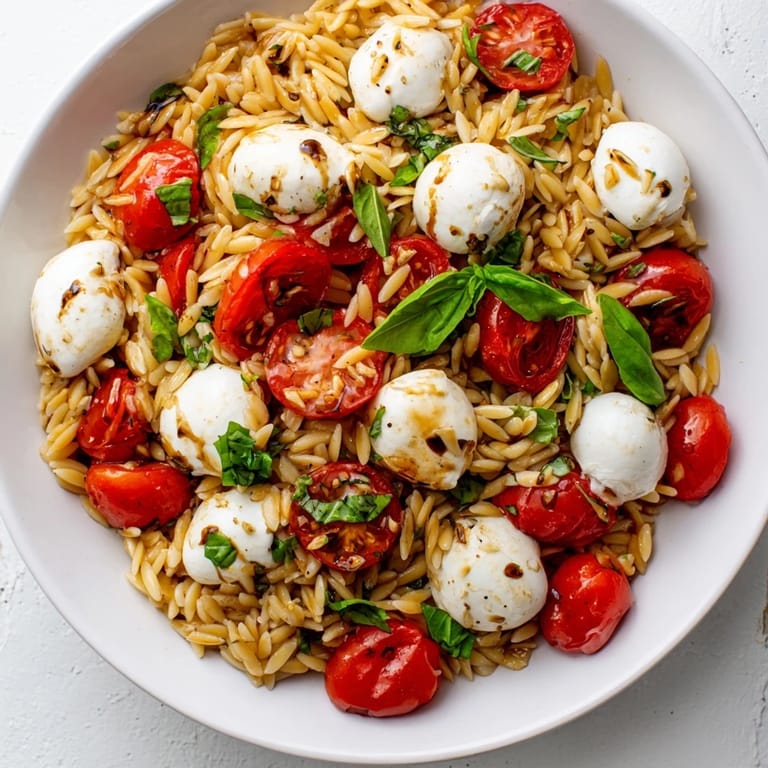
- In a large bowl, combine your cooled orzo with the halved cherry tomatoes, mozzarella balls, and basil. At this point it looks simple, almost humble, but it's about to transform.
- Make the dressing:
- In a small bowl or jar, whisk together the olive oil, balsamic vinegar, Dijon mustard, minced garlic, salt, and pepper. You'll feel it come together under the whisk—it goes from looking separated to creamy and cohesive, and that's the moment you know it's emulsified properly. Taste a tiny bit on your finger and adjust the seasoning.
- Bring it all together:
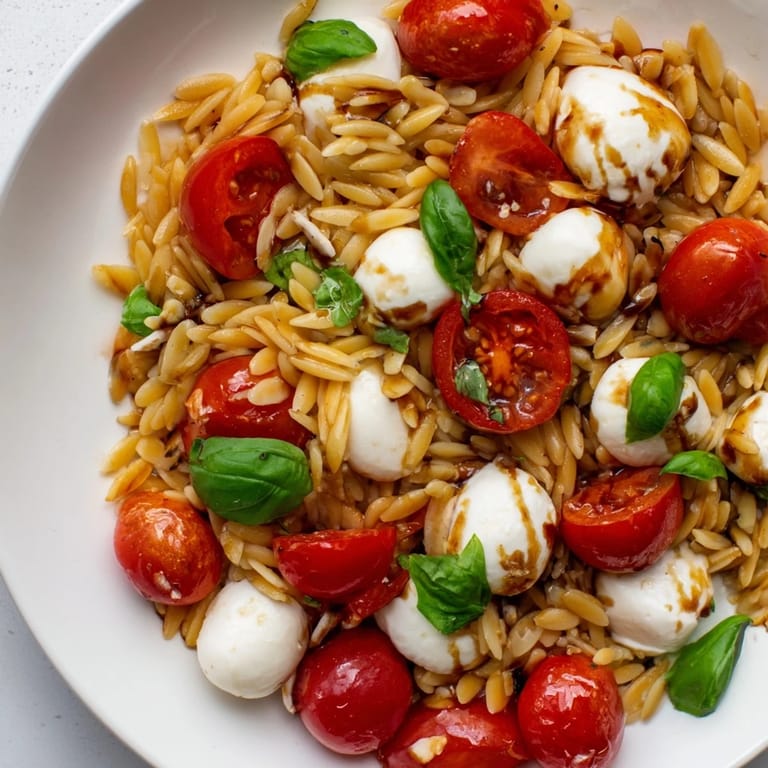
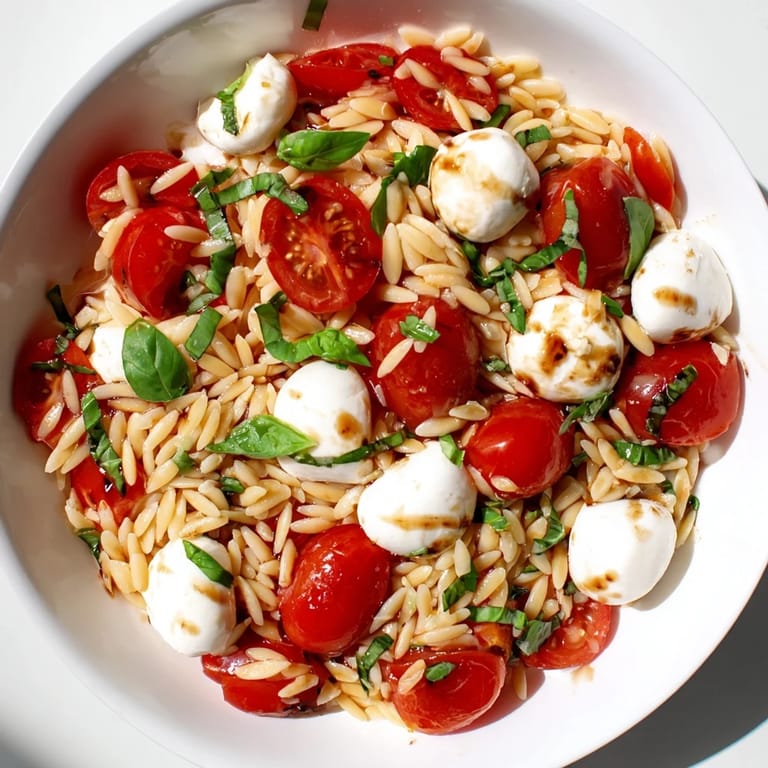
- Pour the dressing over your salad and toss everything gently, making sure every piece of pasta gets coated without breaking up the mozzarella. Taste it immediately, but also know that if you let it sit in the fridge for 30 minutes, the flavors will deepen and the pasta will absorb more of that vinaigrette.
 Save
Save I made this salad for my partner on an ordinary Thursday evening, nothing special planned, just the two of us at home. Halfway through eating, they set down their fork and asked if I'd make it again next week. That's when I understood that the best meals aren't always the elaborate ones—sometimes they're the simple ones that taste exactly like you care.
Why This Salad Works as Both Comfort and Celebration
There's a reason this salad became my go-to: it respects summer vegetables without trying too hard to impress you. The combination of warm pasta meeting cool mozzarella creates a temperature contrast that feels intentional and thoughtful, and the balsamic dressing ties everything together without being heavy or overwhelming. It's light enough for a weeknight dinner but elegant enough to bring to someone else's table, which is the mark of a truly useful recipe.
The Rhythm of Assembly
Unlike recipes that demand your full attention at the stove, this one lets you breathe. The pasta cooks while you chop, the salad waits while you whisk, and there's no scrambling at the end to get everything hot at once. That breathing room is when I actually enjoy cooking instead of treating it like a task to rush through.
Small Changes That Create Big Shifts
Once you understand the backbone of this recipe, you start seeing possibilities everywhere. I've added handfuls of peppery arugula, scattered toasted pine nuts for crunch, even layered in some thinly shaved red onion when I wanted a sharper edge. Sometimes I drizzle a touch of aged balsamic glaze over the top right before serving, which adds this glossy sweetness that makes people pause and really notice what they're eating. The core stays the same, but you're in control of how it evolves.
- Fresh herbs like oregano or mint can replace basil if that's what you have growing nearby.
- Roasted red peppers add a smoky sweetness that plays beautifully with the tang of the vinegar.
- A handful of quality olives or capers punches up the Mediterranean flavor if you're in the mood for something bolder.
 Save
Save This salad taught me that the most satisfying meals are often the ones that feel effortless to make but taste like you knew exactly what you were doing. It's become my answer whenever someone asks what I bring to a gathering, and it's never let me down.
Recipe Help & Answers
- → How do I cook orzo pasta perfectly?
Boil salted water and cook orzo until al dente, about 8-10 minutes. Drain and rinse with cold water to stop cooking and cool it down.
- → Can I use different cheese instead of mozzarella?
Yes, fresh diced mozzarella works well too. Alternatively, mild cheeses like burrata can add creaminess.
- → How should the salad be stored?
Keep it covered in the refrigerator and consume within 1-2 days. Toss before serving to redistribute the dressing.
- → What is a good way to enhance the salad’s flavor?
Additions like fresh arugula, toasted pine nuts, or a drizzle of extra balsamic glaze create depth and contrast.
- → Is it possible to prepare this salad ahead of time?
Yes, you can prepare it a few hours in advance and chill it to allow flavors to meld, but add delicate herbs just before serving.