 Save
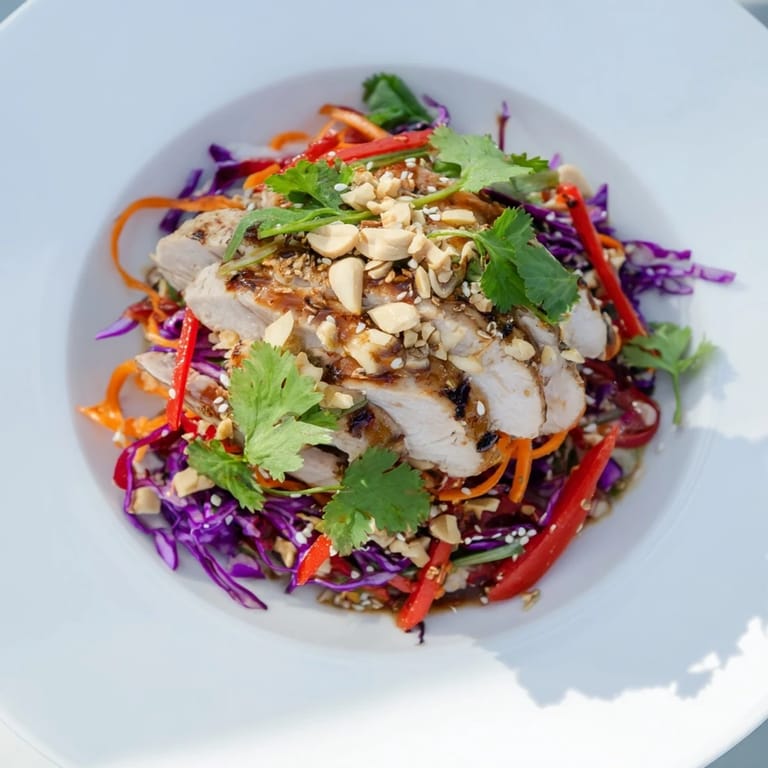
Save There's something about a vegetable peeler in hand that makes me feel like I'm creating instead of just cooking. I discovered this slaw on a Wednesday afternoon when I had chicken thawing and a fridge full of carrots that needed purpose. The idea came from watching someone enthusiastically shave vegetables at a market stand, their hands moving with such practiced ease that I thought, why not make that the star of the plate? That's when the ginger-miso dressing clicked into place, and suddenly I had a salad that felt both vibrant and grounding.
I made this for a friend who mentioned craving something that felt both comforting and energizing, and watching them go back for seconds without asking what was in it told me everything. That moment made me realize how often we apologize for simple food, when really, simplicity done well is its own kind of magic.
Ingredients
- Boneless, skinless chicken breasts (2, about 400 g): The blank canvas here, ready to absorb the soy and sesame marinade without fighting for attention.
- Soy sauce (1 tbsp for marinade, 1 tbsp for dressing): Use tamari if gluten matters to you, and don't skip this in the marinade because it's what gives the chicken its gentle umami undertone.
- Sesame oil (1 tbsp for marinade, 2 tsp for dressing): The toasted kind is non-negotiable here; it's where half the flavor lives.
- Fresh ginger (1 tsp grated for marinade, 1 tbsp for dressing): Buy it by the knob and grate it as you need it, because bottled ginger tastes like disappointment.
- Salt and black pepper: Taste as you go, especially with the chicken; it seasons from the outside in.
- Large carrots peeled into ribbons (4): A vegetable peeler is your best friend here, and the moment you realize you can make them thicker or thinner is the moment you own this dish.
- Red cabbage, finely shredded (2 cups): The purple keeps its color and bite when you dress it moments before eating, so don't prep it hours ahead.
- Red bell pepper, thinly sliced (1): Crisp, sweet, and it adds a note that balances the earthiness of the miso.
- Scallions, thinly sliced (3): Both white and green parts matter; the white adds a sharp bite and the green brings freshness.
- Fresh cilantro leaves (1/2 cup): This is optional only if you're one of those people who thinks it tastes like soap, but if you like it, don't hold back.
- Roasted peanuts, roughly chopped (1/4 cup, optional): They add a textural moment that makes the whole thing feel more intentional.
- Toasted sesame seeds (1 tbsp): Toast them yourself if you can; the difference between raw and toasted is the difference between okay and unforgettable.
- White miso paste (2 tbsp): This is the backbone of the dressing, creamy and funky in the best way.
- Rice vinegar (2 tbsp): Gentler than regular vinegar, which is why it doesn't turn the slaw into a pickle.
- Honey or maple syrup (1 tbsp): A whisper of sweetness that lets the other flavors breathe.
- Neutral oil (3 tbsp): Canola or grapeseed works; this carries the toasted sesame oil without overwhelming it.
- Fresh lime juice (1 tbsp): Squeeze it right before you mix the dressing, because bottled lime juice is a shortcut that shows.
- Garlic clove, minced (1 small): Small matters here; you want presence, not a garlicky punch.
Tired of Takeout? 🥡
Get 10 meals you can make faster than delivery arrives. Seriously.
One email. No spam. Unsubscribe anytime.
Instructions
- Build your marinade:
- Stir together the soy sauce, sesame oil, ginger, salt, and pepper in a small bowl until it looks like a glossy paste. This isn't about drowning the chicken; it's about coating it so every surface gets touched.
- Let the chicken sit:
- Place the chicken breasts in the marinade and turn them a few times so both sides get covered. Ten minutes is enough; the ginger is already doing the work.
- Get your pan ready:
- Heat a grill pan or skillet over medium heat until you can feel the warmth radiating from it but it's not aggressively smoking. A little shimmer of oil helps the chicken not stick and gives you those gentle caramelized edges.
- Cook the chicken:
- Lay the chicken breasts down and resist the urge to fidget with them for about five minutes. Then flip and do the same on the other side, checking for that moment when the inside is no longer pink but the outside still has some give.
- Let it rest:
- Transfer the cooked chicken to a clean cutting board and leave it alone for five minutes. This is when the juices stop panicking and redistribute, which means the chicken stays tender when you slice it.
- Slice your chicken:
- Use a sharp knife and go against the grain, cutting at a slight angle, which gives you more surface area and makes the chicken feel almost luxurious on the salad.
- Prep the vegetables:
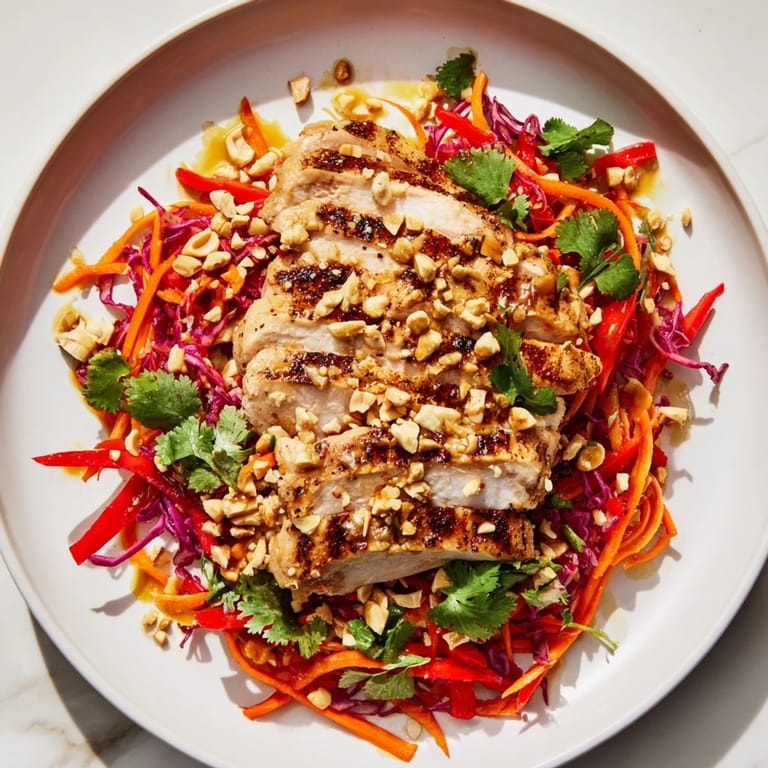
- While the chicken rests, use your vegetable peeler to turn each carrot into ribbons, letting them fall into a large bowl. Add the shredded cabbage, sliced pepper, scallions, and cilantro, tossing gently so everything mingles.
- Make the dressing:
- In a small bowl, start with the miso paste and rice vinegar, whisking until the miso softens and loosens. Add the soy sauce, honey, ginger, sesame oil, neutral oil, lime juice, and garlic, whisking until it's smooth and tastes bright enough that you want to drink it.
- Bring it together:
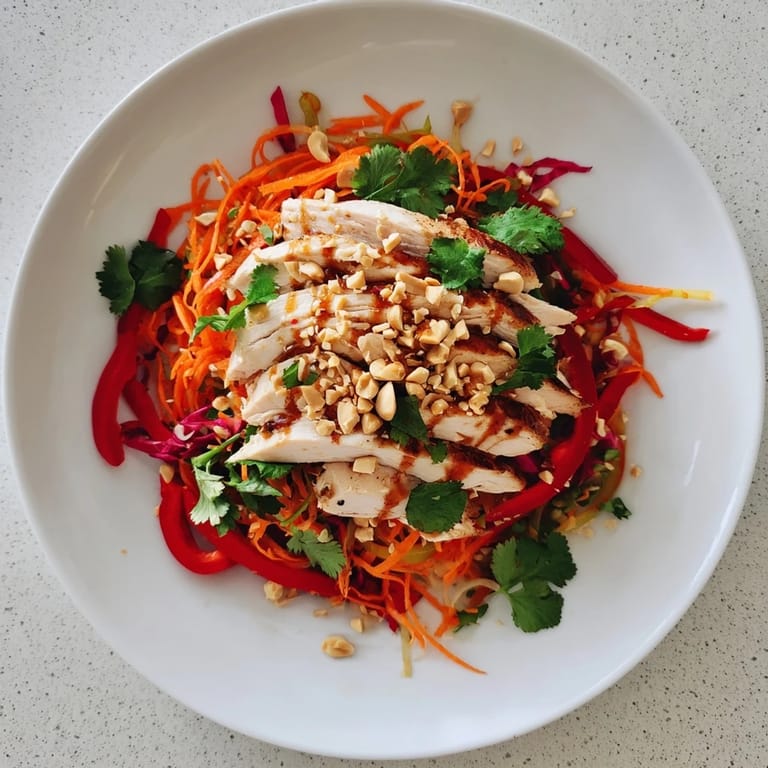
- Add the sliced chicken to the vegetable bowl and pour the dressing over everything. Toss gently but thoroughly, making sure the dressing reaches all the corners.
- Finish and serve:
- Scatter the peanuts and sesame seeds over the top right before serving, so they stay crispy instead of absorbing the moisture and turning soft.
 Save
Save There was an evening when I made this for someone who had mentioned, almost offhand, that they missed feeling excited about food. Watching them taste it and pause for a moment before smiling made me understand that sometimes a salad isn't just a salad; it's a small permission to feel good about what you're feeding yourself.
The Beauty of Ribbons
A vegetable peeler might seem like a small thing, but it changes how you experience carrots. Instead of rounds or sticks or shreds, ribbons catch the dressing differently, bending and folding to hold onto the miso-ginger coating. The first time I realized I could vary the thickness of my ribbons, I felt like I'd unlocked a secret. Thicker ribbons feel substantial; thinner ones almost melt into the slaw. There's no wrong choice, just different textures that change the feel of the whole dish.
About That Dressing
Miso paste has this reputation for being intimidating, but it's really just fermented soybeans that want to make friends with other flavors. The rice vinegar softens it, the sesame oil toasts it, and the honey rounds out the edges so nothing tastes harsh. I started making this dressing because I was curious about miso beyond miso soup, and it became the reason I make this slaw over and over. The dressing is so good that I've found myself drizzling it on grilled vegetables, roasted tofu, and even cold noodles the next day.
Make It Your Own
This slaw is a frame, not a prescription. Some weeks I add sliced cucumber because I want more crunch and the cool, clean taste it brings. Other times I'll slip in edamame because I'm thinking about protein and that tender, almost buttery quality they add. The cilantro can step back if it's not your thing, and the peanuts are optional in case you're cooking for someone with allergies or simply because you prefer the texture without them.
- Grilled tofu or tempeh can replace the chicken if you're vegetarian, just give it the same marinade treatment.
- If you find yourself without lime, rice vinegar takes the lead and does the job just fine.
- Make extra dressing; it keeps in the fridge for three days and makes anything feel special.
 Save
Save This slaw feels like a salad that cares about you, the kind that doesn't apologize for being simple or for tasting this good. Make it once and it becomes the thing you reach for when you want to feel nourished without drama.
Recipe Help & Answers
- → How can I prepare the carrot ribbons?
Use a vegetable peeler to shave the carrots into thin ribbons, which adds a delicate texture and visual appeal.
- → What is the best way to cook the chicken?
Marinate the chicken in soy sauce, sesame oil, ginger, salt, and pepper, then grill or pan-cook for 5–7 minutes per side until fully cooked and tender.
- → Can the dressing be made ahead of time?
Yes, the ginger-miso dressing can be whisked and stored in the refrigerator for up to 2 days to deepen flavors.
- → What substitutes work well for the chicken?
Grilled tofu or tempeh serve as excellent plant-based alternatives that complement the fresh vegetables and dressing.
- → How do the roasted peanuts and sesame seeds enhance the dish?
They add a crunchy texture and a nutty flavor that balances the fresh, crisp vegetables and tender chicken.
- → Which drinks pair nicely with this dish?
A crisp Sauvignon Blanc or chilled jasmine tea enhances the fresh, vibrant flavors of the slaw.