 Save
Save My neighbor's kitchen smelled like this soup every Monday without fail—that deep, savory cloud of ham stock and spices drifting through the hallway was how I knew the weekend was officially over. She'd learned it from her grandmother in New Orleans, and one afternoon while I was helping her chop vegetables, she handed me a wooden spoon and said, "You're going to make this yourself now." That was fifteen years ago, and I've been making it ever since, each batch tasting like both her kitchen and my own.
I made this for my friend Marcus during his first winter in the city, when he was homesick and the weather turned bitter cold. He ate two bowls without saying much, then just sat quietly with the third one, and I realized that sometimes food is just a way of saying, "You're not alone in this." Now whenever he visits, it's the first thing he asks for.
Ingredients
- Smoked ham hock or leftover ham bone (1 lb): This is where the soul of the soup lives—the hock releases collagen and deep smoky flavor over hours that you simply cannot replicate any other way.
- Diced smoked ham (8 oz): This adds texture and bursts of salty richness that remind you why Cajun cooking is so addictive.
- Dried red beans (1 lb, soaked overnight): Soaking them overnight isn't just a step, it's non-negotiable—it cuts cooking time in half and gives you creamy beans instead of grainy ones.
- Yellow onion, green bell pepper, celery (the holy trinity): This combination is the foundation of Cajun cooking, and the way these three vegetables soften together creates an aromatic base you'll recognize in every spoonful.
- Garlic (3 cloves, minced): Add it after the trinity softens so it doesn't burn and turn bitter—trust me, I learned that the hard way.
- Bay leaves (2): They dissolve into the background and make everything taste somehow deeper and more intentional.
- Chicken stock (8 cups): Use low-sodium so you can control the salt yourself; the soup will taste brighter and more honest.
- Thyme, smoked paprika, cayenne, oregano (1 tsp, 1 tsp, 1/2 tsp, 1 tsp): These seasonings work together like a choir—no single one dominates, but together they create something warm and complex.
- Black pepper, white pepper, kosher salt (1 tsp, 1/2 tsp, 1 tsp): Season as you go and taste constantly; every pot of beans absorbs salt differently depending on your water and stock.
- Green onions and fresh parsley (for garnish): These feel like an afterthought until you taste them—they brighten the whole bowl and add a fresh contrast to all that richness.
Tired of Takeout? 🥡
Get 10 meals you can make faster than delivery arrives. Seriously.
One email. No spam. Unsubscribe anytime.
Instructions
- Build your base:
- Heat a splash of oil in your large pot over medium heat and add the onion, bell pepper, and celery. Let them soften for 5 to 7 minutes, stirring occasionally—you'll know they're ready when the onion turns translucent and the kitchen starts to smell like a Cajun kitchen.
- Wake up the garlic:
- Stir in your minced garlic and cook for just one minute until it becomes fragrant. This step is quick but crucial—you want the aroma, not the burn.
- Add everything at once:
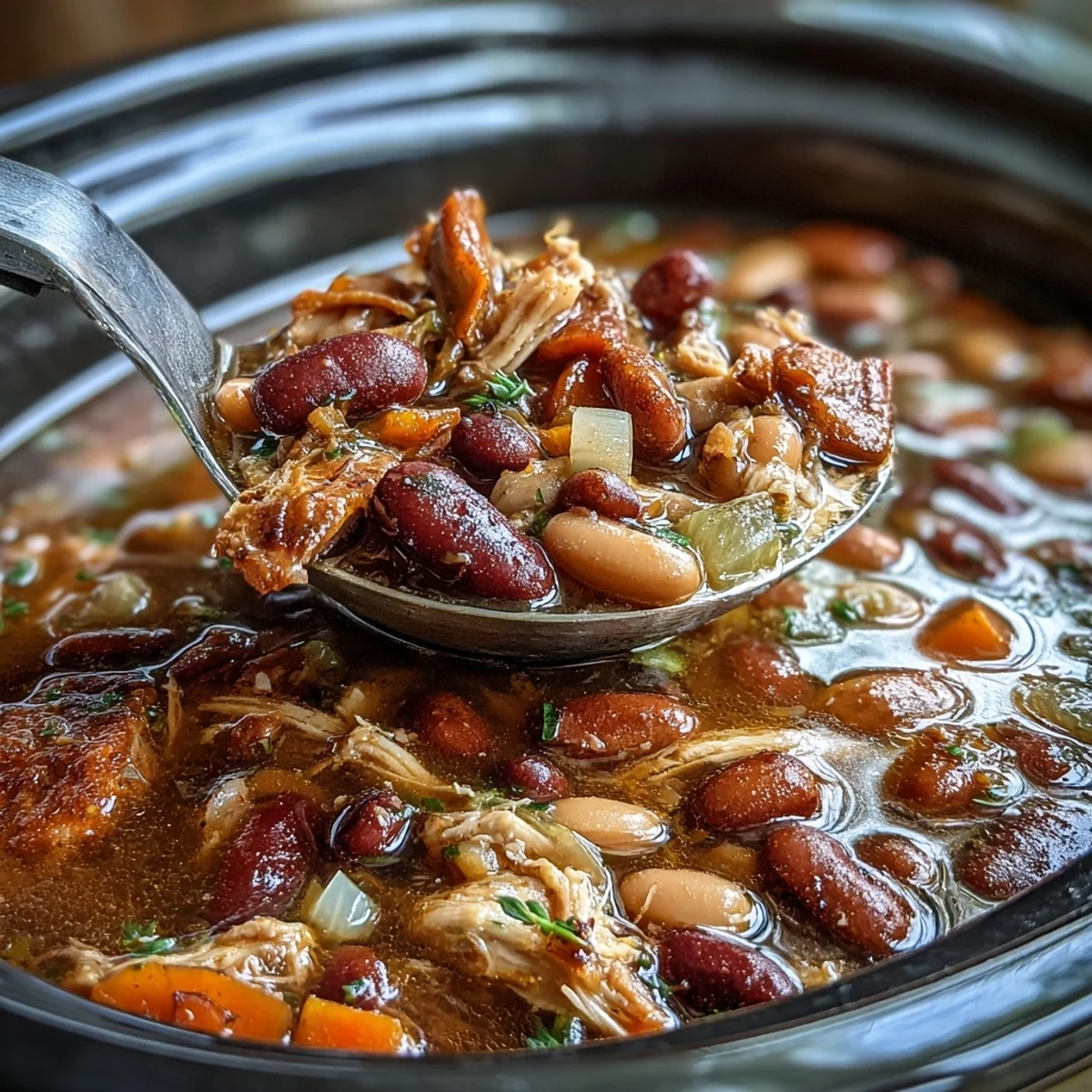
- Throw in your drained beans, ham hock, diced ham, bay leaves, and all your spices. This moment feels chaotic but it's organized chaos—everything gets coated in oil and begins talking to each other.
- Let it simmer gently:
- Pour in your stock, bring the whole pot to a boil, then reduce the heat to low and cover it partially. This is where patience becomes an ingredient—you're going to simmer for about 2 hours, stirring occasionally so the beans cook evenly.
- Check for doneness around the halfway point:
- After about an hour, bite into a bean. It should be nearly tender but not quite there yet. The beans will continue to soften and eventually become creamy as they release their starches into the broth.
- Rescue the meat from the bone:
- Once the beans are creamy (usually around 2 hours total), remove the ham hock carefully, shred any meat from the bone, and return just the meat to the pot. Discard the bone and any excess fat that clings to it.
- Taste and adjust:
- Now comes the moment where you become the chef—taste your soup and decide if it needs more salt, pepper, heat, or even a splash of hot sauce. It's never too late to fix it.
- Serve with love:
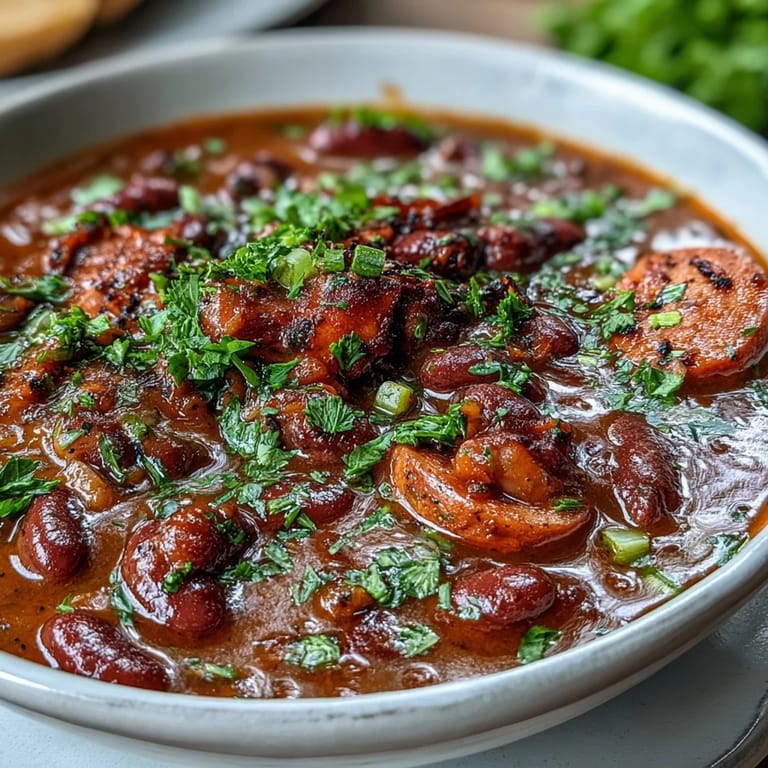
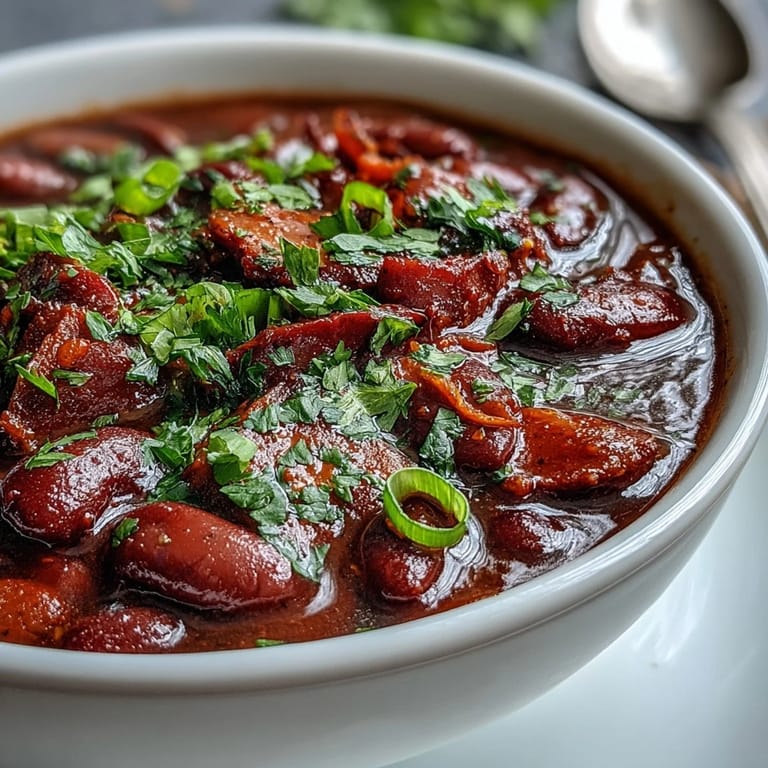
- Ladle the soup into bowls over hot rice, scatter fresh green onions and parsley on top, and watch people's faces as they take the first spoonful.
 Save
Save My mother-in-law once told me that Cajun cooking isn't about shortcuts or tricks—it's about respecting time and letting flavors develop at their own pace. Making this soup taught me that lesson in a way that nothing else could. It's why I keep coming back to this recipe, why it tastes like home now, and why it's become one of my most treasured things to cook for people I care about.
The Art of Building Flavor
The reason this soup tastes so much better on day two or three isn't magic—it's just that the flavors need time to truly meld and deepen. The spices stop fighting each other and start dancing together. The smoke from the ham penetrates every single bean. The broth becomes silkier and more velvety. If you're making this for a dinner party, seriously consider making it a day ahead. Your future self at the stove will thank you.
When You Want to Make It Your Own
Andouille sausage is the most authentic addition, and you brown it in a separate skillet before adding it to the pot so it stays textured and its oils coat everything. Some people add okra in the last 20 minutes, which gives the soup a slightly different texture. Others swear by a pinch of file powder sprinkled on top at serving time. The beauty of this recipe is that it's flexible enough to bend toward your preferences while staying fundamentally true to itself.
Serving and Storing
This soup is meant to be served hot over fluffy white rice, with crusty French bread or warm cornbread on the side for soaking up every last drop. Leftovers keep beautifully in the refrigerator for up to four days, and you can also freeze them for up to three months. The flavors actually improve as it sits, making it one of those rare dishes that becomes a better version of itself.
- Reheat gently on the stovetop over medium heat rather than the microwave, which can make the beans mushy.
- If it thickens too much in the fridge, thin it with a splash of stock or water when you reheat it.
- Make this in a heavy Dutch oven or soup pot that distributes heat evenly—it makes a real difference in how the beans cook.
 Save
Save This soup is proof that the best things in life take time and aren't rushed. Make it slowly, with good ingredients and a full heart, and it becomes something that people remember.
Recipe Help & Answers
- → What type of ham works best?
Smoked ham hocks or diced smoked ham provide the ideal smoky flavor and richness for this dish.
- → How should red beans be prepared before cooking?
Red beans should be soaked overnight and thoroughly drained to ensure even cooking and creaminess.
- → Can I adjust the spice level?
Yes, cayenne pepper and hot sauce can be added or reduced according to your heat preference.
- → What side pairs well with this dish?
Cooked long-grain white rice or crusty bread are excellent accompaniments to soak up the flavorful broth.
- → How to thicken the dish if desired?
Gently mash some of the beans against the pot before serving to create a thicker, creamier consistency.
- → Can additional meats be added?
Adding sliced and browned andouille sausage enhances smokiness and depth of flavor.