 Save
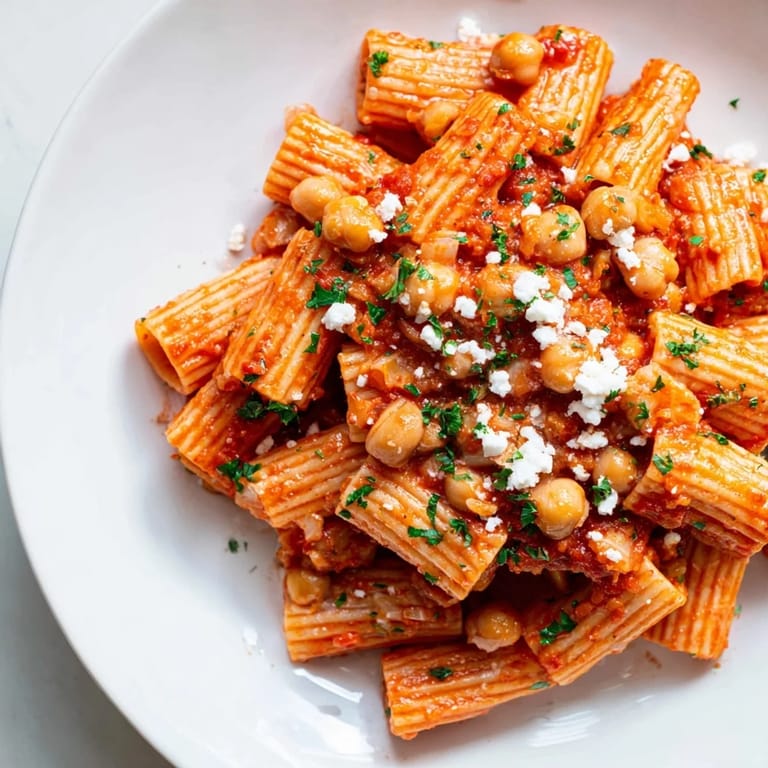
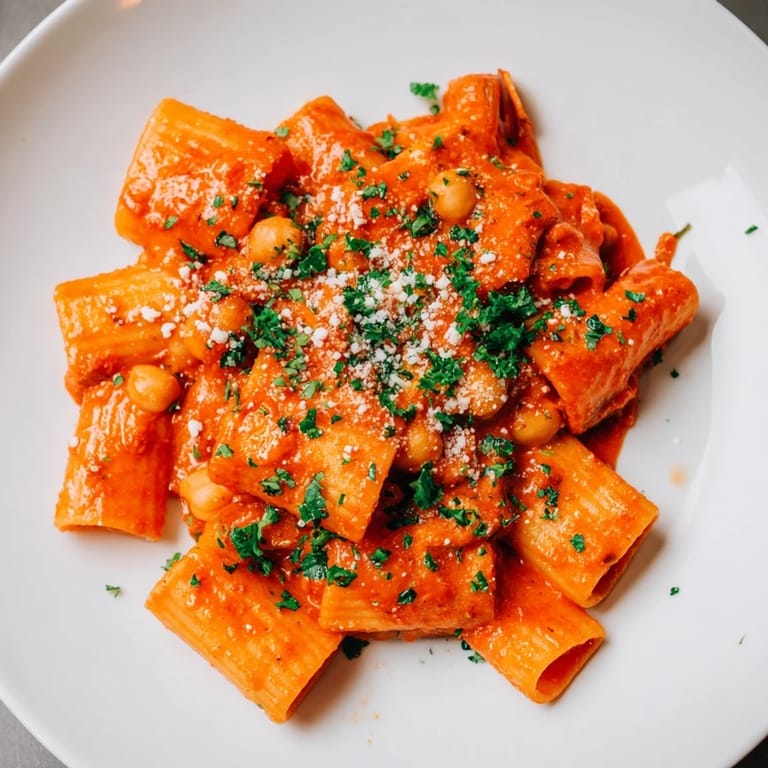
Save I discovered harissa pasta on a rainy Tuesday when my usual weeknight rotation felt stale. Browsing through my spice cabinet, that small jar of harissa caught my eye—something I'd bought on impulse months earlier and forgotten about. Within forty minutes, I had a bowl of vibrant, steaming pasta that tasted nothing like what I expected to make. The heat wasn't aggressive; it was warm and complex, singing against creamy chickpeas and bright lemon.
My partner took one bite and asked where this came from, genuinely surprised it wasn't from our favorite Mediterranean place downtown. I remember feeling that small flush of pride that comes from feeding someone something unexpected and good. He went back for seconds, and somehow that simple moment—him eating enthusiastically while I poured more wine—made the whole dish feel worth repeating.
Ingredients
- Dried short pasta (penne, rigatoni, or fusilli): 350 g—choose a shape that catches and holds the sauce; smaller tubes work better than long noodles here.
- Olive oil: 2 tbsp—use good quality if you can; it carries the flavors forward.
- Medium onion: 1, finely chopped—this builds the foundation; don't rush it.
- Garlic cloves: 3, minced—fresh is crucial; the paste transforms once it hits heat.
- Harissa paste: 2 tbsp—this is your backbone; adjust based on your heat tolerance and brand strength.
- Ground cumin: 1 tsp—warm and earthy, it rounds out the spice profile.
- Smoked paprika: 1/2 tsp—adds depth without extra heat.
- Canned diced tomatoes: 1 (400 g)—good quality matters; the sauce depends on it.
- Canned chickpeas: 2 (400 g), drained and rinsed—rinsing removes excess sodium and foam.
- Vegetable broth or water: 1/2 cup—this keeps the sauce from seizing up.
- Salt and freshly ground black pepper: to taste—season as you go, not just at the end.
- Lemon: 1—zest and juice brighten everything; don't skip this step.
- Fresh parsley or cilantro: 2 tbsp chopped—add just before serving so it stays vibrant.
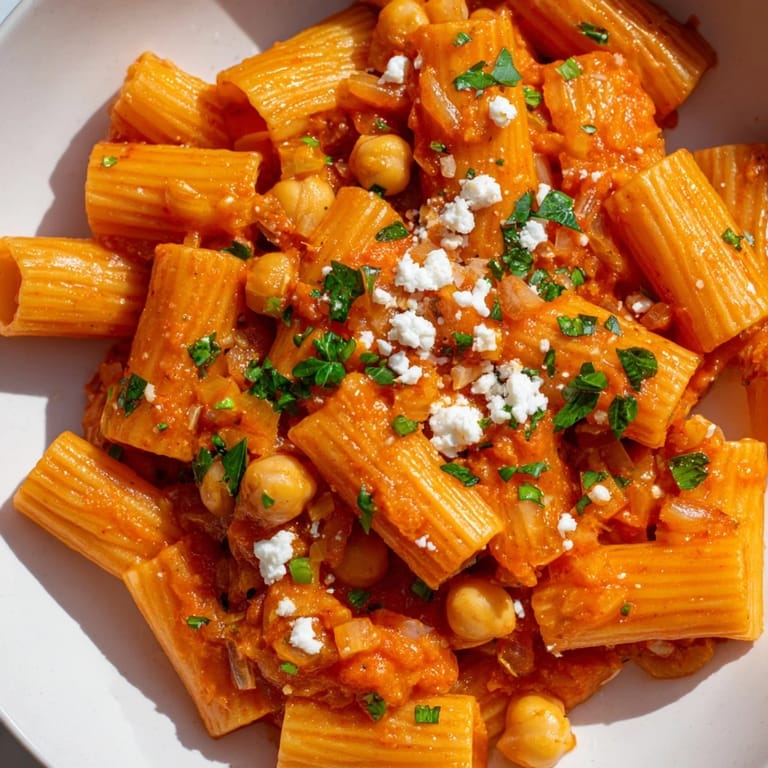
- Feta cheese (optional): to serve—crumbled on top adds a salty contrast.
Tired of Takeout? 🥡
Get 10 meals you can make faster than delivery arrives. Seriously.
One email. No spam. Unsubscribe anytime.
Instructions
- Set your water boiling:
- Fill a large pot with water and salt it generously—you want it to taste like the sea. This is your only chance to season the pasta itself, so don't hold back.
- Sauté the onion base:
- Heat olive oil in a large skillet over medium heat, then add your chopped onion. Let it sit undisturbed for a minute or two before stirring, watching for that soft, translucent moment around 4 to 5 minutes.
- Wake up the spices:
- Add minced garlic, harissa paste, cumin, and smoked paprika all at once, then stir constantly for about a minute. You'll smell the transformation immediately—that's when you know they're blooming properly.
- Build the sauce:
- Pour in your diced tomatoes, drained chickpeas, and vegetable broth, stirring until everything is coated and combined. Bring it to a gentle simmer, then season with salt and pepper—taste here because harissa can vary wildly in saltiness.
- Let it simmer and meld:
- Cover the skillet and let the sauce bubble quietly for 10 to 12 minutes, stirring now and then. The sauce will darken slightly and thicken, and that's when you know the flavors have gotten to know each other.
- Cook the pasta:
- While your sauce is simmering, cook the pasta in that boiling salted water according to the package instructions, aiming for al dente—tender but with a slight bite. Reserve about half a cup of pasta water before draining; you'll use this as a secret weapon if the sauce seems too thick.
- Bring it all together:
- Add the drained pasta directly to the skillet with the sauce, tossing everything gently to coat. If it looks dry, splash in some of that reserved pasta water a little at a time until it feels creamy without being soupy.
- Finish with brightness:
- Remove from heat, then stir in lemon zest, lemon juice, and your chopped herbs. Taste one more time and adjust salt and pepper—the acid should make everything sing.
- Serve and celebrate:
- Divide into bowls and top with extra fresh herbs and crumbled feta if you like. Eat while it's hot, with good bread nearby for soaking up every bit of sauce.
 Save
Save What surprised me most about this dish was how it felt like something I'd made a hundred times, even though it was entirely new. The flavors settled into something almost comforting, the kind of food that reminds you why cooking matters.
Why This Combination Works
Harissa is a North African chili paste that brings both heat and smoky depth, while cumin and paprika echo those same warm spices, creating a cohesive flavor story rather than random seasoning. Chickpeas absorb and hold the sauce beautifully, making them substantial enough to make you feel full and satisfied. The tomatoes add brightness and body, the lemon cuts through richness at the last second, and the pasta catches everything together.
How to Make It Your Own
This recipe is flexible enough to shift based on what's in your pantry or your mood on any given night. White beans, cannellini, or even lentils work in place of chickpeas if that's what you have. Roasted zucchini, spinach, or even canned artichoke hearts add vegetable depth without changing the technique.
Pairing and Storage
Serve this with a crisp white wine like Sauvignon Blanc or a chilled rosé—something with acidity that matches the lemon and spice. Leftover pasta keeps well in the refrigerator for up to three days, and it actually tastes better the next day as the flavors deepen; reheat gently with a splash of water if it's dried out.
- Cold leftovers work surprisingly well as a chopped salad the next day if you're looking for something different.
- If you're cooking for guests, you can prepare the sauce up to a few hours ahead and reheat it while the pasta cooks.
- Make extra sauce if you like; it freezes beautifully in containers for quick dinners weeks later.
 Save
Save This is the kind of recipe that gets better every time you make it, once you understand how the pieces talk to each other. I hope it becomes one of your weeknight saves, the dish you turn to when you want something vibrant and real.