 Save
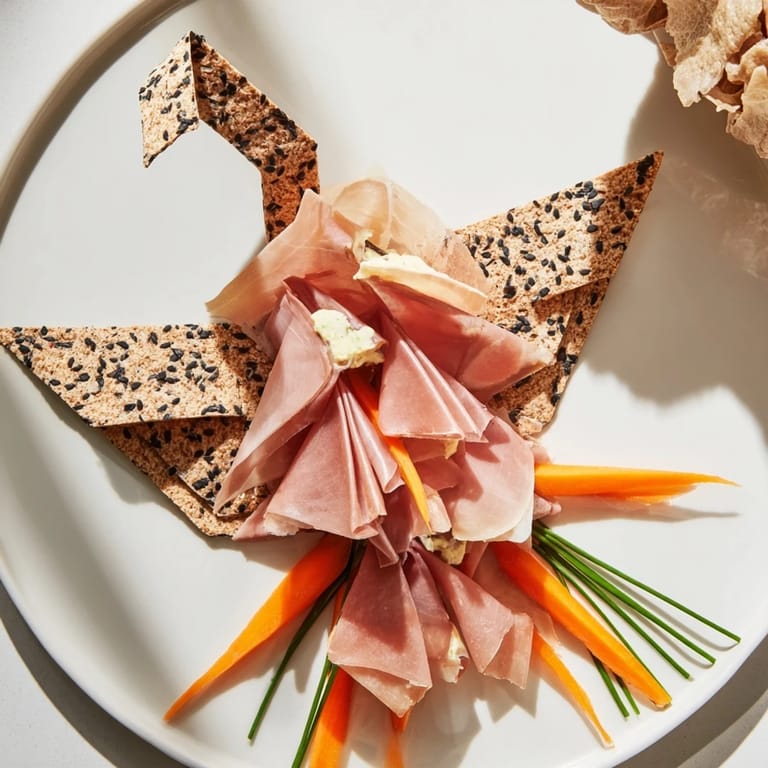
Save I discovered the joy of plating as art the moment I realized that food doesn't have to taste exceptional to make people stop mid-conversation—it just has to look like someone cared enough to fold it properly. A friend brought The Paper Crane to a dinner party years ago, and instead of reaching for it immediately, everyone just stared. The delicate origami of cured meats, the precise geometry of crackers, the carrot strips curling like brushstrokes—it felt almost too beautiful to eat. That's when I understood: sometimes the most memorable dishes are the ones that ask your eyes to feast first.
The first time I made this for my partner's coworkers, I was terrified. Not of the technique—folding meat is forgiving—but of whether it would feel pretentious or just right. By the time the second person said 'Did you really make this?', I realized the beauty of this dish isn't about showing off; it's about the small joy of seeing someone's face shift from skepticism to genuine delight. That moment, right when they understood it was both real and beautiful, made every careful fold worthwhile.
Ingredients
- Prosciutto: Buy it sliced thin from the counter rather than pre-packaged—it folds like silk and tastes brighter, and the seller can usually slice it even thinner if you ask.
- Smoked turkey breast: Look for a whole piece at the deli and ask them to slice it thin; it holds its shape during folding better than packaged versions.
- Bresaola or pastrami: These cured meats are the wings of your crane, so choose whichever appeals to your palate—bresaola is milder and more delicate, pastrami is bolder and more assertive.
- Triangular whole-grain crackers: The shape matters here; if you can't find pre-cut triangles, use square crackers and trim them carefully with a sharp knife or let the slightly imperfect edges add character.
- Black sesame or poppy seed crackers: These add contrast and visual weight; don't skip them as they're what make your crane look intentional rather than accidental.
- Fresh chives: Keep them whole and long; they become tail feathers and details, so the longer your bundle, the more graceful your crane.
- Carrot: Use a vegetable peeler to create thin ribbons—this tool is essential because thick carrot slices won't curl or fold delicately enough to suggest a bird in flight.
- Cream cheese: This is your edible glue; it should be cold from the fridge so it holds shapes but still soft enough to spread with a small spatula.
- Black sesame seeds: These go beyond garnish into storytelling—they're the crane's eye, so place them with intention.
Tired of Takeout? 🥡
Get 10 meals you can make faster than delivery arrives. Seriously.
One email. No spam. Unsubscribe anytime.
Instructions
- Create your ribbons:
- Take your carrot and run the vegetable peeler along its length, creating thin, paper-like strips that curl naturally as they fall. Set aside a couple of strips to fold into a beak shape, and let the others coil gently on a small plate—these become your crane's graceful details and the curves matter more than perfection.
- Fold the body:
- Lay a slice of prosciutto flat and fold it into a triangle, then fold again to create layers and dimension. Stack two or three of these folded triangles slightly overlapped on your platter where the crane's body should sit—think of building upward and backward rather than flat, so light catches the folds.
- Shape the wings:
- Take your bresaola or pastrami and fold each slice into a triangle, then angle these triangles upward and outward on either side of the body as if the crane is mid-flight. The folds should catch light, so fold with intention and let each layer be slightly visible rather than hidden.
- Build the frame:
- Position your whole-grain crackers beneath and beside the meat folds, following the body and wing lines to create a silhouette. Leave small gaps so the cream cheese can peek through—this detail makes the arrangement feel thoughtful rather than crowded.
- Attach the features:
- Use a small offset spatula or butter knife to apply a tiny bit of cold cream cheese where the beak should attach, then press a folded carrot strip into place. Add chives along the tail area, letting them arch naturally—think of these as the finishing brushstrokes that transform a pile of ingredients into a creature.
- Add the finishing touches:
- Sprinkle black sesame seeds where the eye would be and scatter a few more across the wings for texture and visual interest. Step back and look at your platter; if it doesn't look like a bird yet, adjust the angles slightly—crane posture is everything.
- Serve or hold:
- Bring it to the table immediately if your guests are waiting, or cover loosely with plastic wrap and refrigerate for up to an hour if timing allows. The cold will set the cream cheese and make everything taste even brighter.
 Save
Save I'll never forget the silence that fell over the table when I unveiled this dish—not the awkward kind, but the kind that happens when people encounter something genuinely beautiful on an ordinary Tuesday night. Someone asked if they should take a photo before eating it, and instead of feeling self-conscious, I realized the meal had already succeeded before anyone took a bite. The Paper Crane taught me that food is conversation, and sometimes the loudest voices don't use words.
The Art of Folding Without Fear
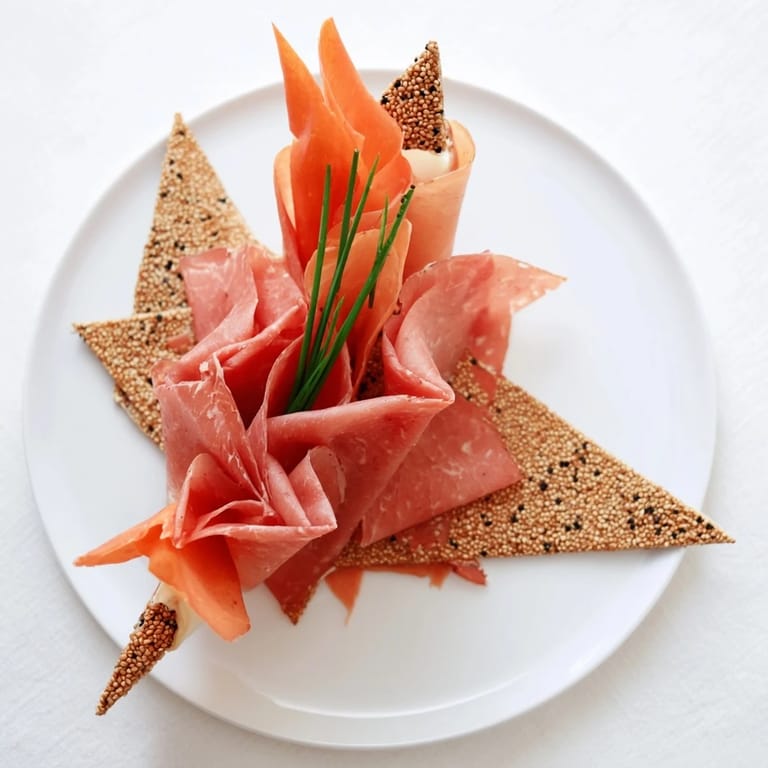
Folding cured meat looks intimidating until you realize it wants to cooperate—the thinness that seems delicate is actually what makes it pliable and forgiving. The prosciutto won't tear if you fold it gently, and if it does, it becomes part of the texture rather than a failure. I learned this by accepting that precision matters less than commitment; fold decisively, layer intentionally, and trust that your arrangement will read as intentional even if it's not perfectly symmetrical. The best part about working with cured meats is that they taste exactly the same whether you fold them into origami or leave them flat, so any anxiety is purely about the visual.
Timing and Temperature Considerations
The moment between assembly and serving is crucial—your crane should arrive at the table cool but not so cold that the cream cheese is brittle. If you're making this ahead, keep everything in the refrigerator in its assembled state, but pull it out five minutes before presenting so the meats soften slightly and the aromas wake up. Temperature affects flavor more than most people realize, and cured meats taste best when they're cool enough to feel intentional but warm enough to actually taste like themselves rather than like something frozen. This is when you'll notice why you bought good cured meats in the first place; cold, they're delicious, but cool, they're transcendent.
Variations and Personal Touches
The beauty of The Paper Crane is that it's a template rather than a rulebook, so feel free to riff on it without guilt. I've made versions with smoked salmon for pescatarian guests and versions where I replaced half the cured meats with whipped ricotta for a lighter feel. The structure stays the same—body, wings, features—but the ingredients shift based on what's in season or what your guests prefer. Each version teaches you something different about balance and flavor, and none of them is more correct than any other.
- Try roasted beet strips instead of carrot for a deeper color and earthier flavor that still photographs beautifully.
- Substitute cream cheese with flavored butters or herbed ricotta to add complexity without changing the technique.
- Use smoked salmon, sliced radishes, or even roasted vegetable strips if you're feeding people with different dietary preferences—the crane shape adapts to everything.
 Save
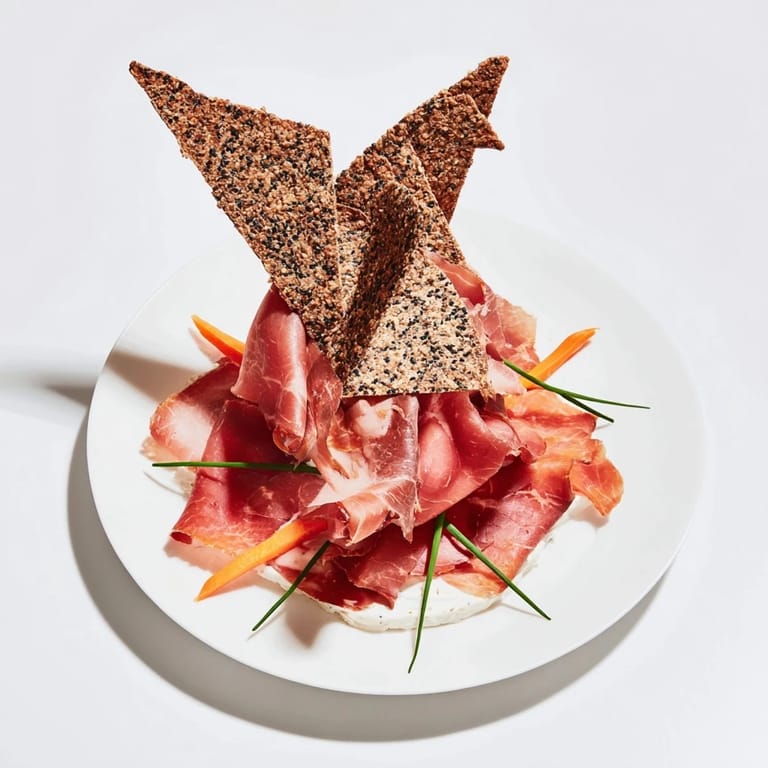
Save This dish reminds me that cooking is often about seeing possibility in simple ingredients—that a few slices of cured meat and some crackers can become a conversation starter. Every time I make it, someone asks if I went to culinary school, and I smile because the real education happened the first time I folded something carefully enough to make someone pause and look.
Recipe Help & Answers
- → How do I achieve the crane shape with cured meats?
Fold thin slices of prosciutto, turkey, and bresaola into sharp triangles and layer them to create a three-dimensional crane silhouette.
- → What alternatives can I use for a pescatarian or vegetarian version?
Substitute cured meats with smoked salmon or thin tofu slices to maintain texture and flavor.
- → Which crackers work best for this presentation?
Triangular whole-grain crackers and black sesame or poppy seed crackers complement the shape and add crunch.
- → How to ensure the decorative carrot strips stay in place?
Attach carrot strips using small dollops of cream cheese to secure the beak and legs without slipping.
- → Can this appetizer be prepared ahead of time?
Yes, cover loosely with plastic wrap and refrigerate for up to one hour before serving to maintain freshness.