 Save
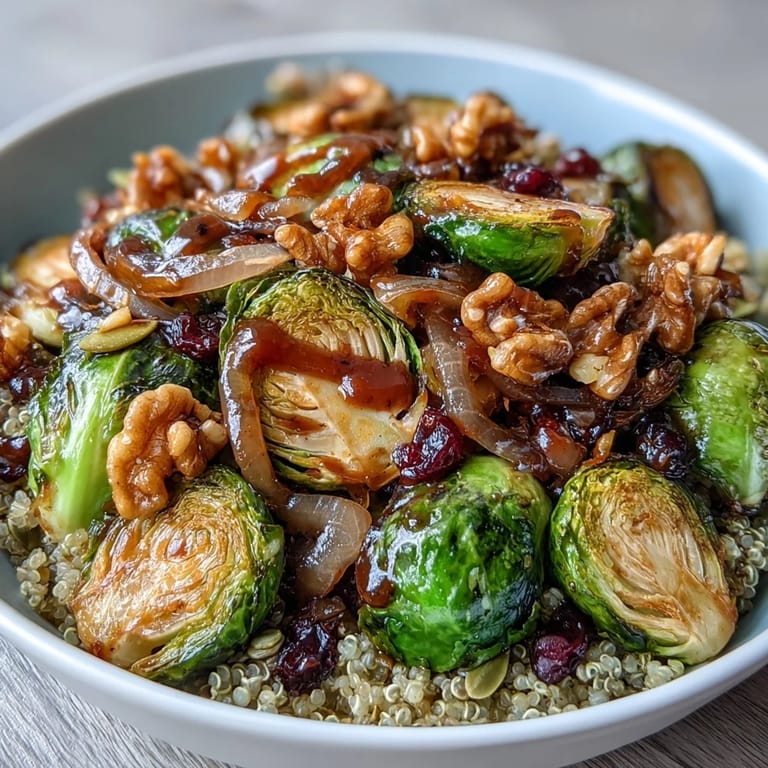
Save There's something almost magical about the moment when Brussels sprouts hit a hot oven and start to transform. I discovered this bowl recipe on a drizzly autumn afternoon while rummaging through my fridge, finding a bag of sprouts that needed rescuing and leftover quinoa from meal prep. The combination clicked immediately—crispy, caramelized vegetables over fluffy grains with a sharp balsamic tang felt like the kind of meal that could anchor a whole week. What started as creative salvaging became something I now make intentionally, sometimes with friends who swear they've never enjoyed Brussels sprouts until they've tasted them this way.
I served this to my sister last winter when she was going through a phase of trying to eat more vegetables, and watching her come back for seconds while barely acknowledging how healthy it was felt like a small victory. She started making it weekly, texting me photos from her kitchen with little variations—sometimes she adds chickpeas, sometimes roasted carrots. That's when I realized this wasn't just a recipe I'd stumbled into, but something genuinely shareable.
Ingredients
- Brussels sprouts (1 lb, trimmed and halved): The star of the show—trimming away yellowed outer leaves and halving them evenly ensures even caramelization, which is where the magic happens.
- Red onion (1 medium, thinly sliced): Roasting mellows the sharpness while adding natural sweetness and color contrast that makes the bowl visually stunning.
- Olive oil (2 tbsp for roasting, plus 2 tbsp for dressing): Quality matters here since it's the foundation for both caramelization and the final drizzle.
- Salt and black pepper: Use your hand to sprinkle rather than pouring straight from the shaker—it's easier to adjust seasoning this way.
- Quinoa or brown rice (1 cup uncooked): Quinoa is technically a seed with complete protein, while brown rice offers earthier flavor; choose based on your mood and what's in your pantry.
- Water or vegetable broth (2 cups): Broth adds depth, but water works fine if that's what you have on hand.
- Balsamic vinegar (1/4 cup): The older and more complex your vinegar, the better the dressing—it should smell rich and slightly sweet.
- Maple syrup or honey (1 tbsp): Just a touch of sweetness balances the vinegar's acidity without making the dressing cloying.
- Dijon mustard (1 tsp): The emulsifier that helps the dressing come together smoothly and adds subtle depth.
- Toasted nuts, dried cranberries, and pumpkin seeds (optional toppings): These aren't decorative—they add textural contrast and keep each bite interesting.
Tired of Takeout? 🥡
Get 10 meals you can make faster than delivery arrives. Seriously.
One email. No spam. Unsubscribe anytime.
Instructions
- Heat your oven and prepare:
- Set the oven to 425°F and line a baking sheet with parchment paper so your vegetables won't stick and cleanup will be effortless. A hot oven is essential for that golden-brown caramelization you're after.
- Toss the vegetables:
- In a bowl, coat your halved Brussels sprouts and sliced red onion with olive oil, salt, and pepper—use your hands to make sure every piece gets a light coating. Spread them cut-side down on the baking sheet in a single layer so they have room to brown, not steam.
- Roast until golden:
- Roast for 25 to 30 minutes, stirring halfway through so the other side gets contact with the hot pan. You'll know they're done when the cut sides are deep golden brown and the edges are crispy—this is where flavor lives.
- Cook your grains while vegetables roast:
- Rinse quinoa under cold water to remove any bitter coating, then combine with water or broth in a saucepan. Bring to a boil, reduce heat to low, cover, and simmer for about 15 to 20 minutes until tender and the liquid is absorbed—fluff gently with a fork when done.
- Whisk the dressing:
- In a small bowl, combine balsamic vinegar, extra-virgin olive oil, maple syrup, Dijon mustard, salt, and pepper, whisking until emulsified. Taste and adjust—if it feels too sharp, add a tiny bit more maple syrup.
- Build your bowls:
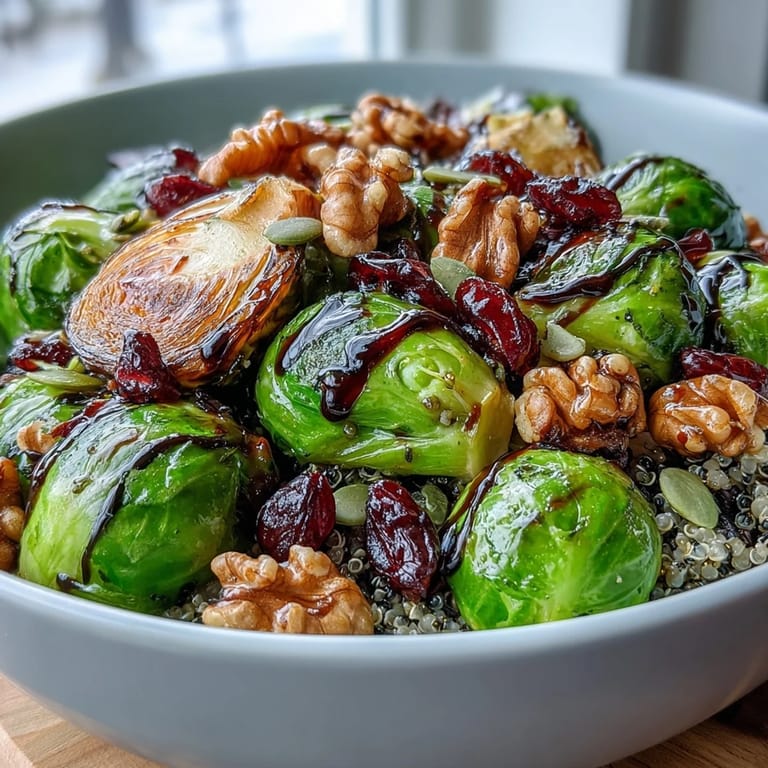
- Divide warm grains among four bowls, top with roasted Brussels sprouts and onions, then drizzle generously with the balsamic dressing. Scatter with nuts, cranberries, and seeds if you're using them.
 Save
Save The real turning point for me came when I realized this bowl works equally well as a satisfying lunch that keeps me full for hours or as a side dish that steals the spotlight at a dinner table. It's become the recipe I reach for when I want something nourishing without feeling restricted or like I'm missing out on actual flavor and pleasure.
Roasting Vegetables With Intention
The difference between roasted and merely cooked vegetables is all about patience and high heat. When Brussels sprouts get enough space and a hot enough oven, they undergo the Maillard reaction—that scientific process where natural sugars caramelize and create deep, complex flavors. I've learned that stirring halfway through matters more than most recipes let on, because the side touching the pan gets the crispiest and best-colored, so rotation ensures every piece gets its moment against the hot surface.
Building Bowls That Actually Stay Interesting
Texture is the secret ingredient that keeps each spoonful engaging—if your bowl is all soft and creamy, your interest drops halfway through. That's why the contrast of crispy roasted vegetables, chewy grains, and crunchy nuts matters so much, and why I always include some kind of textural topping even when I'm eating alone. The balsamic dressing also plays a role, breaking up the richness while adding brightness that refreshes your palate with each bite.
Flexibility and Personal Customization
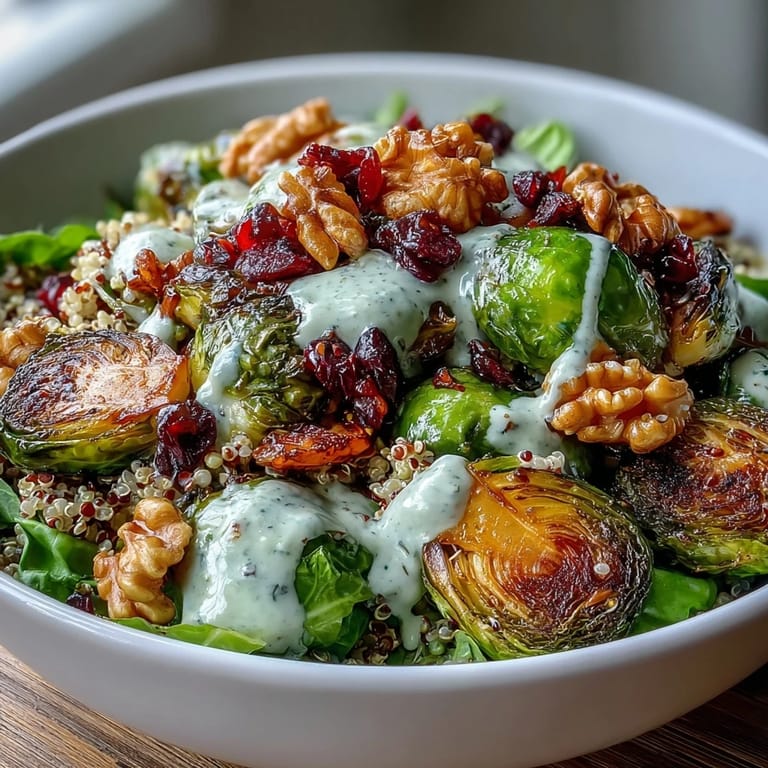
This recipe is genuinely forgiving and improves with adaptation based on what you have in your kitchen and what sounds good that day. Some weeks I add roasted sweet potatoes and chickpeas for extra protein and heartiness, other times I'll swap the quinoa for farro if I want something with more chew. The core technique—roast vegetables until caramelized, top with grains, drizzle with dressing—stays consistent, so you're really just playing with flavors and textures around that solid foundation.
- Try adding crumbled feta, goat cheese, or tofu for extra protein and richness without making it feel heavy.
- Roasted carrots, beets, or sweet potatoes extend the veggie spectrum and add natural sweetness that plays beautifully with the balsamic.
- Make a big batch of dressing and keep it refrigerated for up to two weeks so you can throw together quick bowls any time the mood strikes.
 Save
Save This bowl has become my reliable friend—the recipe that shows up when I need something nourishing, when I'm cooking for others, and when I want to feel like I've taken care of myself. Make it once and it'll become something you return to, each time discovering a small new variation that makes it feel fresh again.
Recipe Help & Answers
- → How do I get Brussels sprouts to caramelize properly?
Roast at high heat (425°F) and spread them in a single layer on the baking sheet. This allows edges to brown and become sweet while interiors stay tender. Don't overcrowd the pan, and toss halfway through cooking.
- → Can I make this ahead for meal prep?
Absolutely. The roasted vegetables and cooked grains keep well in the refrigerator for 4-5 days. Store the dressing separately and drizzle just before serving to maintain the best texture.
- → What grains work best in this bowl?
Quinoa and brown rice are excellent choices, but farro, bulgur, or couscous also work beautifully. Each brings a slightly different texture and cooking time to the dish.
- → How can I add more protein?
Stir in chickpeas during the last 10 minutes of roasting, add grilled tofu strips, or sprinkle with feta cheese. Roasted tempeh or a poached egg also makes great protein additions.
- → Is this suitable for special diets?
This bowl is naturally vegetarian, vegan when using maple syrup, and gluten-free if made with quinoa or rice. It's also dairy-free and packed with fiber, vitamins, and wholesome plant-based ingredients.