 Save
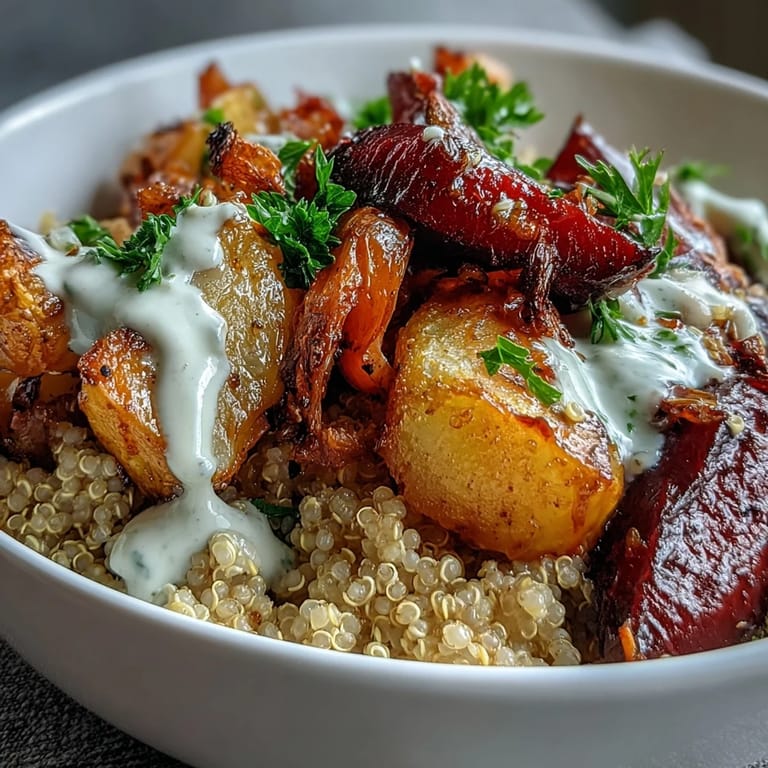
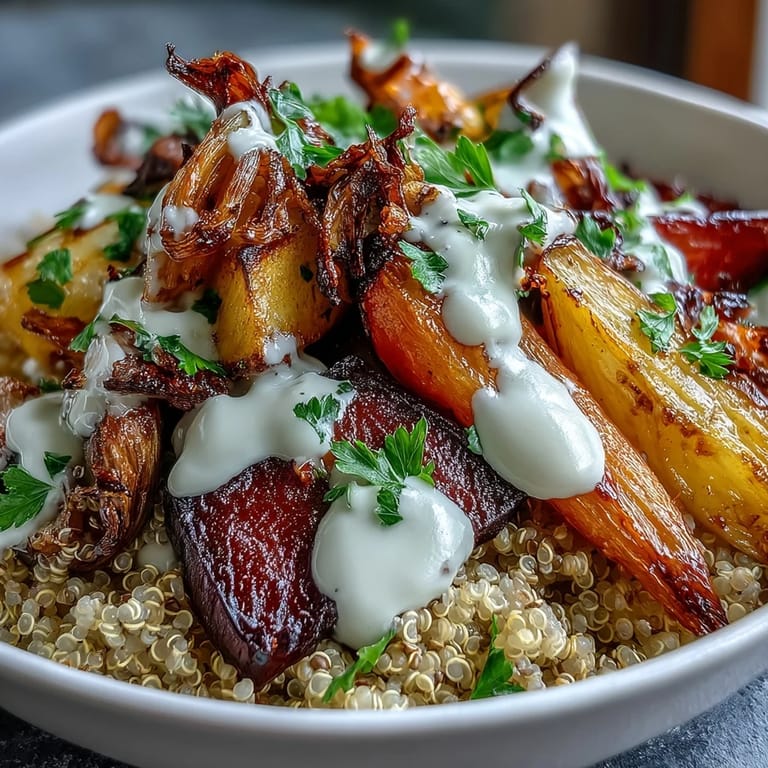
Save Last autumn, I found myself standing in front of a farmers market table absolutely overwhelmed by the abundance of root vegetables—beets still wearing their soil, parsnips I'd never really cooked before, carrots in shades I didn't know existed. The vendor suggested roasting them together, and something clicked. That first bowl, built on a bed of fluffy quinoa and dressed with a silky tahini sauce, became my go-to whenever I needed to feel nourished and grounded.
I made this for a friend who'd been eating mostly takeout, and watching their face light up when they tasted that first spoonful—hearing them say it tasted like actual care—reminded me why home cooking matters. They asked for the recipe before finishing their bowl, which told me everything.
Ingredients
- Carrots: Use medium ones so they roast evenly and develop those gorgeous caramelized edges.
- Beets: Their earthy sweetness deepens when roasted, but peel them before cutting to avoid staining everything.
- Turnips: Often overlooked, but they become creamy and mild once roasted, adding a subtle complexity.
- Parsnips: They caramelize beautifully and add a natural sweetness that balances the earthier vegetables.
- Olive oil: Don't skimp here—you need enough to coat everything and help them crisp up.
- Sea salt and black pepper: Season generously; roasted vegetables need more seasoning than you'd think.
- Dried thyme or rosemary: Optional but worth it—the herbs infuse into the oil and coat every piece.
- Quinoa: Always rinse it first to remove the bitter coating, then use a one-to-two ratio with water.
- Vegetable broth: If you have it, use it instead of water for added flavor in the quinoa.
- Tahini: This sesame paste is the soul of the sauce, so grab a good quality one that tastes creamy, not bitter.
- Lemon juice: Fresh lemon brightens everything and prevents the tahini from feeling heavy.
- Garlic: Mince it finely so it distributes evenly throughout the sauce without overpowering.
- Maple syrup or honey: A touch of sweetness rounds out the tahini's earthiness and adds depth.
- Fresh parsley: The green color and fresh bite are essential for finishing the bowl.
- Toasted seeds: Pumpkin or sunflower seeds add crunch and a nutty flavor that completes each bite.
Tired of Takeout? 🥡
Get 10 meals you can make faster than delivery arrives. Seriously.
One email. No spam. Unsubscribe anytime.
Instructions
- Get your oven ready:
- Preheat to 425°F and line a baking sheet with parchment paper so nothing sticks and cleanup is easy.
- Prepare and season the vegetables:
- Toss your cut vegetables with olive oil, salt, pepper, and herbs in a large bowl—this is where the flavor begins, so don't rush it. Make sure every piece is coated with oil so it can caramelize properly.
- Roast until golden:
- Spread everything in a single layer on the baking sheet and roast for 30 to 35 minutes, stirring halfway through so they cook evenly. You'll know they're done when the edges are deeply browned and caramelized, and a fork slides through easily.
- Cook the quinoa:
- While vegetables roast, combine quinoa, water or broth, and salt in a saucepan and bring to a boil. Lower the heat, cover, and let it simmer gently for 15 minutes, then remove from heat and let it sit covered for 5 minutes before fluffing with a fork.
- Whisk the tahini sauce:
- In a small bowl, whisk together tahini, lemon juice, water, minced garlic, salt, and maple syrup until smooth and creamy. If it's too thick, add water a tablespoon at a time until it reaches a drizzle-friendly consistency.
- Assemble your bowls:
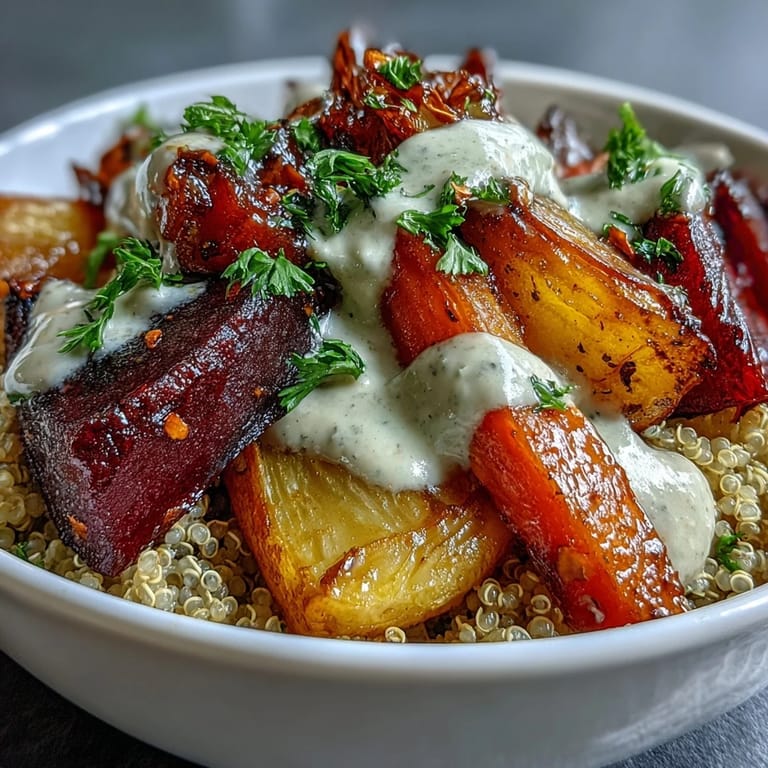
- Divide fluffy quinoa among four bowls, top with warm roasted vegetables, drizzle generously with tahini sauce, then finish with fresh parsley and toasted seeds.
 Save
Save There was a quiet Tuesday evening when I made this bowl just for myself, sitting by the window while the light turned golden, and something about the ritual of roasting vegetables felt almost meditative. Food doesn't always need an occasion to matter.
Why Root Vegetables are Magic
Root vegetables get overlooked because they seem humble, but roasting transforms them into something almost unrecognizable—sweeter, more tender, with crispy edges that catch on your fork. The heat concentrates their natural sugars and browns them deeply, creating layers of flavor you simply don't get from boiling or steaming. Once you've tasted roasted beets and parsnips, you'll understand why people get excited about farmers markets in autumn.
Building Bowls that Actually Fill You Up
The key to a satisfying grain bowl is balance—protein, healthy fats, vegetables, and carbohydrates all working together. Quinoa here is your protein foundation, the tahini adds richness and more protein from sesame, and the roasted vegetables bring volume and nutrients without feeling heavy. The result is something that's genuinely nourishing, not just photogenic.
Making This Your Own
This bowl is forgiving in the best way, and once you understand the formula, you can adapt it to whatever's in your kitchen or what you're craving that particular week. The roasting method works for nearly any root vegetable, and the tahini sauce pairs with almost everything. Think of this as a template rather than a rigid instruction, and you'll find yourself making it again and again without getting bored.
- Swap in sweet potatoes, rutabaga, or even regular potatoes if that's what you have on hand.
- Add chickpeas, white beans, or a poached egg for extra protein if you want a heartier meal.
- Experiment with different garnishes—pomegranate seeds, toasted nuts, crispy chickpeas, or a drizzle of hot sauce all work beautifully.
 Save
Save This bowl has become my answer to so many questions—what to cook when you're tired, what to bring to someone who needs nourishing, what to make when you want to feel taken care of. It's proof that simple, honest cooking is often exactly what we need.
Recipe Help & Answers
- → Can I prepare the vegetables ahead of time?
Yes, you can peel and chop the vegetables up to a day in advance. Store them in an airtight container in the refrigerator until ready to roast. The tahini sauce can also be made ahead and kept refrigerated for up to a week—just thin with a little water before serving.
- → What other root vegetables work well in this bowl?
Sweet potatoes, rutabaga, and butternut squash are excellent additions or substitutions. Sweet potatoes add natural sweetness, while rutabaga brings a pleasant peppery bite. Adjust roasting time as needed since different vegetables may require slightly different cooking times.
- → How do I store leftovers?
Store each component separately in airtight containers in the refrigerator for up to 4 days. Reheat vegetables and quinoa gently in the microwave or oven. The tahini sauce may thicken when chilled—simply whisk in a small amount of water to restore the desired consistency.
- → Can I add more protein to this bowl?
Absolutely. Roasted chickpeas, pan-seared tofu, or a poached egg make excellent protein additions. You can also serve alongside grilled chicken or fish if you're not following a vegetarian diet. The quinoa provides about 9g of protein per serving already.
- → My tahini sauce keeps separating—what am I doing wrong?
Separation is natural and easily fixed. Simply whisk vigorously while adding room-temperature water one tablespoon at a time until the sauce becomes smooth and creamy. The key is adding liquid slowly and whisking thoroughly to emulsify the mixture properly.
- → Can I freeze the roasted vegetables?
Yes, roasted vegetables freeze beautifully for up to 3 months. Spread them on a baking sheet to freeze individually before transferring to a freezer bag. Reheat in a 400°F oven for 10-15 minutes to restore their caramelized texture. The quinoa and sauce are best enjoyed fresh.