 Save
Save Last spring, my neighbor arrived at my door with a colander overflowing with peas still in their pods—her garden had exploded overnight, and she needed help. We shelled them together at my kitchen table, and I suddenly remembered why risotto had always felt like a luxury dish. That evening, I stirred this bright, creamy risotto while she told stories about her plans for the season, and something clicked: this wasn't complicated cooking, just patient stirring and good timing. Now whenever I make it, I think of her laugh and how a simple bowl of rice became the centerpiece of a perfect spring dinner.
I made this for my partner's colleagues one April evening, nervous because risotto has that reputation for being temperamental. But as I stirred, the kitchen filled with the smell of butter and wine, and conversations drifted over from the living room. By the time I plated it with that sprinkle of fresh mint and lemon zest, everyone was already crowding the kitchen, drawn by the aroma. That's when I realized risotto isn't intimidating—it just needs your presence and attention, which somehow makes it feel more personal than any other dish.
Ingredients
- Fresh or frozen green peas (1 cup): The heart of this dish, so choose the best you can find; frozen peas from a quality producer are honestly just as good as fresh, and they thaw perfectly in the warm risotto.
- Arborio rice (1 1/2 cups): The short, starchy grains are non-negotiable here—they release starch as you stir, creating that signature creamy texture without any cream.
- Vegetable stock (4 cups), kept warm: Cold broth will shock the rice and stop the cooking process; keep it simmering gently in another pot so each addition is a warm embrace.
- Dry white wine (1/2 cup): This adds acidity and complexity that vinegar simply cannot replicate; don't use anything you wouldn't drink.
- Unsalted butter (3 tbsp, divided): Butter is building blocks here—the first batch toasts the rice, the final pat creates a silky finish that tastes like luxury.
- Freshly grated Parmesan (1/2 cup, plus extra): Grate it yourself just before cooking; pre-grated cheese has anti-caking agents that prevent it from melting smoothly into the risotto.
- Fresh mint leaves (1/4 cup): Mint is the green thread that pulls everything together; chop it just before serving so it stays bright and aromatic.
- Lemon zest: This single ingredient lifts the entire dish, adding a whisper of brightness that makes people ask what the secret ingredient is.
- Salt and freshly ground black pepper: Taste as you go; the stock is already seasoned, so go easy at first.
Tired of Takeout? 🥡
Get 10 meals you can make faster than delivery arrives. Seriously.
One email. No spam. Unsubscribe anytime.
Instructions
- Warm your broth and gather your focus:
- Before you start cooking rice, make sure your vegetable stock is simmering gently in a separate pot. This step alone prevents half the problems people have with risotto—cold broth shocking the rice is like unexpected cold water mid-shower. Have your ladle ready and clear your schedule for the next twenty minutes; this dish needs your attention.
- Build the flavor foundation with butter, onion, and garlic:
- Melt two tablespoons of butter in a large saucepan over medium heat, then add the chopped onion. The sizzle should be gentle, not aggressive; you're coaxing sweetness from the onion, not rushing it. After about four minutes, when the onion turns translucent and smells almost nutty, stir in the garlic and let it warm through for just one minute—garlic burns faster than you'd think.
- Toast the rice until it whispers:
- Add the Arborio rice and stir it constantly for about two minutes, coating each grain in butter. You'll hear a subtle clicking sound as the rice tumbles in the pan; this toasting step seals the grain's edges and prevents mushiness later. The rice should smell slightly nutty, almost like popcorn.
- Deglaze with wine and let it absorb:
- Pour in the white wine and stir until the rice drinks it up, about two minutes. The wine's acidity opens up the grain and adds a subtle complexity that people often can't quite name. When the pan looks almost dry, you're ready for the broth.
- Begin the patient stirring meditation:
- This is where risotto becomes a conversation between you and the rice. Add about one ladleful of warm stock and stir gently but constantly, letting the rice absorb the liquid. When it's mostly soaked in—not dry, but not soupy—add another ladleful. The stirring releases starch from the rice, which is what creates that creamy texture. Keep going for eighteen to twenty minutes; there's no shortcut here, but the rhythm becomes almost meditative.
- Fold in the peas at the perfect moment:
- About five minutes before the rice finishes cooking, stir in the peas. This timing keeps them bright green and tender, with a little bite still intact. You'll see them warm through as the rice finishes.
- Finish with butter, cheese, and freshness:
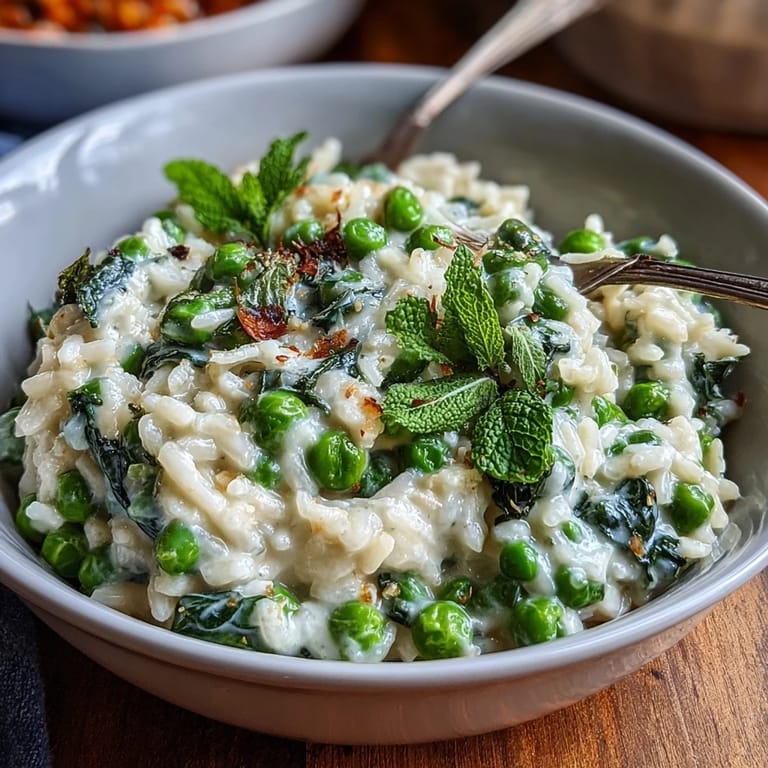
- Remove the pan from heat and stir in the remaining butter, Parmesan, chopped mint, lemon zest, and a pinch of salt and pepper. The butter and cheese create a final creamy wave that makes the risotto silky on your tongue. Taste it—the lemon zest should be a whisper, not a shout.
- Serve immediately with celebration:
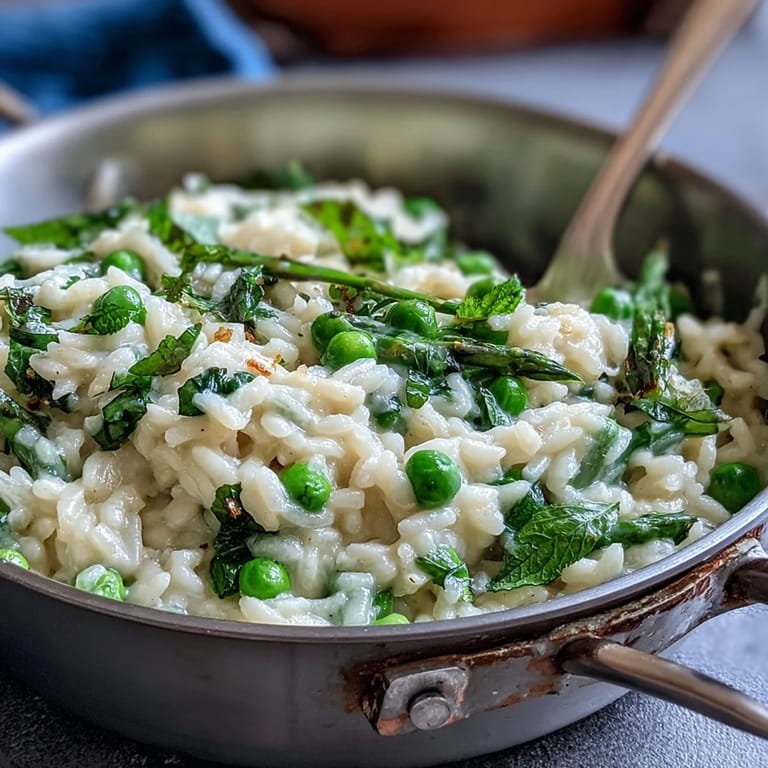
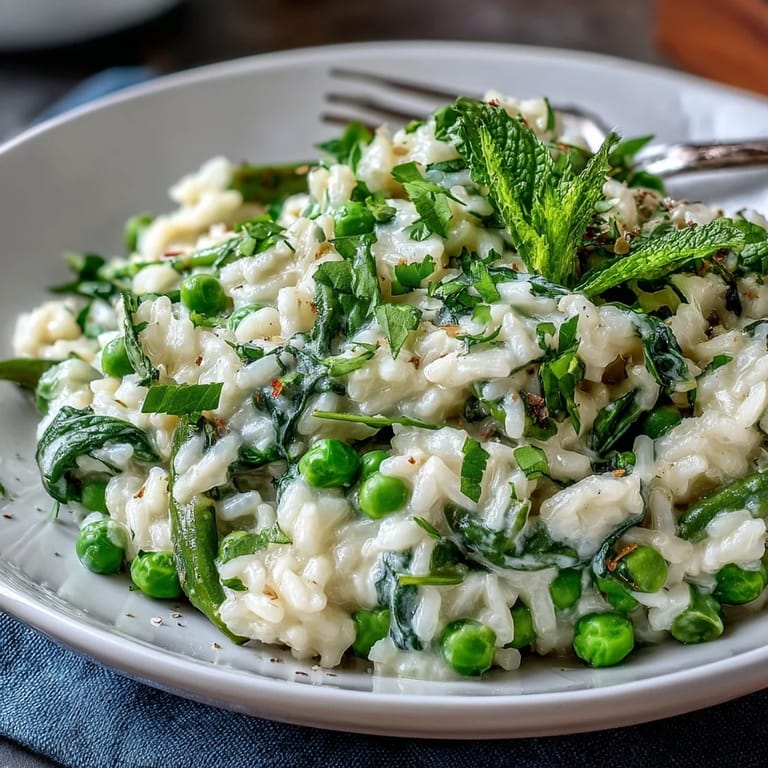
- Plate the risotto right away while it's hot and creamy, garnish with extra Parmesan and fresh mint leaves, and bring it to the table. Risotto waits for no one, so gather your guests first.
 Save
Save One evening, a friend brought her daughter who declared she didn't like risotto, peas, or anything green. By dessert, she asked for seconds and wanted to know my secret. I didn't have one—just good ingredients and the willingness to stand at the stove. Watching her face light up reminded me that cooking isn't about impressing people; it's about creating a moment where they feel cared for enough to try something new.
The Magic of Spring Peas
Spring peas are a gift that arrives for such a short time, which is exactly why they deserve a dish that celebrates them without drowning them in cream or heavy sauces. In this risotto, they're the star—their sweetness plays against the savory rice and sharp Parmesan. If you've ever only known frozen peas, fresh ones from a farmer's market or garden are a revelation: tender, almost buttery, with a delicate sweetness that tastes like green. Even frozen peas, added at exactly the right moment, maintain their brightness and contribute real flavor rather than just color.
Wine Pairing and Serving
This risotto pairs beautifully with crisp white wines—think Sauvignon Blanc or Pinot Grigio—because the wine's acidity cuts through the richness of the butter and Parmesan. Serve it as a main course with a simple green salad on the side, or make it the star of a multi-course dinner with grilled vegetables and crusty bread. The risotto itself is filling enough to satisfy, but a light appetizer before it and fresh fruit after rounds out the meal perfectly.
Customizing Your Risotto
Once you understand the basic technique, this risotto becomes a canvas for seasonal variation. In summer, swap some of the peas for fresh corn and zucchini; in late spring, add asparagus cut into small pieces. The method stays exactly the same—the confidence comes from knowing that as long as you stir constantly and add warm liquid gradually, you're creating something delicious. I've made versions with roasted mushrooms, with white beans, with nothing but herbs and cheese, and every single one has been dinner party worthy.
- Frozen peas work brilliantly and need no thawing—just toss them in during the last five minutes so they heat through gently.
- If fresh Parmesan feels expensive, remember that a little goes a long way when you grate it yourself; pre-grated never melts as smoothly.
- Make sure your wine is something you'd actually drink, because risotto amplifies whatever flavors you add to it.
 Save
Save There's something about standing at the stove, stirring risotto while the kitchen fills with steam and butter and garlic, that feels like you're doing something meaningful. This dish has the power to slow down an evening and remind us why gathering around food matters so much.