 Save
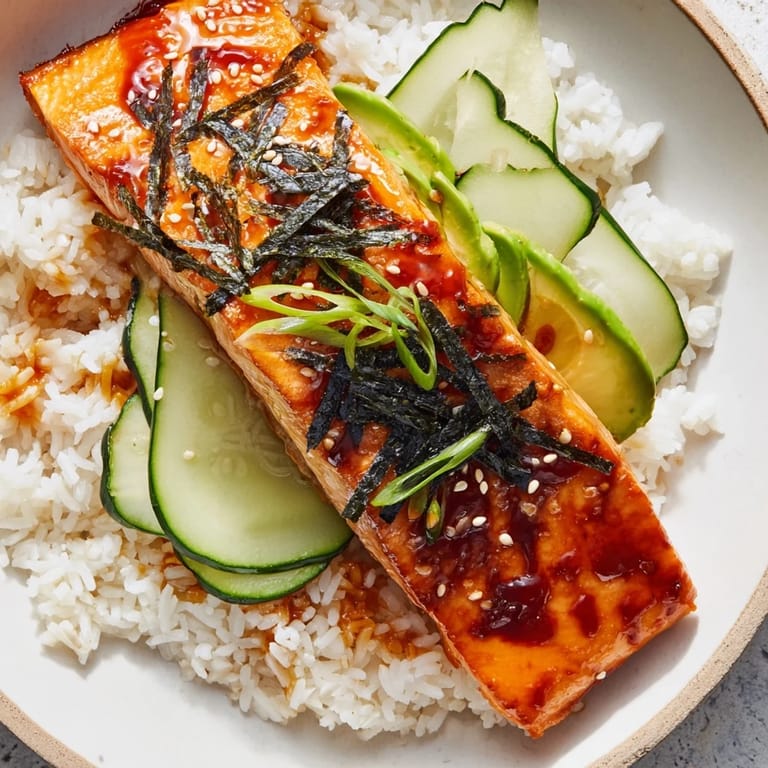
Save The first time I made this bowl, I was scrolling through videos at midnight, mesmerized by how someone casually caramelized salmon with this tangy orange-gochujang glaze. What struck me wasn't the technique—it was how the sauce seemed to glow under the kitchen light, sticky and almost jewel-like. I grabbed salmon from my freezer, squeezed an orange that was sitting on the counter, and mixed up the glaze in whatever bowl I could find. Twenty minutes later, I had something that tasted like a restaurant dish but felt entirely my own.
I made this for a friend who'd just moved to the city, and she sat at my kitchen counter eating directly from the bowl, barely looking up. She told me later it was the first meal that made her feel like maybe the move was going to be okay. Now whenever I make it, I think of that moment—how food can quietly do something bigger than just feeding someone.
Ingredients
- Salmon fillets (150 g each): Look for bright, firm flesh that doesn't smell fishy—that's the mark of something fresh enough to deserve minimal fussing.
- Gochujang: This Korean chili paste is spicy but rounded, with umami depth that keeps you reaching for another bite.
- Fresh orange juice: Don't use bottled; freshly squeezed makes all the difference, adding brightness that cuts through the richness.
- Soy sauce: The anchor that ties sweet and spicy into something balanced and crave-worthy.
- Honey: Just a touch to smooth the edges and help the glaze caramelize beautifully.
- Rice vinegar: A small splash that lifts everything, keeping the sauce from feeling heavy.
- Toasted sesame oil: Use the real stuff—this is where nutty depth comes from.
- Fresh ginger and garlic: These aren't just flavor; they're what makes your kitchen smell like something worth cooking.
- Short-grain rice: Warm rice is essential; it soaks up the glaze that drips down and becomes part of the magic.
- Cucumber, avocado, nori, sesame seeds, scallions: These toppings aren't garnish—they're the textural conversation that makes each bite interesting.
Tired of Takeout? 🥡
Get 10 meals you can make faster than delivery arrives. Seriously.
One email. No spam. Unsubscribe anytime.
Instructions
- Heat your oven and prepare:
- Set the oven to 200°C (400°F) and line a tray with parchment—this keeps cleanup minimal and lets you focus on the glaze. You want the oven ready so the salmon goes straight in without waiting.
- Season the salmon gently:
- A light touch of salt and pepper on both sides is all you need; the glaze will do the heavy lifting. Place the fillets on the parchment with enough space between them.
- Whisk the glaze:
- In a bowl, combine gochujang, orange juice, soy sauce, honey, rice vinegar, sesame oil, ginger, and garlic. Mix until it's smooth and deep orange, with no lumps of gochujang hiding—this is where all the flavor lives.
- First glaze and bake:
- Brush half the glaze over each fillet and slide them into the oven. You'll hear the sizzle, and after about 12–14 minutes the salmon will flake easily when you test it with a fork—that's your signal to pull it out.
- The optional broil:
- If you want that sticky, caramelized finish (and you do), brush the remaining glaze on top and slide everything under the broiler for 1–2 minutes. Watch it closely—this part happens fast.
- Assemble with intention:
- Divide warm rice between two bowls and nestle a salmon fillet into each. Arrange cucumber, avocado, and nori strips around it, then scatter sesame seeds and scallions on top like you're finishing something you care about.
- Serve immediately:
- This dish is best eaten right away, when everything is still warm and the flavors are singing.
 Save
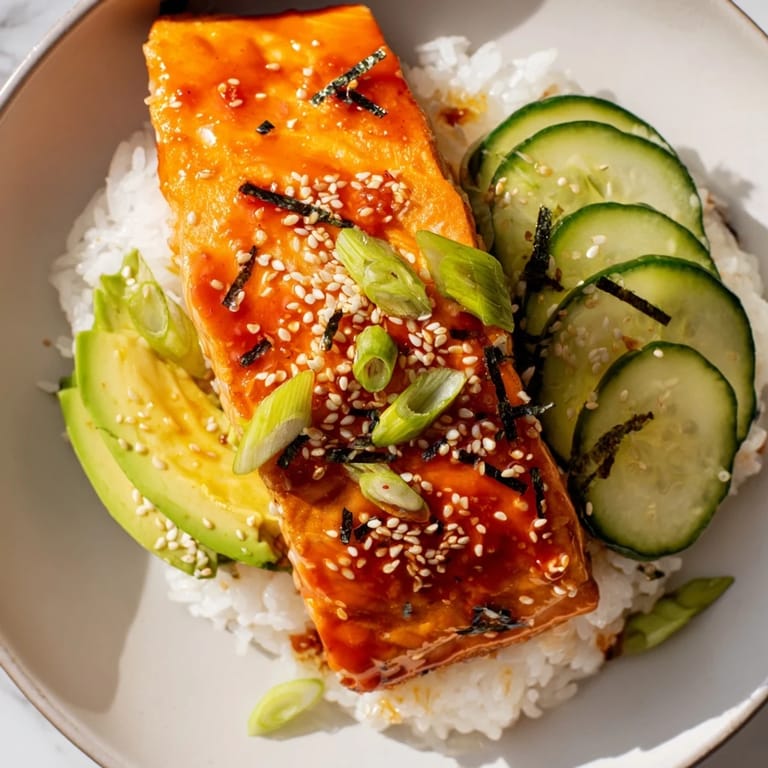
Save There's something about the way gochujang and orange play together that feels like discovering a secret—like you've stumbled onto a flavor combination that shouldn't work but somehow does. Every time I make this, it tastes like possibility, like the kitchen is telling me something I didn't know before.
The Story Behind the Glaze
Gochujang gets a lot of attention in Korean cooking, but pairing it with citrus feels like finding the one thing it's been waiting for. The sweetness of the orange mellows the heat just enough, while the honey adds this glossy caramelization that makes the salmon look almost too beautiful to eat. I learned this by accident—I had an orange on the counter and gochujang in my pantry, and I wondered what would happen if I put them together. Turns out, magic is often just curiosity followed by a clean-up.
Building the Perfect Bowl
The toppings aren't random scatter—they're a conversation happening on top of warm rice. The cucumber brings cool crunch against the warm salmon, avocado adds richness, and nori brings an ocean-like earthiness that somehow makes everything taste more intentional. The sesame seeds aren't just for show; they add a toasty depth that ties the whole thing together. Fresh scallions give you a final green note that lifts everything. Think of the bowl as layers of contrast: warm and cool, soft and crunchy, rich and bright.
When You're Short on Time
This recipe is designed to come together quickly, but there are ways to make it even faster. Prep your toppings while the oven preheats, buy sushi rice if you have some in the freezer, and don't stress about precision—a recipe this forgiving actually tastes better when you cook it with momentum instead of hesitation.
- Make the glaze the night before and refrigerate it; you'll actually give the flavors more time to get to know each other.
- Slice your cucumber and avocado right before serving so they stay crisp and bright instead of browning.
- If you're really pressed, skip the optional broil—the baked salmon is already delicious on its own.
 Save
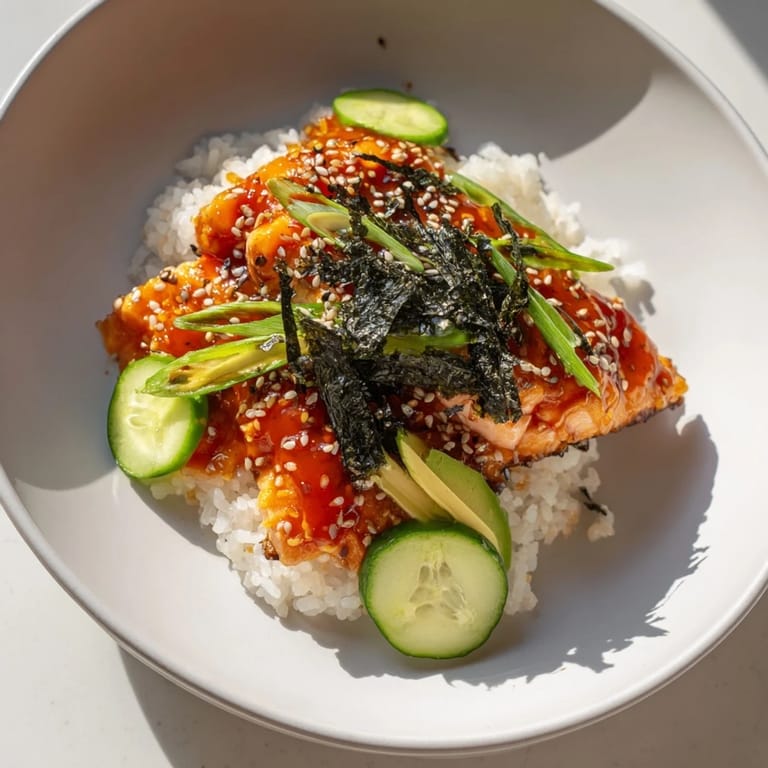
Save This bowl has become my answer to the question 'what should we make tonight' because it's never boring but never complicated. It's the kind of dish that reminds you why you loved cooking in the first place.
Recipe Help & Answers
- → What type of salmon is best for this dish?
Use skinless salmon fillets around 150 grams each for even cooking and easy glazing.
- → Can I substitute gochujang with another sauce?
While gochujang provides a unique sweet-spicy depth, you may use a blend of chili paste and miso for a similar flavor profile.
- → How do I achieve the sticky glaze on the salmon?
Brush the glaze on before baking and again near the end, then briefly broil to caramelize the sauce for a sticky finish.
- → What rice works best with this bowl?
Warm short-grain rice is ideal for its fluffy texture that complements the salmon and toppings well.
- → Are there vegetarian alternatives for the salmon?
Firm tofu can replace salmon, absorbing the glaze flavors while offering a similar texture.
- → What toppings enhance the dish's texture and freshness?
Sliced cucumber, avocado, roasted nori strips, sesame seeds, and scallions add crunch, creaminess, and umami.