 Save
Save There's a particular kind of quiet that falls over the kitchen when you're beating egg whites—that rhythmic whisper of the mixer building something from nothing. Years ago, at a friend's dinner party, I watched her pavlova collapse mid-assembly and thought it was the end of the world, but then she simply laughed, crumbled it into a bowl with cream and berries, and called it a mess. That night taught me that sometimes the most forgiving desserts are the ones that look polished but taste like controlled chaos. Strawberry pavlova became my answer to that lesson: a dessert confident enough to hold its own and humble enough to still work when things don't go perfectly.
I made this for my sister's garden party last June, the kind of afternoon where the light turns honey-colored and everyone's a bit more relaxed than usual. Someone asked if the meringue would hold up in the heat, and honestly, I wasn't entirely sure—but it did, standing there like a small edible monument while people ate around it. That moment, watching someone close their eyes at that first bite, made me understand why this dessert has lasted generations.
Ingredients
- Egg whites (4 large, room temperature): Cold eggs won't whip properly, so pull them out an hour before you start; even one tiny drop of yolk will sabotage everything, so separate them carefully over a small bowl first.
- Superfine sugar (1 cup): The finer texture dissolves faster than regular sugar, creating that silky, glossy finish rather than a grainy one.
- Cornstarch (1 tsp): This magic ingredient stabilizes the meringue and creates a slightly chewy center that makes the whole thing feel less austere.
- White vinegar (1 tsp): It sounds odd, but the acidity strengthens the meringue structure and keeps it from weeping later.
- Vanilla extract (1 tsp, plus 1 tsp more for cream): Use real vanilla if you have it; the flavor matters when everything else is this delicate.
- Heavy cream (1 cup, chilled): Cold cream whips faster and holds peaks longer, so chill your bowl and beaters too if you have time.
- Powdered sugar (2 tbsp): It dissolves instantly into whipped cream without the graininess of regular sugar.
- Fresh strawberries (2 cups, hulled and sliced): Choose berries that are ripe but still firm; watery ones will make the meringue soggy and dilute the cream.
- Granulated sugar for macerating (1 tbsp, optional): This draws out the strawberry juices to create a light syrup that flavors everything.
- Fresh mint (optional): A few leaves add a whisper of brightness and make the whole thing feel intentional.
Tired of Takeout? 🥡
Get 10 meals you can make faster than delivery arrives. Seriously.
One email. No spam. Unsubscribe anytime.
Instructions
- Set the stage:
- Preheat your oven to 275°F and line a baking sheet with parchment paper, drawing a 9-inch circle as your guide so the meringue knows where to go. This low temperature is the secret—it dries rather than browns, creating that tender interior you're after.
- Beat the whites:
- In a completely clean, dry bowl (even a hint of grease ruins everything), beat egg whites on medium speed until they look like fluffy clouds with soft peaks that curl when you lift the beater. This takes a few minutes and feels good to watch.
- Add sugar gradually:
- Sprinkle in the superfine sugar one tablespoon at a time, beating on high the whole while, until the mixture looks glossy and stiff peaks stand straight up when you lift the beater—about 7 to 10 minutes total. Rushing this step means grainy meringue, so patience genuinely matters.
- Fold in the stabilizers:
- Gently fold in the cornstarch, vinegar, and vanilla with a spatula, taking care not to deflate everything you just built; you want to keep it light and airy. This is one moment where restraint and tenderness make the difference.
- Shape the nest:
- Spoon the meringue onto the parchment, using your circle as a guide, then shape it into a disc with slightly raised edges like a shallow bowl or nest. The raised edges will catch the cream and strawberries later.
- Bake low and slow:
- Bake for 1 hour 15 minutes until the outside is dry and pale, then turn off the oven and let it cool completely inside with the door slightly ajar; this gradual cooling prevents cracking. The waiting is the hardest part.
- Whip the cream:
- While the meringue cools, chill a bowl and beaters, then whip the heavy cream with powdered sugar and vanilla until soft peaks form—it should look billowy and light. Don't overbeat or you'll end up with something grainy and separated.
- Macerate the berries:
- Toss your sliced strawberries with granulated sugar if you want them softer and more syrupy, then let them sit for about 10 minutes so they release their juices. This creates a gentle sauce that flavors every bite.
- Assemble with care:
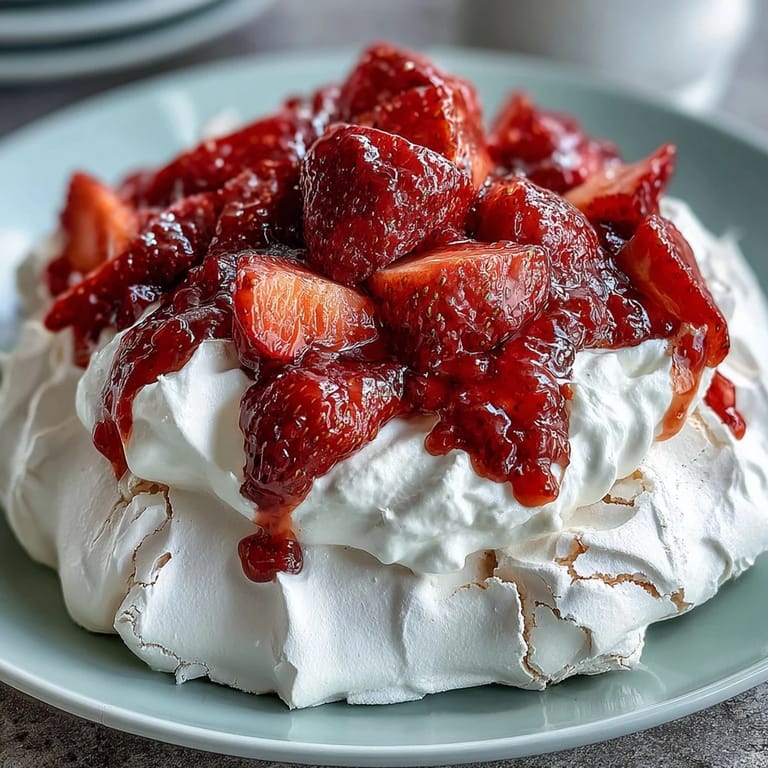
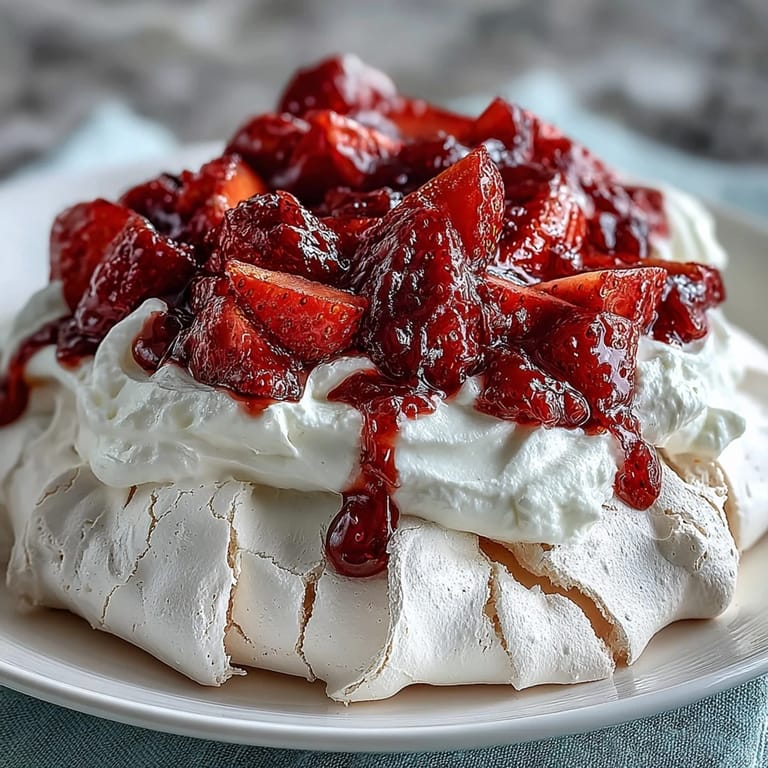
- Transfer the cooled meringue to a serving plate (it's more delicate than it looks), spread the whipped cream over the center, then top with strawberries. A few mint leaves on top make it look like you planned everything, even if you're making it up as you go.
- Serve right away:
- Bring it to the table while the meringue is still crisp and the cream still holds its shape; the longer it sits, the softer everything becomes. Sometimes the fleeting moment is exactly the point.
 Save
Save I once made this for someone going through a difficult time, and watching them eat it—really eat it, not just politely taste—felt like a small permission slip to enjoy something good. Food has a way of saying things words can't, and this dessert, with its fragility and generosity all at once, seemed to understand what needed saying.
The Science of Meringue
Meringue is egg whites transformed by air and sugar into something that defies logic—it's mostly nothing, mostly sky, but somehow stands firm. The cornstarch prevents weeping by absorbing any moisture that might escape, while the vinegar strengthens the protein network so everything holds together even under the weight of cream and berries. Understanding this makes the whole process feel less like following orders and more like participating in actual kitchen chemistry.
Timing and Temperature
The low oven temperature is non-negotiable; a hotter oven will brown the meringue and create a harder, less tender center. I learned this by trying to speed things up on a busy evening and ending up with something that tasted like sweetened foam rather than the delicate, chewy heart the dish deserves. Starting with room-temperature eggs also matters more than it sounds—cold eggs take longer to whip and incorporate air less efficiently, so patience at the beginning saves frustration later.
Variations and Storage
While strawberries are classic, a mix of raspberries, blueberries, and blackberries works beautifully if you're feeling adventurous or shopping the season. The meringue base can be made a day ahead and stored in an airtight container, though it's best assembled within a few hours of serving so the meringue stays crisp. Leftovers soften over time in the fridge, but there's something oddly appealing about a softened pavlova the next morning—it becomes more cake-like and almost as good as the original.
- Store any leftovers in an airtight container in the fridge, though the meringue will gradually soften and absorb moisture from the cream.
- If making ahead, assemble the pavlova just before serving to keep that contrast between crispy and creamy at its peak.
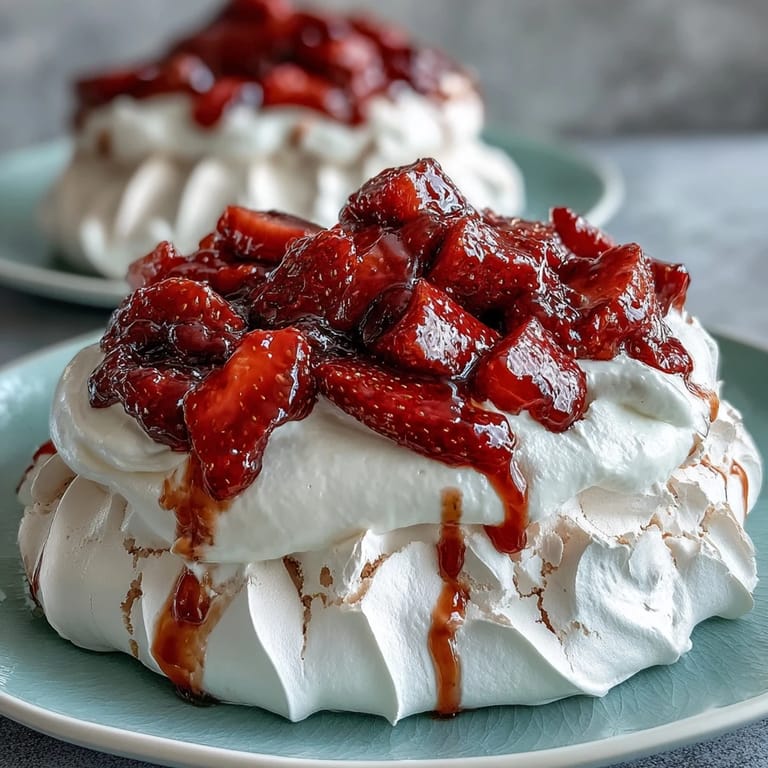
- A pavlova also works beautifully as an individual dessert—make four smaller nests instead of one large one for elegant plating.
 Save
Save This dessert is forgiving in all the ways that matter and temperamental only in the ways that teach you something. Every time you make it, you'll understand a little more about how patience, precision, and a few simple ingredients can create something that feels entirely out of reach—until you take a bite and realize you did it.
Recipe Help & Answers
- → How do I achieve a crisp yet chewy meringue base?
Beat egg whites until stiff peaks form, gently fold in cornstarch and vinegar, and bake slowly at low temperature until the exterior is crisp while the inside remains slightly chewy.
- → Can I prepare the whipped cream in advance?
Yes, whipped cream can be made ahead but is best used fresh to maintain its light texture and volume.
- → What is the purpose of macerating strawberries?
Macerating softens strawberries and enhances their sweetness by drawing out natural juices, adding depth to the topping.
- → How should leftovers be stored to keep texture?
Store leftovers in the refrigerator but note the meringue will soften over time due to moisture absorption.
- → Are there alternatives to superfine sugar for the meringue?
Superfine sugar dissolves best for a smooth meringue, but regular granulated sugar can be used if processed briefly in a blender.